 Whalesbook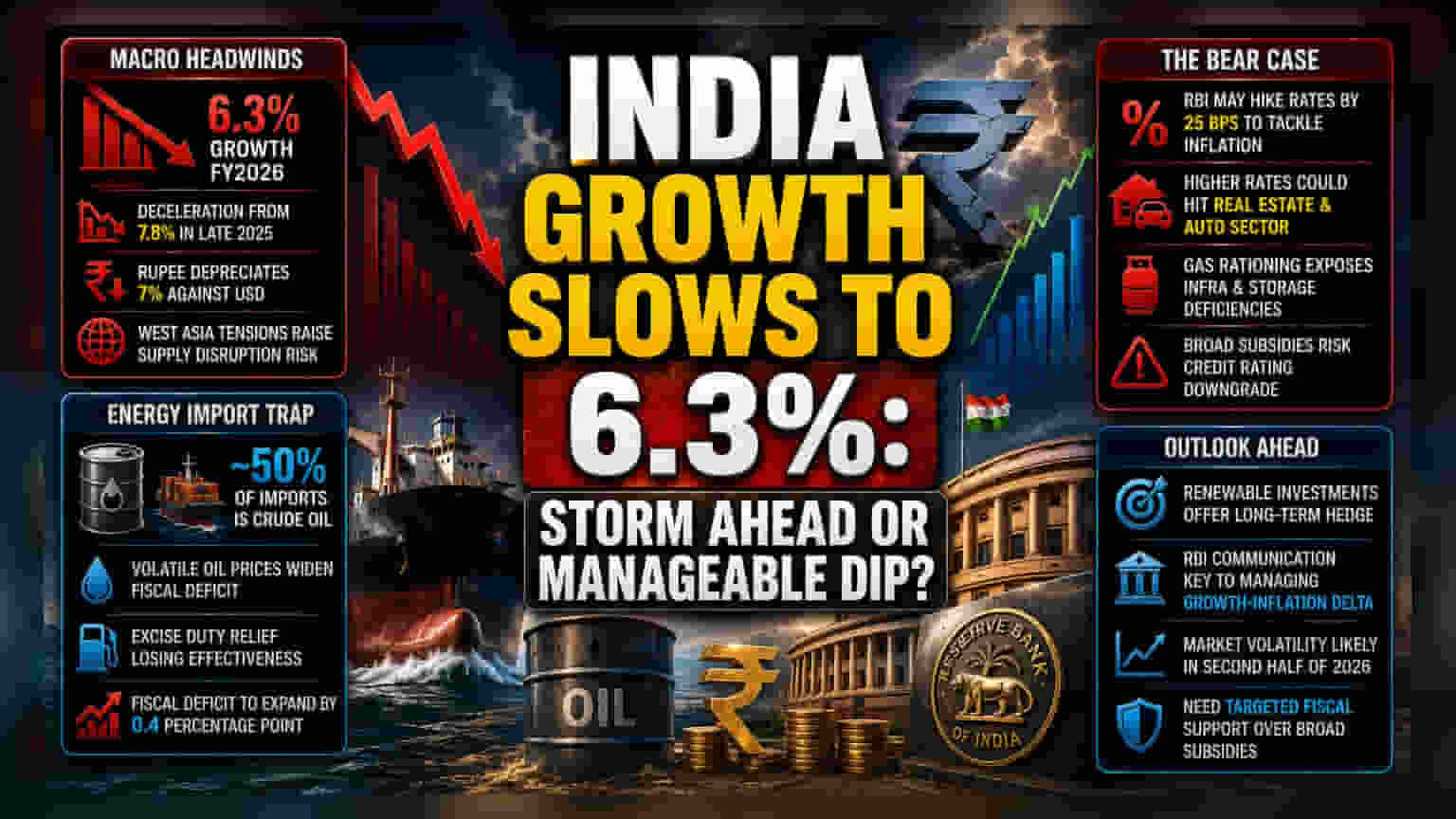


The Macroeconomic Headwind
Beyond the headline growth deceleration to 6.3% for the upcoming fiscal year, the structural reality facing the Indian economy is one of heightened sensitivity to imported inflation. The recent 7% depreciation of the rupee against the U.S. dollar has fundamentally altered the cost-basis for domestic industrial production. This currency weakness, coupled with the persistent threat of supply-side disruptions in West Asia, is forcing a re-evaluation of the country’s growth trajectory. While the 7.8% expansion recorded in late 2025 showcased considerable inertia, the current environment indicates a transition toward a more defensive macroeconomic posture characterized by constrained private consumption.
The Energy Import Trap
India’s current fiscal architecture is disproportionately burdened by energy import costs. With nearly half of total imports comprised of crude oil, the economy remains tethered to volatile commodity markets. Unlike economies with diversified energy portfolios, India faces a direct transmission mechanism where global oil price volatility immediately impacts the fiscal deficit. Recent administrative maneuvers, such as excise duty adjustments on petroleum products, have provided temporary relief but are now reaching their limits of efficacy. The anticipated 0.4 percentage point expansion in the fiscal deficit stems not from a lack of fiscal discipline, but from the systemic cost of shielding consumers from global price spikes, an increasingly expensive endeavor for the exchequer.
The Bear Case: Policy Constraints and Structural Risks
Risk management experts emphasize that the Reserve Bank of India is approaching a difficult junction. The prospect of a 25-basis-point rate hike, while necessary to anchor inflation expectations, creates a secondary risk of suppressing credit-sensitive sectors like real estate and automotive manufacturing. Furthermore, the reliance on gas rationing as a tactical response to supply shocks suggests underlying deficiencies in storage infrastructure and long-term energy security. Unlike emerging market peers that have aggressively diversified into sovereign wealth-backed energy reserves, India remains exposed to near-term logistical hazards. Investors should monitor whether the government pivots toward the OECD’s recommendation of targeted fiscal support, as a continuation of broad-based subsidies could lead to further credit rating scrutiny.
Forward Guidance
Market participants are recalibrating expectations for the remainder of 2026 as monetary policy enters a tightening cycle. While renewable energy investments offer a potential long-term hedge against structural energy deficits, the transition period remains fraught with execution risk. Institutional focus remains centered on the RBI’s communication strategy; failure to effectively manage the delta between growth targets and inflation control may lead to increased volatility in equity markets through the second half of the year.