 Whalesbook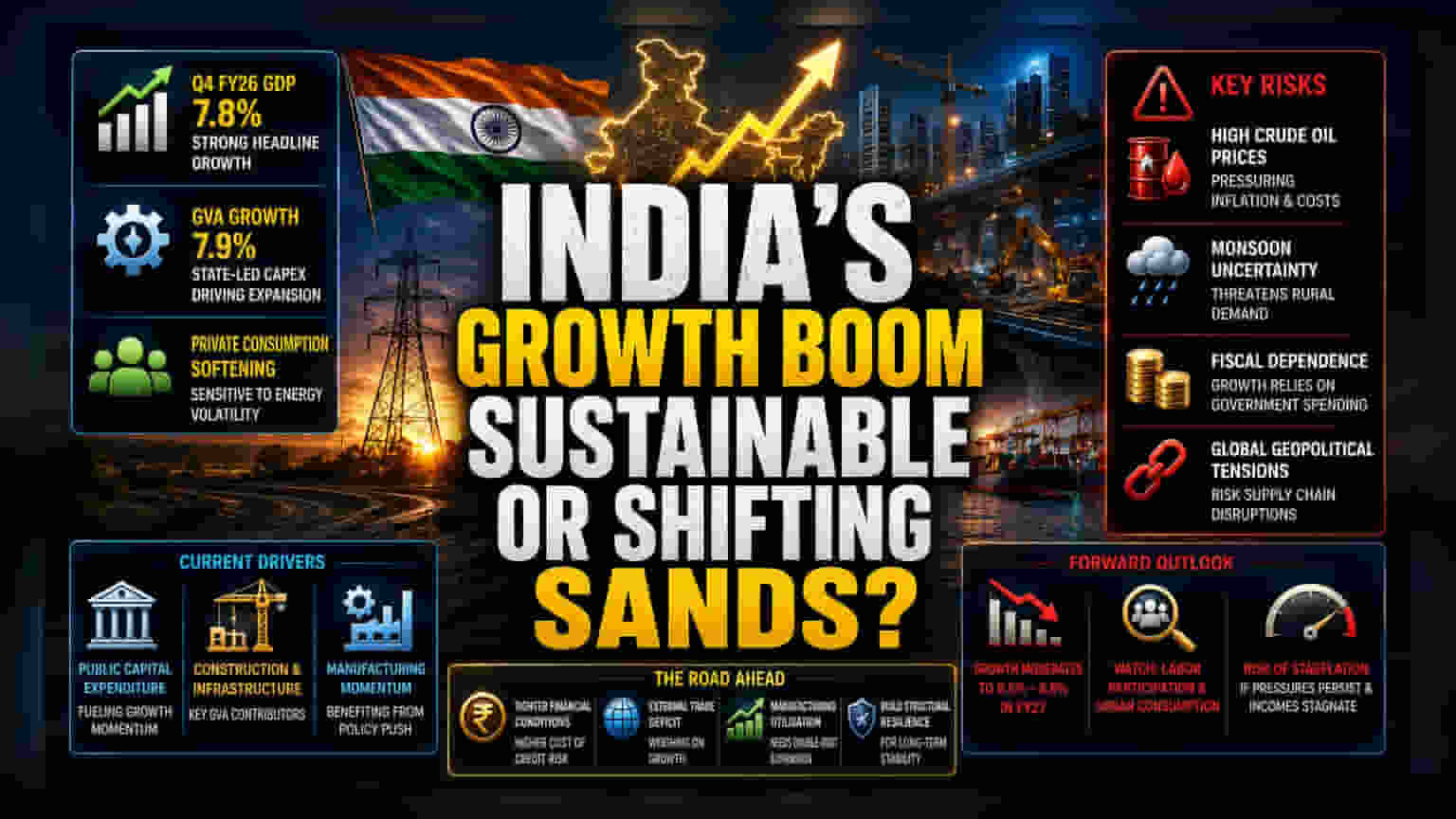


The Consumption Mirage and Production Reality
While the 7.8% headline growth figure for the final quarter creates an aura of invincibility, the data reveals a transition from broad-based expansion to a reliance on state-led capital expenditure. The Gross Value Added (GVA) growth of 7.9% effectively masking a softening in private discretionary spending, which has become increasingly sensitive to energy volatility. This expansion phase is currently sustained by public balance sheets rather than a surge in private corporate investment, signaling that the economy is running on a high-octane policy stimulus that may struggle to maintain its current velocity if public fiscal consolidation begins.
The Valuation of Economic Resilience
The gap between current performance and the projected 6.5% to 6.6% growth trajectory for the upcoming year suggests that institutional investors are already pricing in a margin compression at the national level. Unlike previous growth cycles, the current economic structure faces a twin burden: an external trade deficit compounded by a potential monsoon shortfall and the rigid pricing environment in energy markets. With crude oil price benchmarks hovering near critical thresholds, the cost of maintaining this growth trajectory is shifting toward the consumer, threatening to choke off the very domestic demand that acted as the primary engine for the 2026 fiscal year.
The Forensic Bear Case
The central risk remains the sustainability of the government’s front-loaded capital expenditure program. Should the Reserve Bank of India be forced to prioritize inflation containment over growth support, the cost of credit will likely increase, punishing sectors that have utilized debt to bridge the gap in demand. Furthermore, the reliance on GVA in sectors like construction and manufacturing masks a lack of real productivity gains in export-oriented services, which remain tethered to the volatility of global tech spending. If the geopolitical situation in West Asia escalates, the resultant supply chain fragmentation will act as a structural drag, forcing a revision of investment inflows that have historically provided a buffer for the rupee.
Forward Guidance and Structural Adjustments
Looking toward the next four quarters, the consensus among private sector economists points toward a moderation phase. The transition from 7.7% to the mid-six percent range is not merely a statistical base effect but a reaction to tighter financial conditions. Market participants are watching the labor participation rates and urban consumption indices as the primary leading indicators for fiscal 2027. Unless manufacturing capacity utilization reaches consistent double-digit expansion, the economy risks entering a period of stagflationary pressure where headline growth remains positive but real household income stagnates.