

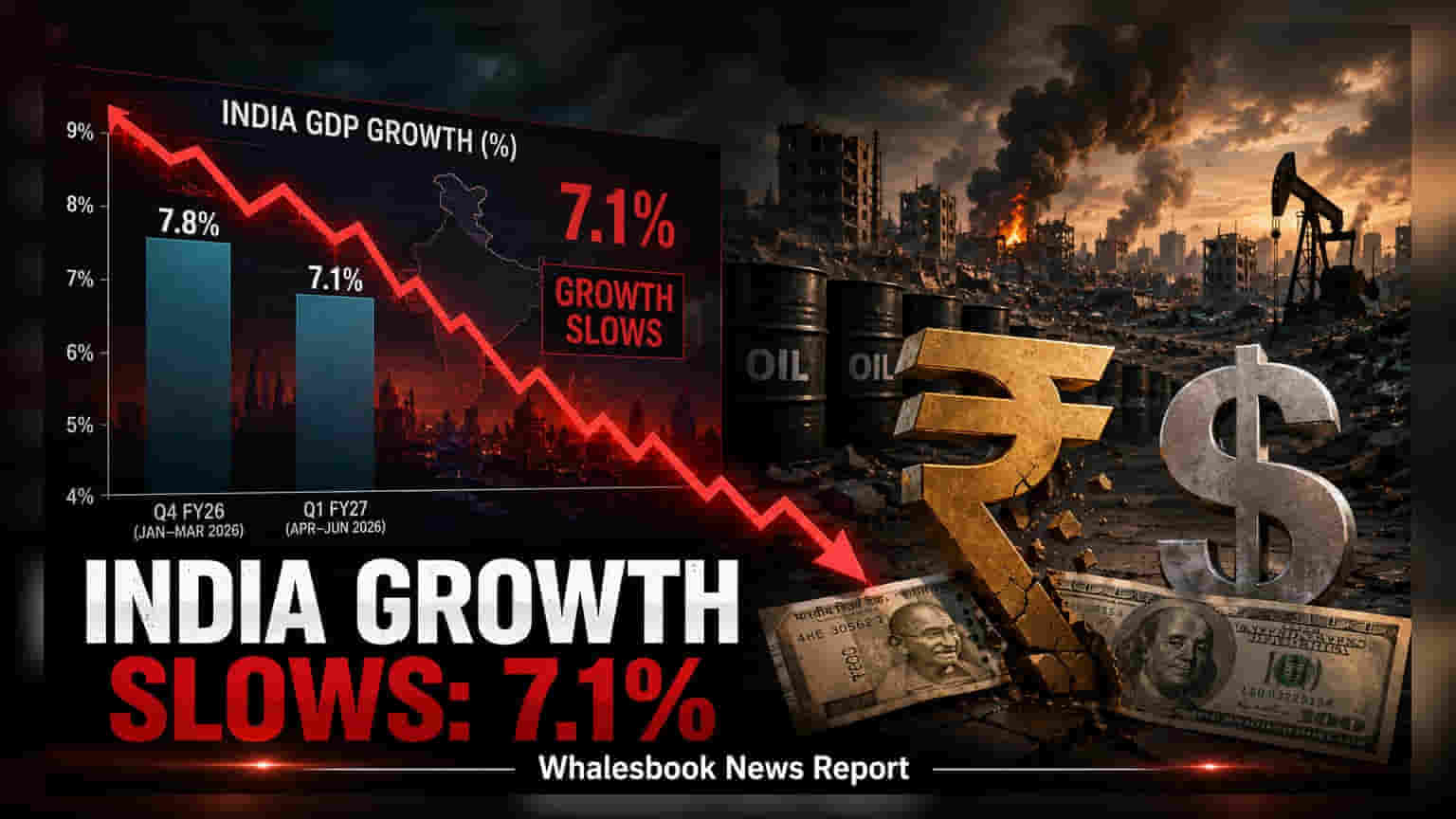
India’s economic growth slowed to an estimated 7.1% for the April-June quarter of 2026, down from 7.8% in the previous period. The moderation is driven by rising inflation, geopolitical tensions in West Asia, and a cautious approach to private investment. Investors are now closely monitoring how corporate profit margins and consumer demand adjust to these persistent economic pressures.
India’s economic growth cooled during the first quarter of the current fiscal year (April-June 2026), with estimates placing the growth rate at 7.1%. This represents a moderation from the 7.8% expansion recorded in the previous quarter. While the economy continues to show resilience, this shift reflects the impact of several external and domestic pressures that are currently weighing on overall performance.
Inflation and Geopolitical Pressures
The primary reasons behind this slowdown include rising inflationary pressures and geopolitical instability. Crude oil prices, which remain high due to ongoing conflicts in West Asia, continue to be a concern for India. As an importer of the vast majority of its oil needs, high fuel prices increase transportation and production costs for businesses. When businesses face higher expenses, it can eventually hit their bottom line, leading to pressure on profit margins if they are unable to pass these costs on to consumers.
Additionally, the broader geopolitical situation, including tensions involving the U.S. and Iran, has created an environment of uncertainty. This uncertainty often makes businesses hesitant to spend money on new expansion projects or large-scale capital spending. While the economy has been supported by government spending and stable consumer demand, the pace of private investment—money that companies spend to build capacity—has been slower than anticipated.
Economic Outlook and Risks
Looking ahead, the full-year GDP growth for FY27 is projected to be in the range of 6.7% to 6.8%. While this is still a positive growth trajectory, it signals a cooling trend compared to the stronger numbers seen in the previous fiscal year. Another factor that investors are watching is the value of the Indian Rupee. A weakening currency can make imports more expensive, adding to the inflationary strain on the economy.
Furthermore, the agricultural sector faces uncertainty due to unpredictable weather patterns, such as El Niño, which could impact rural demand. Since rural consumption is a significant pillar of the Indian economy, any hit to agricultural output could dampen demand for consumer goods, vehicles, and other discretionary items.
What Investors Should Track
For investors, the immediate focus is not just the headline GDP number but how these macro pressures translate into company-level performance. The key monitorables in the coming quarters will be the ability of companies to manage their profit margins in an environment of high input costs. Additionally, tracking consumption data will be vital to see if urban and rural demand remains strong despite rising prices. The next major update for the market will be official government data releases and management commentary from listed companies regarding their future spending plans and demand expectations.