

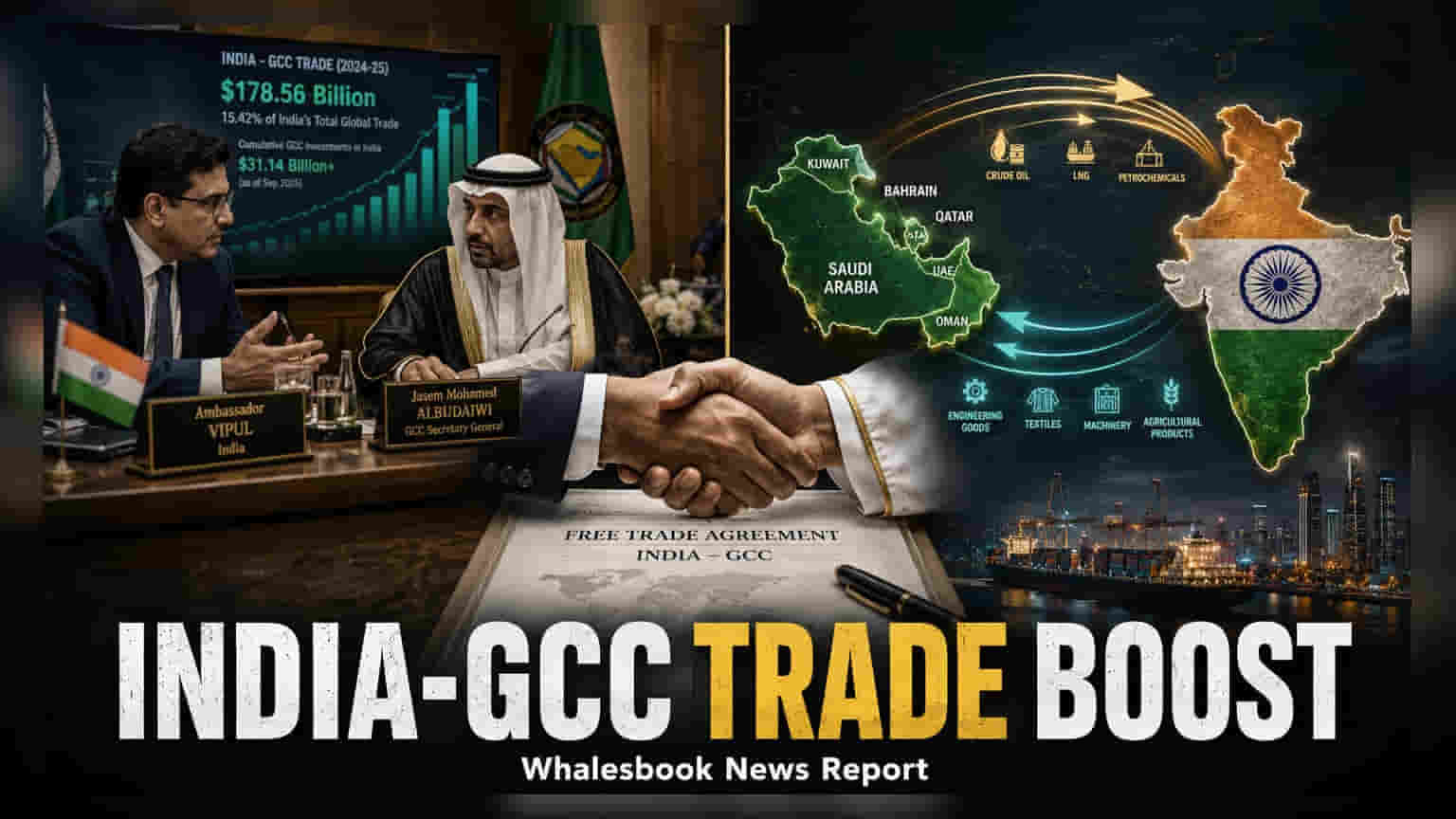
India and the Gulf Cooperation Council have revived negotiations for a comprehensive Free Trade Agreement following high-level discussions in Riyadh. With bilateral trade reaching $178.56 billion in FY 2024-25, this deal is critical for economic integration and energy supply. Investors are now tracking the next ministerial meeting scheduled for September 2026.
India and the Gulf Cooperation Council (GCC) have officially restarted negotiations for a comprehensive Free Trade Agreement (FTA). High-level talks took place in Riyadh between the Indian Ambassador to Saudi Arabia, Vipul, and the GCC Secretary General, Jasem Mohamed Albudaiwi. The meeting focused on establishing a framework to deepen economic cooperation between India and the six-nation bloc, which includes Bahrain, Kuwait, Oman, Qatar, Saudi Arabia, and the United Arab Emirates.
This renewed effort aims to build upon a massive existing trade relationship. In the 2024-25 fiscal year, bilateral trade between India and the GCC stood at $178.56 billion, accounting for approximately 15.42% of India's total global trade. The current trade structure is energy-intensive, with India importing significant amounts of crude oil, LNG, and petrochemicals from the region, while exporting engineering goods, textiles, machinery, and agricultural products like rice.
The strategic importance of this agreement lies in securing stable energy supplies and diversifying investment channels. As of September 2025, cumulative investments from GCC nations into India had already crossed $31.14 billion. An FTA could further lower trade barriers, potentially increasing the competitiveness of Indian exports in these markets. India has already signed individual trade pacts with the UAE and Oman, and a broader deal with the entire GCC would complete a vital strategic link in the region.
However, the path to a final agreement involves significant complexities. One of the primary structural challenges is India's persistent trade deficit with the region, driven by its high dependency on energy imports. Negotiators must find ways to balance this deficit while securing favorable market access for Indian goods. Furthermore, harmonizing tariff structures and rules of origin across six different member states, each with its own regulatory environment, often proves to be a time-consuming process. These factors suggest that the road to ratification may involve extensive and technical negotiations.
The next major phase for this initiative is a ministerial meeting scheduled for September 2026. This meeting is expected to set the agenda and resolve pending issues, providing a clearer timeline for the potential conclusion of the agreement. For investors and businesses in sectors like energy, infrastructure, textiles, and engineering, the outcome of these talks will be important to track as they could lead to reduced costs, easier market access, and stronger capital flows between the regions.