

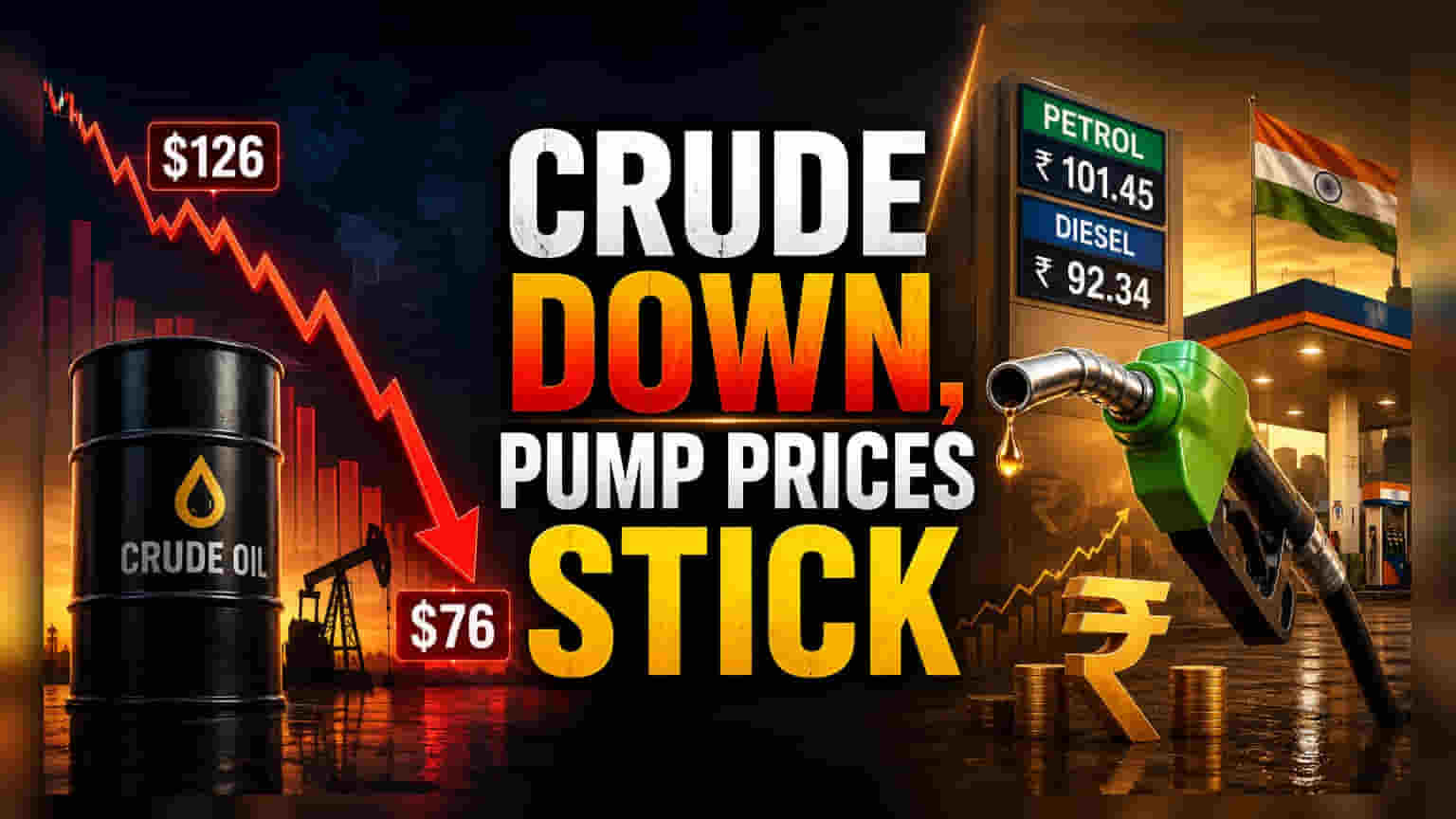
Global crude oil prices have seen a significant pullback from recent highs, yet retail prices for petrol and diesel in India remain stable. The heavy reliance on central and state taxes limits the pass-through of these international savings to the consumer. This environment directly impacts inflation metrics and influences the profitability dynamics of oil marketing companies.
What Happened
Global crude oil prices have recently slipped from their peak levels of USD 126 per barrel to approximately USD 76 per barrel. In many global markets, such as the United States, this decline has resulted in immediate relief for consumers at the pump. However, the situation in India is starkly different. Despite the sharp drop in international crude costs, retail petrol and diesel prices have remained largely unchanged for the domestic consumer, creating a noticeable gap between global trends and local pump prices.
The Role Of Taxes In Pricing
Although petrol and diesel prices were officially deregulated in India in 2010 and 2014 respectively, the pricing mechanism remains complex. A significant portion of the retail price—often more than half—is composed of central excise duties and state-level Value Added Tax (VAT).
Historically, when global crude oil prices fall, governments have frequently adjusted these levies upward to boost tax revenue rather than passing the savings to consumers. This structure ensures that retail fuel prices in India do not follow the volatile, immediate fluctuations seen in global commodity markets, but it also means consumers rarely experience the full benefit of lower global oil prices.
Inflation And Economic Impact
For investors and the broader economy, the stickiness of fuel prices has direct consequences. Fuel and light costs are major components of India's Consumer Price Index (CPI), the primary gauge for retail inflation.
Furthermore, high diesel prices carry a multiplier effect across the economy. Since diesel is the primary fuel for the road freight sector, which handles nearly 65% of India’s freight movement, elevated costs directly impact transportation expenses. This can contribute to upward pressure on food and essential commodity prices, affecting household spending power and broader inflation forecasts.
OMC Profitability Context
Oil Marketing Companies (OMCs) like Indian Oil Corporation (IOC), Bharat Petroleum Corporation (BPCL), and Hindustan Petroleum Corporation (HPCL) operate within this regulated environment. These companies often balance their marketing margins—the profit made from selling fuel at the pump—with their refining margins—the profit made from turning crude oil into finished products.
Investors often monitor these companies when global crude prices are low, as the cost of raw materials (crude oil) decreases, potentially boosting refining margins. While these companies have reported substantial profits in periods of cheaper crude, the lack of a downward pass-through to consumers means the marketing margin is effectively protected, even if it limits the benefits to the end-user.
What Investors Should Track
Moving forward, the primary monitorables for investors include the trend in global crude oil prices, which directly impacts the import bill and the financial health of OMCs. Additionally, any changes to central or state tax structures on fuel will be critical, as these decisions dictate both government revenue and inflation levels. Investors should also observe retail inflation data, as high energy costs remain a key variable that central banks track when setting interest rate policies.