 Whalesbook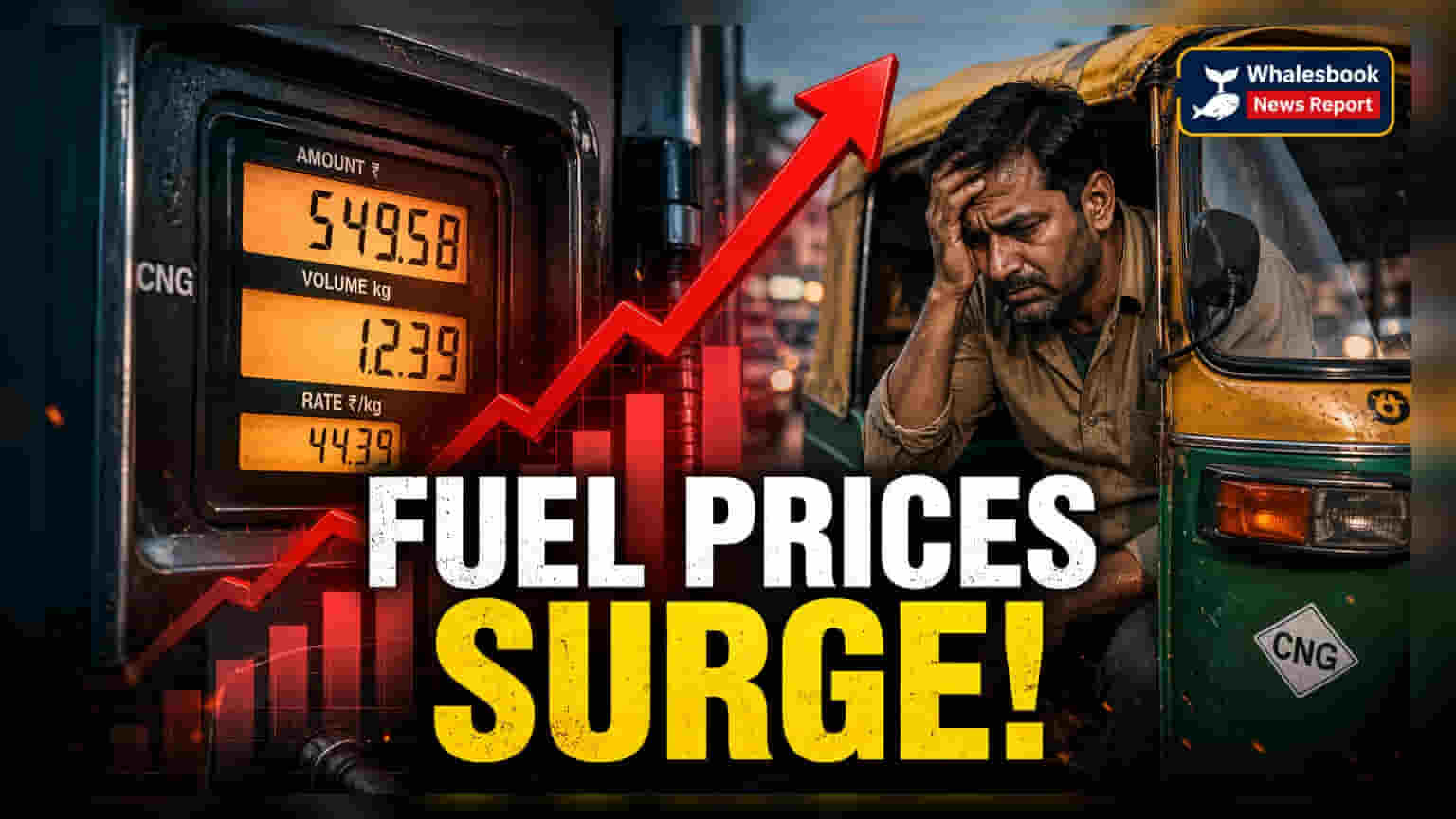


Fuel Price Increases Strain Budgets
Commuters across India are facing mounting transportation costs as Compressed Natural Gas (CNG) prices have risen by ₹1 per kg. This latest adjustment follows recent increases in petrol and diesel prices across metropolitan areas, exacerbating the daily expenses for users of CNG-powered vehicles. The impact is particularly felt by auto-rickshaw drivers, taxi operators, and owners of private CNG vehicles, as well as public transport fleets in major cities like Delhi and Mumbai.
Metro City Price Hikes Intensify
Petrol prices have climbed to ₹99.51 per litre in Delhi, with diesel reaching ₹92.49 per litre. Kolkata has seen substantial increases, with petrol at ₹110.64 per litre and diesel at ₹97.02 per litre. Mumbai's petrol prices are now ₹108.49 per litre and diesel at ₹95.02 per litre. Chennai also registered a rise, with petrol at ₹105.31 per litre and diesel at ₹96.98 per litre. These revisions mark the third fuel price increase in May 2026, reflecting ongoing volatility in the energy market and the passing on of increased global crude oil costs.
Economic Ripples and Inflationary Pressures
The surge in fuel prices is directly linked to elevated global energy prices, stemming from geopolitical tensions in West Asia and supply uncertainties, particularly concerning the Strait of Hormuz. Global Brent crude oil prices have seen significant fluctuations, trading around $97 per barrel on May 22, 2026, and averaging $117/b in April 2026 due to these disruptions. Analysts warn that these price adjustments are anticipated to drive up transportation and logistics costs, potentially leading to cascading effects on general inflation. Retail inflation, which stood at 3.48% in April 2026, is projected to climb further, with estimates suggesting a 25-30 basis point increase in May and June. This broader economic transmission is concerning, as higher fuel costs can increase the prices of essential goods, manufactured products, and services. Consumer inflation expectations have also risen, reaching 8.80% in March 2026.
Market Dynamics and Company Performance
State-run oil marketing companies (OMCs) have been absorbing mounting losses, with reports indicating daily losses of close to ₹1,000 crore and cumulative under-recoveries reaching approximately ₹1.98 lakh crore. This situation has been exacerbated by the fact that domestic fuel prices had remained largely unchanged for years, with the first major increase in over four years occurring in May 2026. While private retailers like Shell India are charging significantly higher prices, the OMCs are in a challenging position. The global energy market is expected to remain volatile, with OPEC+ continuing to monitor production levels and potential adjustments in response to market conditions. Forecasts for Brent crude average around $90–$100/bbl for 2026, though these are subject to geopolitical risks. While J.P. Morgan projects Brent crude to average around $60/bbl in 2026 due to soft supply-demand fundamentals, recent events have pushed prices higher. India's reliance on imports, with nearly 85% of crude oil requirements sourced internationally, makes its domestic prices vulnerable to global market fluctuations. This situation is compounded by the potential for further price hikes if global crude oil prices continue to remain elevated, with cumulative increases of up to Rs 10 per litre anticipated for the financial year 2026-27.