

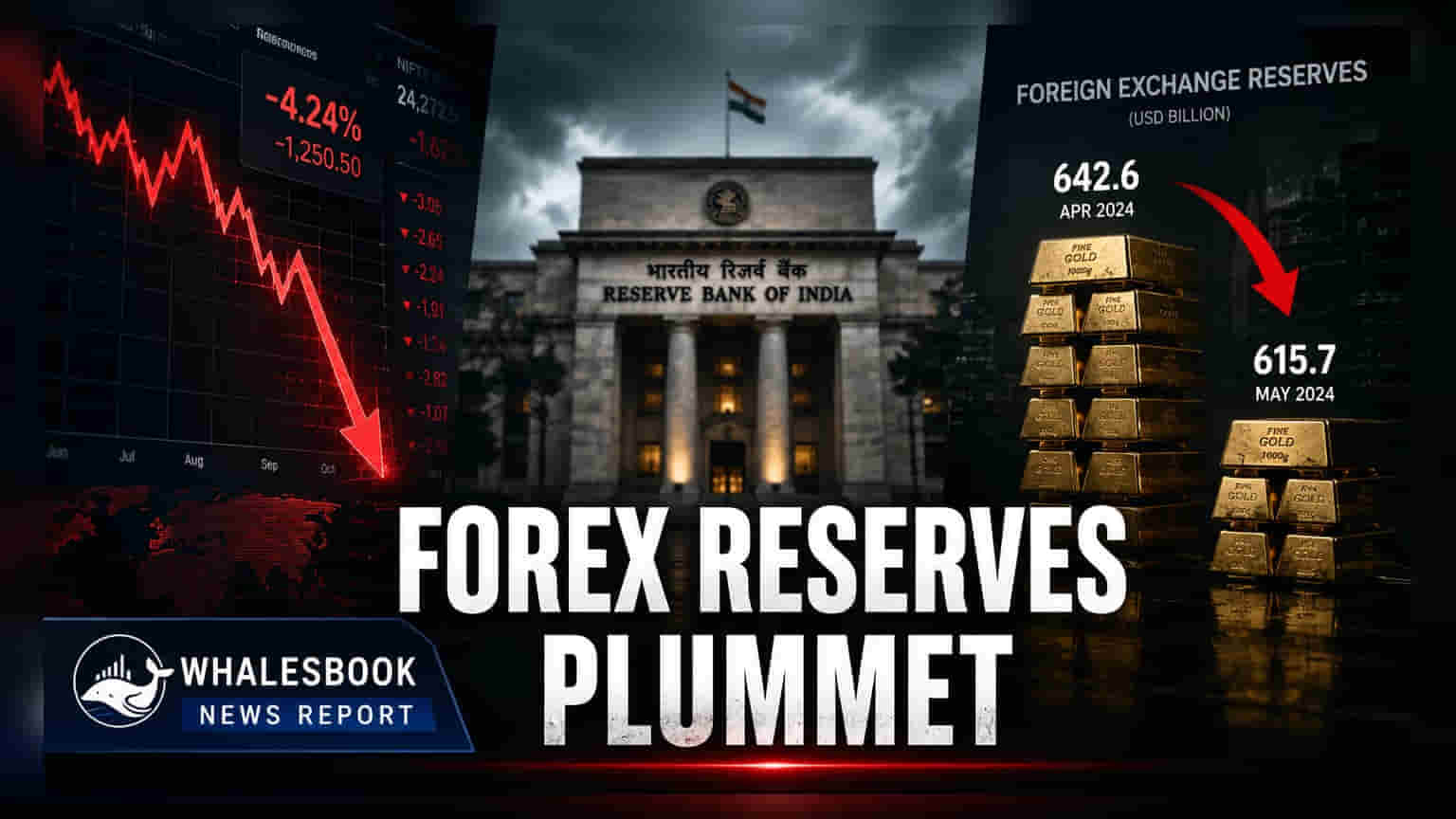
India’s foreign exchange reserves fell by $5.65 billion for the week ending June 26, primarily due to a sharp decline in gold valuations. This reduction impacts the nation's total forex kitty, which is closely monitored by the RBI to maintain currency stability.
What Happened
India's foreign exchange reserves saw a significant contraction for the week ending June 26, 2026, dropping by $5.654 billion to a total of $666.933 billion. This decrease marks a shift from the previous week, which had recorded a modest gain of $963 million. The reserves, which act as a financial buffer for the country, are managed by the Reserve Bank of India (RBI) and are composed of gold holdings, foreign currency assets, Special Drawing Rights (SDRs), and the country's reserve position with the International Monetary Fund (IMF).
The Impact of Gold Valuations
The most prominent factor behind this decline was a sharp reduction in the value of gold reserves, which fell by $5.394 billion to $102.536 billion. Because the RBI reports these reserves in US dollars, a drop in global gold prices directly reduces the dollar-denominated value of the gold held in the vault, even if the physical quantity remains unchanged. This volatility in gold prices often creates temporary fluctuations in the reported total forex reserve figure.
Foreign Currency Assets and Other Holdings
Foreign currency assets, which form the largest part of India's reserves, also recorded a decline of $150 million, bringing the total to $541.067 billion. These assets include investments in foreign government bonds and deposits with other central banks. Their value is influenced by both the actual purchase or sale of currencies by the RBI and the conversion of non-dollar currencies—such as the Euro, Pound, and Yen—into US dollars. Additionally, Special Drawing Rights (SDRs) decreased by $89 million to $18.558 billion, while India's reserve position with the IMF fell by $21 million to $4.772 billion.
Why This Matters for the Economy
Forex reserves are crucial for India as they provide the RBI with the firepower to manage volatility in the Indian Rupee. When the rupee faces pressure against the dollar, the central bank may sell dollars from these reserves to stabilize the currency. The current level of $666.933 billion remains a significant amount, especially when compared to the all-time high of $728.494 billion reached in late February 2026. Investors often track these weekly changes to gauge the RBI's activity in the currency market and to understand the country's overall external financial health.
What Investors Should Track
The key monitorables for the coming weeks include global gold price trends and the RBI’s foreign exchange intervention policy. Changes in these reserves are updated every Friday by the Reserve Bank of India. Significant or sustained declines in these figures may indicate ongoing pressure on the rupee or a change in the central bank's strategy to manage liquidity and currency valuation.