

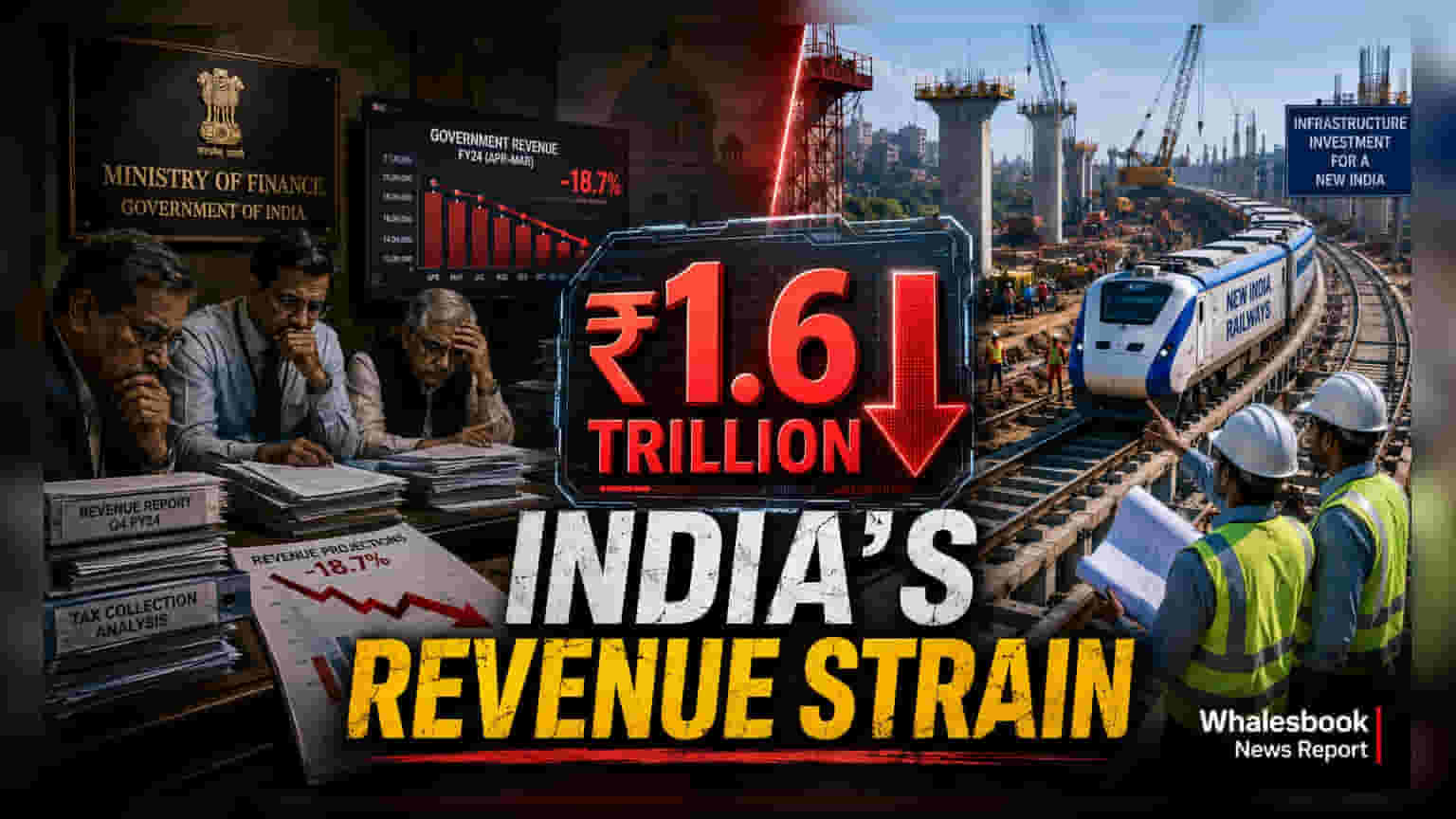
India’s fiscal deficit reached ₹1.6 trillion in April-May 2026, marking 10% of the annual budget estimate. While government revenue from taxes and other sources has slowed, spending on infrastructure projects continues to rise, impacting the country’s short-term financial balance.
The central government’s fiscal position faced a challenging start to the 2027 financial year. Data from the first two months shows that the fiscal deficit, or the gap between what the government earns and what it spends, has reached ₹1.6 trillion. This accounts for roughly 10% of the total budget target for the entire year, a noticeable increase compared to the 6% rate usually seen during this period in previous years.
Revenue Shortfall Amidst Lower Collections
A primary factor behind this strain is a decline in government income. Net tax revenues fell by 2% during April and May compared to the same months last year. This is a sharp reversal from the 28% growth observed in the early months of the previous fiscal year. Non-tax revenues, which include dividends and fees, also saw a 2% contraction. Notably, income from the government’s plan to sell stakes in state-owned companies or monetize assets has remained low, missing expectations.
Infrastructure Spending Continues to Lead
Despite the pressure on income, the government has maintained a high pace of capital spending. This money is primarily directed toward long-term assets, such as building railways and providing financial transfers to state governments. In the first two months, capital spending grew by 13% year-on-year. Out of the total ₹12.2 trillion allocated for infrastructure expansion this year, ₹2.5 trillion has already been deployed. While this spending is intended to stimulate the broader economy, it has contributed to a total expenditure increase of 18% during this period.
Impact of Rising Subsidies and Interest
Beyond infrastructure, the government is managing higher costs in other areas. Fertilizer subsidies have reached ₹345 billion, which is significantly above the historical average of ₹200 billion for this period. Additionally, interest payments on existing debt and increased spending on defense have added to the total expenditure. These categories, along with pensions and state transfers, now represent 80% of all government spending.
How the Government Manages Cash Flow
To manage these costs, the government has become increasingly dependent on dividends from the Reserve Bank of India, which accounted for 82% of all non-tax revenue in this two-month window. Furthermore, strong inflows into the National Small Savings Fund, which jumped 85%, have provided a stable source of cash. This has allowed the government to cover its immediate obligations and manage its debt repayments effectively. Investors will likely track the government's ability to boost tax collections in the coming months, as this will be critical in deciding whether the fiscal deficit remains within the budgeted limits for the remainder of the year.