 Whalesbook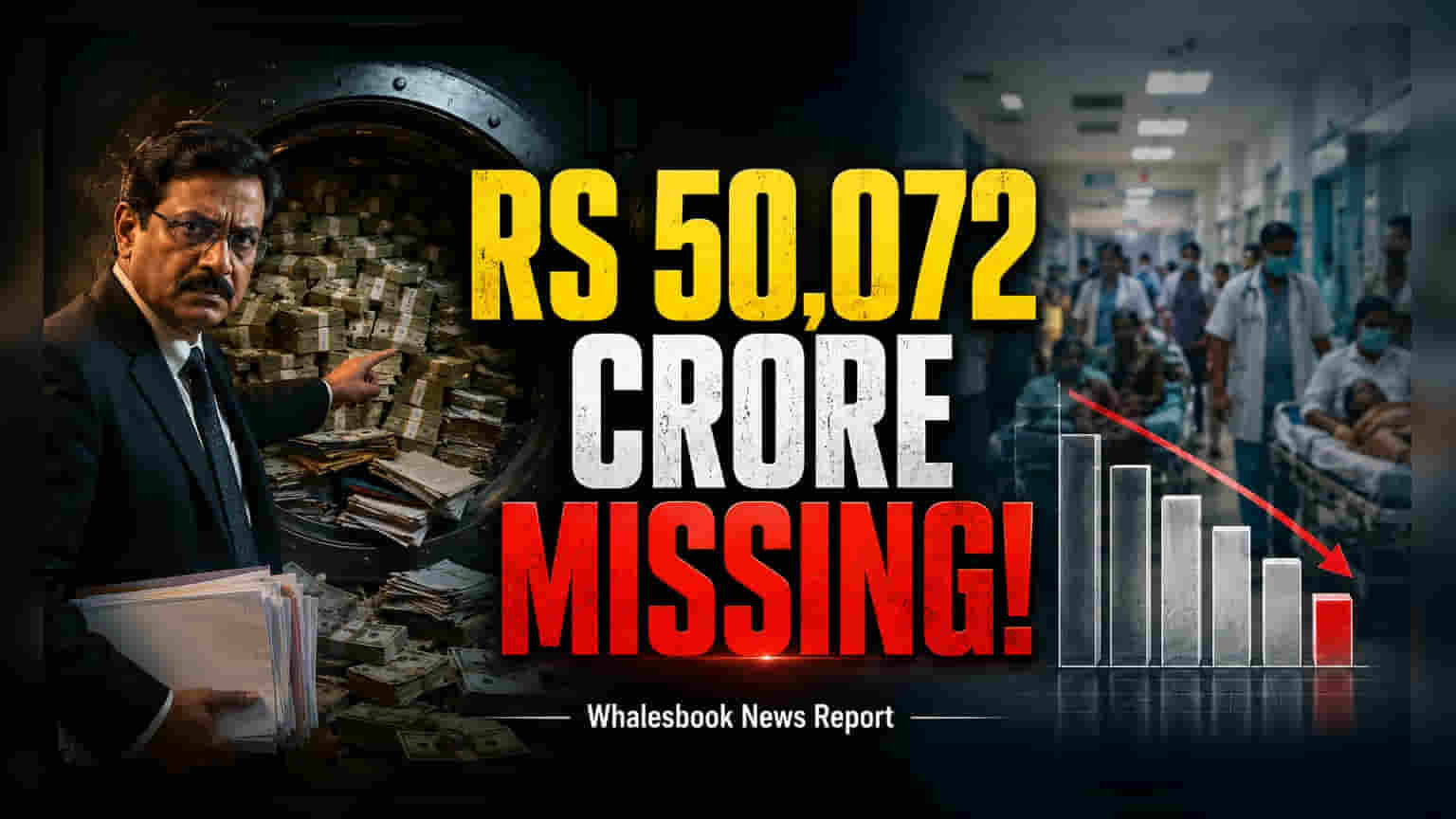


Health Cess Shortfall Revealed by CAG Audit
A critical audit by the Comptroller and Auditor General of India (CAG) has highlighted significant issues with financial oversight at the Union Ministry of Health and Family Welfare, specifically concerning health cess collections.
Health Cess Collection Shortfall
The CAG's report for the 2024-25 fiscal year reveals that out of Rs 96,627 crore collected as health cess between 2018-19 and 2024-25, a substantial Rs 50,072 crore was not transferred to the correct public accounts. This represents nearly 52 percent of the total collected funds. For the 2024-25 period alone, Rs 6,646 crore of the Rs 21,085 crore collected was not distributed from the Pradhan Mantri Swasthya Suraksha Nidhi.
Calls for Financial Accountability
The public health advocacy group Jan Swasthya Abhiyan India (JSAI) is demanding answers from Union Finance Minister Nirmala Sitharaman. JSAI questions the delayed establishment of separate accounting heads for health and education cess, which only occurred in March 2024. The group also points to repeated CAG objections and questions why constitutional provisions were reportedly ignored.
The Ministry of Health has stated that the Finance Ministry is responsible for collecting and transferring these cess funds.
Transparency Concerns and Unspent Budgets
According to the CAG, no satisfactory explanation was provided for these "short transfers." JSAI argues that consolidating these designated funds into the Consolidated Fund makes it unclear if they are used for their intended public health purposes, thereby undermining financial accountability.
Further compounding the issue, the Union Ministry of Health and Family Welfare has reportedly struggled to fully utilize its allocated budget for key areas such as human resources, medical education, and general health initiatives. Significant portions of approved budgets remain unspent over the last three years for various schemes, including the Pradhan Mantri Ayushman Bharat Health Infrastructure Mission.
Potential Impact on Public Health Infrastructure
JSAI estimates that the Rs 50,072 crore not transferred could have made a significant impact on India's public health infrastructure. The organization suggests these funds could have supported the creation of over 100 new district hospitals and 100 government medical colleges. Additionally, these funds could have been used to upgrade primary and community health centers and to hire and adequately compensate healthcare professionals in underserved rural and tribal areas, which are currently facing severe staff shortages.