

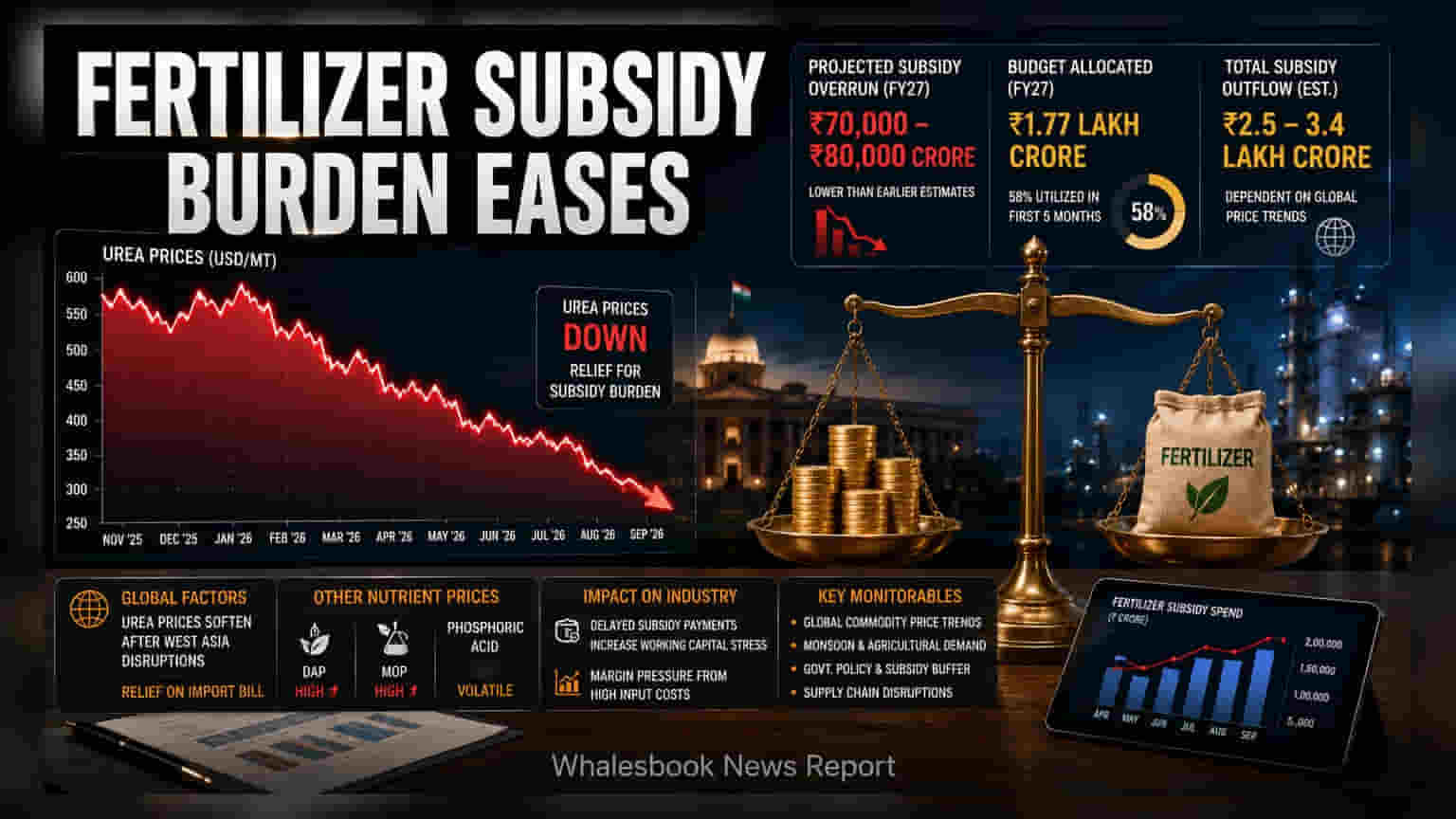
The government estimates an additional fertilizer subsidy requirement of Rs 70,000–80,000 crore for FY27, as total expenditures remain elevated. While cooling global urea prices have provided some relief, the exhaustion of 58% of the annual budget in the first five months continues to pressure the national exchequer and the fertilizer industry.
The central government is grappling with a projected fertilizer subsidy overrun of Rs 70,000 to Rs 80,000 crore for the current fiscal year. While this figure is lower than earlier, more pessimistic forecasts, it highlights a significant challenge in managing the national budget amid volatile global commodity markets.
Fiscal Pressure and Budget Utilization
Budget estimates for FY27 had allocated approximately Rs 1.77 lakh crore toward fertilizer subsidies. However, government data indicates that over 58% of this annual budget was exhausted within the first five months of the fiscal year. This rapid depletion of funds underscores the sustained pressure on the exchequer, driven by the need to maintain affordable fertilizer prices for farmers despite high input costs. Even with recent corrections, total subsidy outflows for the year are projected by some analysts to potentially range between Rs 2.5 lakh crore and Rs 3.4 lakh crore, depending on how global prices behave for the remainder of the season.
The Mixed Impact of Global Price Trends
The revision in the subsidy overrun estimate is largely tied to a drop in international urea prices. After reaching seasonal highs earlier this year—fueled by supply chain disruptions in West Asia—urea prices have softened significantly. This stabilization has reduced the immediate burden for one of the most widely used fertilizers. However, this relief is not uniform. Prices for other essential nutrients, such as di-ammonium phosphate (DAP), muriate of potash (MOP), and key inputs like phosphoric acid, have remained high or shown volatility. The increased cost of these nutrients offsets some of the savings gained from lower urea import bills, preventing a more substantial decline in the total subsidy requirement.
Impact on the Fertilizer Industry
For investors and fertilizer manufacturers, this situation creates a complex operational environment. Fertilizer companies often rely on government subsidy payments to manage their working capital. A higher-than-budgeted subsidy bill can lead to delays in these payouts, potentially increasing debt levels for manufacturers as they wait for government reimbursements. Furthermore, companies may face margin pressure if they cannot fully pass on the rising costs of non-urea fertilizers to farmers, who are protected by the government’s Nutrient Based Subsidy scheme.
Looking ahead, the final subsidy expenditure will depend heavily on the intensity of the monsoon and the resulting agricultural demand for the upcoming cropping seasons. Investors may monitor factors such as global commodity price trends, government policy adjustments regarding the subsidy buffer, and the impact of potential supply chain disruptions on raw material costs. The ability of the government to manage its fiscal deficit while ensuring adequate domestic availability of fertilizers will remain the primary monitorable for the sector.