

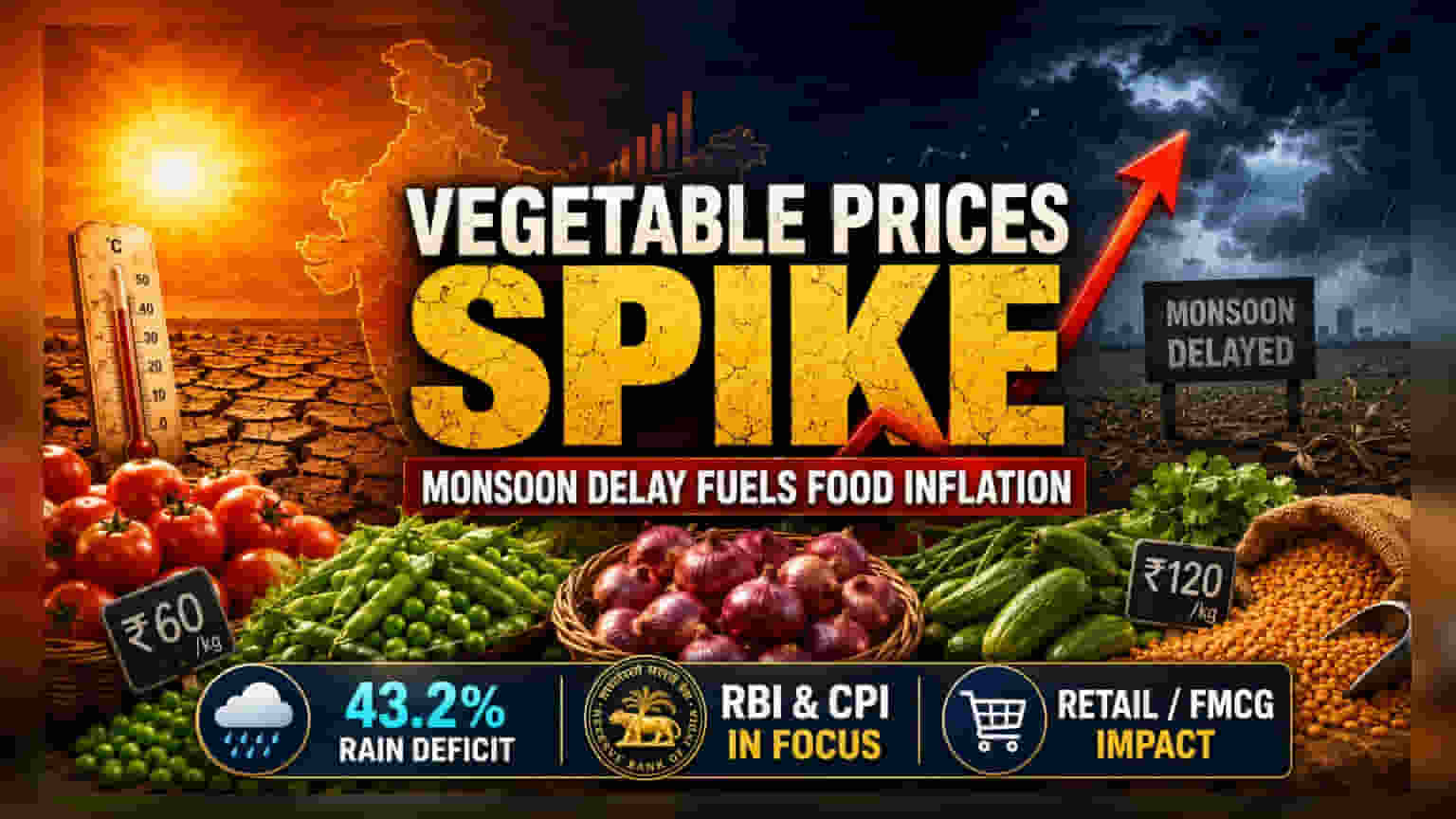
Vegetable inflation rose in May, with several key items seeing double-digit price hikes. A 43.2% monsoon rainfall deficit, combined with heatwaves, is threatening supply and potentially increasing food inflation. This scenario impacts the broader economic outlook, influencing how investors view interest rates and margins in the retail and FMCG sectors.
What Happened
Vegetable prices in India have seen a sharp rise, with data from May 2026 showing double-digit inflation for eight out of seventeen key food items. Items such as tomatoes, pulses, and green peas have recorded significant price increases. This shift has pushed the inflation rate for this specific group of food products to 4.3%, according to official data. This trend reflects growing supply-side concerns, as erratic weather patterns begin to impact the availability of essential produce in local markets.
Why Weather Is Impacting Supply
The rise in prices is largely driven by a combination of extreme heatwaves and a delayed monsoon. As of June 23, 2026, cumulative rainfall in India shows a deficit of 43.2% from the normal level. This lack of rain, following a period of high temperatures, has made it difficult for farmers to manage seedling planting and crop cycles. Horticulture experts note that while some areas rely on irrigation, a significant portion of vegetable cultivation depends on monsoon conditions. If the rainfall deficit continues, it could lead to reduced crop yields and sustained supply constraints in the coming months.
Economic And Market Impact
Rising food inflation is a primary concern for the Reserve Bank of India (RBI), as food prices carry significant weight in the Consumer Price Index (CPI). When vegetable prices spike, it impacts overall headline inflation, potentially limiting the central bank’s ability to consider interest rate adjustments. Economists note that while foodgrain stocks remain stable, the volatility in vegetables, pulses, and edible oils adds pressure to the consumption basket. For the broader economy, persistent food inflation can squeeze household disposable income, which may affect demand in discretionary categories.
Impact On Retail And FMCG Stocks
Investors often look at how rising raw material costs affect the FMCG (Fast-Moving Consumer Goods) and retail sectors. For large food retailers like Avenue Supermarts (DMart) or the retail divisions of conglomerates like Reliance Industries, price volatility can impact inventory management and profit margins. FMCG companies, such as Nestle India or ITC, often manage the impact of raw material inflation through price hikes or packaging adjustments. However, if vegetable and pulse inflation remains high for an extended period, it may influence pricing power and quarterly profit margins for companies in the food and beverages space.
What Investors Should Track Next
The key monitorable for the market is the progress of the Southwest monsoon over the coming weeks. A recovery in rainfall could help normalize the crop cycle and alleviate supply pressures. Investors may also track RBI’s upcoming monetary policy commentary for any shift in stance regarding inflation management. Additionally, watching monthly CPI data for food inflation trends will provide clarity on whether these price spikes are temporary or represent a more persistent challenge for the economy.