

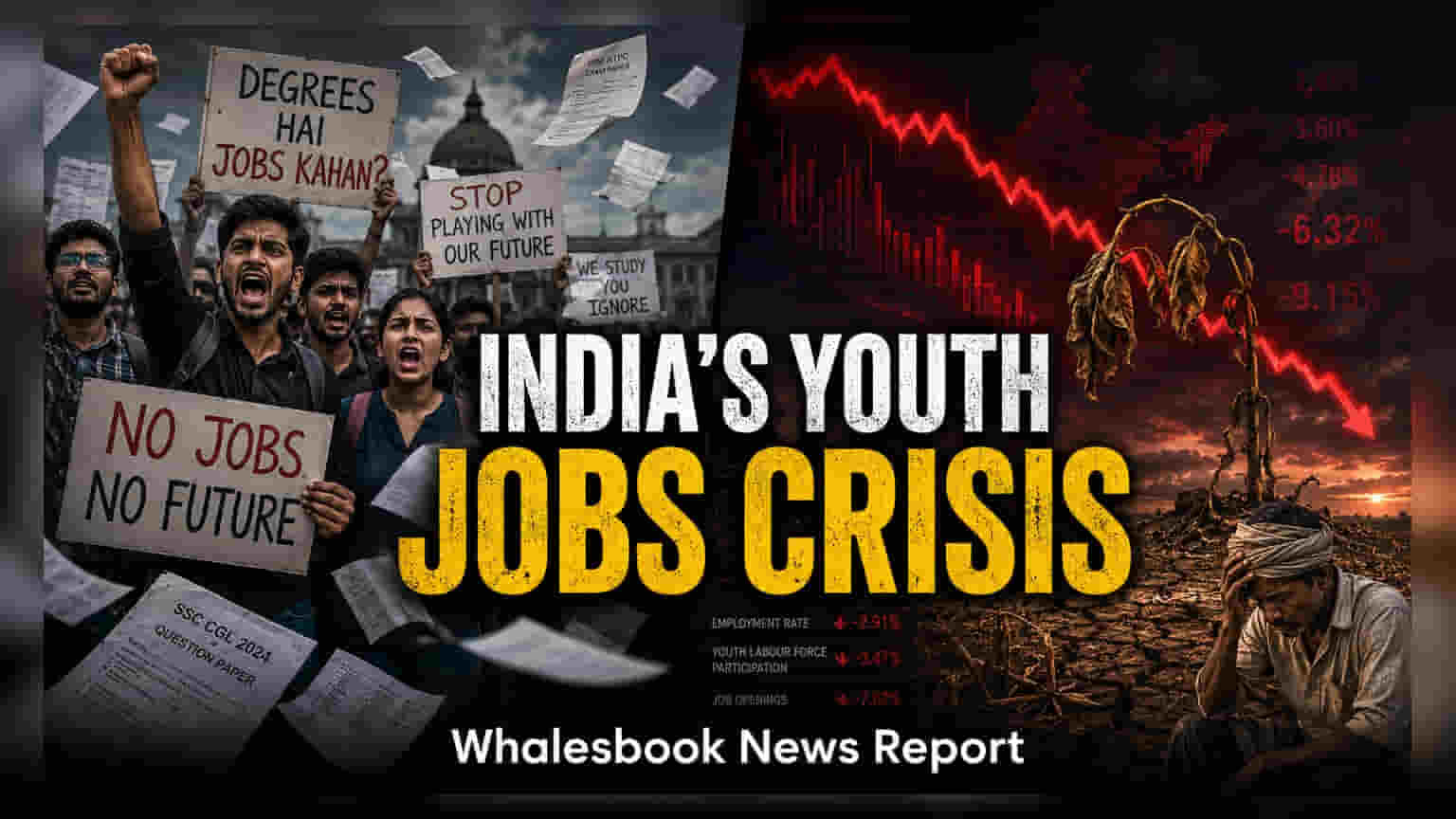
High youth unemployment and recurring exam leaks have highlighted structural issues in India's labor market. As the country aims to leverage its large working-age population, concerns are mounting over job quality, stagnant wage growth, and the widening gap between education and industry requirements.
India is currently navigating a period of significant economic tension, as high youth unemployment and systemic issues in examination integrity become central to the national discourse. While overall national unemployment figures remain relatively stable at approximately 5.5% as of June 2026, the specific data for the 15-29 age group tells a different story. According to the latest Periodic Labour Force Survey (PLFS), youth unemployment has climbed to 16.2%, signaling a mismatch between the country's economic growth and the availability of quality employment for new workers.
Structural Challenges in Employment
The central concern for many economists and market observers is not just the count of jobs, but the quality of work being created. Recent data indicates that a substantial portion of employment growth has been concentrated in the agricultural sector, which typically offers lower wages and less job security compared to the manufacturing and formal service sectors. This trend is a departure from the traditional economic path where emerging economies successfully transition workers from farms to factories. For investors, this shift is critical because it impacts consumption power and, by extension, the growth potential of consumer-facing industries.
Impact of Exam Integrity
The integrity of national examinations has become a major hurdle, with high-profile paper leaks, such as those impacting the NEET and UGC-NET exams, causing widespread public frustration. These incidents have strained trust in government-led recruitment and testing processes. In response, the government introduced the Public Examinations (Prevention of Unfair Means) Amendment Bill, 2026, to introduce stricter penalties for malpractices. However, the recurring nature of these issues and the subsequent leadership changes at the Ministry of Education have led analysts to suggest that legislative fixes alone may not solve the underlying anxiety surrounding the future of the nation’s youth.
Why Investors Are Watching
For stock market participants, the health of the labor market is a key indicator of long-term economic stability. India’s “demographic dividend”—the economic growth advantage gained from having a large working-age population—depends entirely on the ability of the economy to provide productive, high-value roles for young workers. If the current trend of stagnant real wage growth and high youth underemployment persists, it could limit the expansion of the middle class, which is a primary driver of corporate earnings in sectors like retail, banking, and automobiles.
Furthermore, the quality of the workforce directly affects the competitiveness of the manufacturing and services sectors. Companies across the country are increasingly focusing on internal vocational training and skill-development programs to bridge the gap between academic output and industry needs. The ability of the government and the private sector to effectively channel youth into high-demand areas like electronics manufacturing, digital services, and green energy will be the most significant monitorable in the coming quarters. Investors should continue to track policy announcements regarding industrial job creation and education reform as indicators of how successfully India can address these systemic labor challenges.