

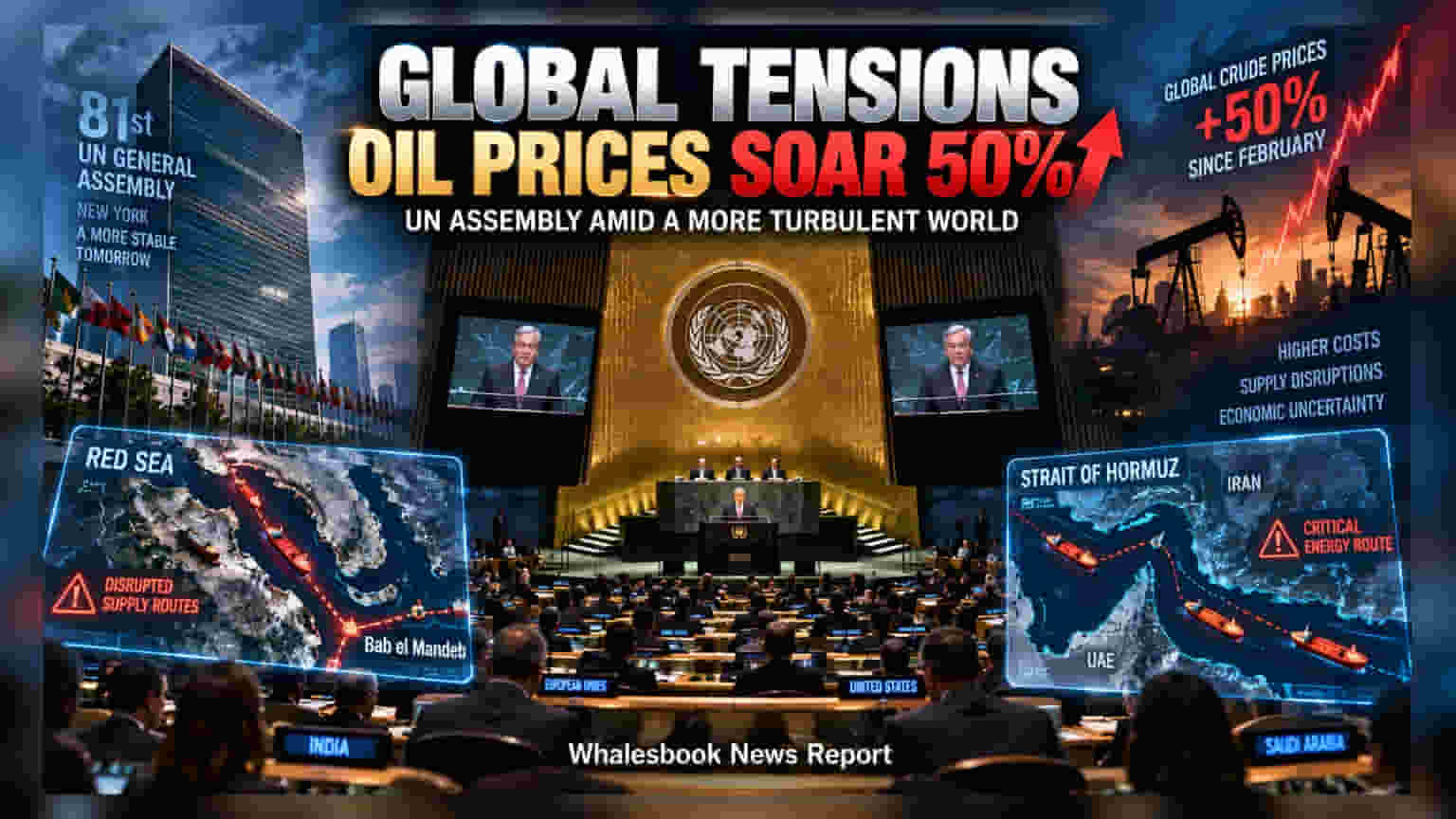
Global crude oil prices have surged more than 50% since February, fueled by supply disruptions in the Red Sea and ongoing conflicts in Ukraine and the Middle East. This sharp increase presents a major challenge for India, which relies heavily on energy imports, potentially raising inflation and straining fiscal health. Investors are closely tracking how these rising energy costs might impact the Indian economy and corporate profit margins.
The 81st session of the United Nations General Assembly has begun in New York amidst significant global instability. For Indian investors, the most critical development is the sharp rise in global crude oil prices, which have climbed over 50% since February. This price surge is primarily driven by mounting tensions in the Middle East and the conflict in Ukraine, both of which have severely disrupted essential energy shipping lanes, including the Red Sea and the Strait of Hormuz.
Rising Energy Costs and Indian Fiscal Risks
India remains heavily dependent on energy imports, meaning that any sustained spike in global crude prices directly pressures the domestic economy. Economic analysts frequently note that when crude oil prices rise, the cost to the Indian exchequer increases significantly. While estimates vary, the broader consensus is that every dollar increase in crude oil prices adds billions to the import bill, which can impact the Current Account Deficit and domestic inflation levels. As energy costs rise, the government's fiscal planning faces increased uncertainty. Furthermore, higher input costs for energy can place pressure on corporate profit margins, particularly for sectors like transportation, cement, chemicals, and manufacturing that rely on oil derivatives.
Global Supply Chains Under Strain
The current geopolitical situation has created one of the most severe supply chain disruptions in recent years. The Bab el Mandeb strait, a crucial maritime chokepoint, has seen activity effectively challenged, leading to the constriction of energy flows. Simultaneously, the conflict in Ukraine has intensified, with industrial-scale warfare affecting infrastructure and energy stability in the region. The combination of these factors has created a supply-side shock that keeps global energy prices at elevated levels.
The attendance of global leaders at the 81st UN General Assembly session highlights the severity of these crises. Markets are now looking for any signs of diplomatic progress or de-escalation that could potentially stabilize energy corridors and mitigate inflationary shocks. For investors, the key monitorables over the coming weeks will include government commentary on fiscal management, potential adjustments to domestic fuel pricing, and how companies across various sectors manage the squeeze on their operating margins. As the situation remains fluid, financial markets are likely to stay sensitive to any updates regarding the security of major energy supply routes.