

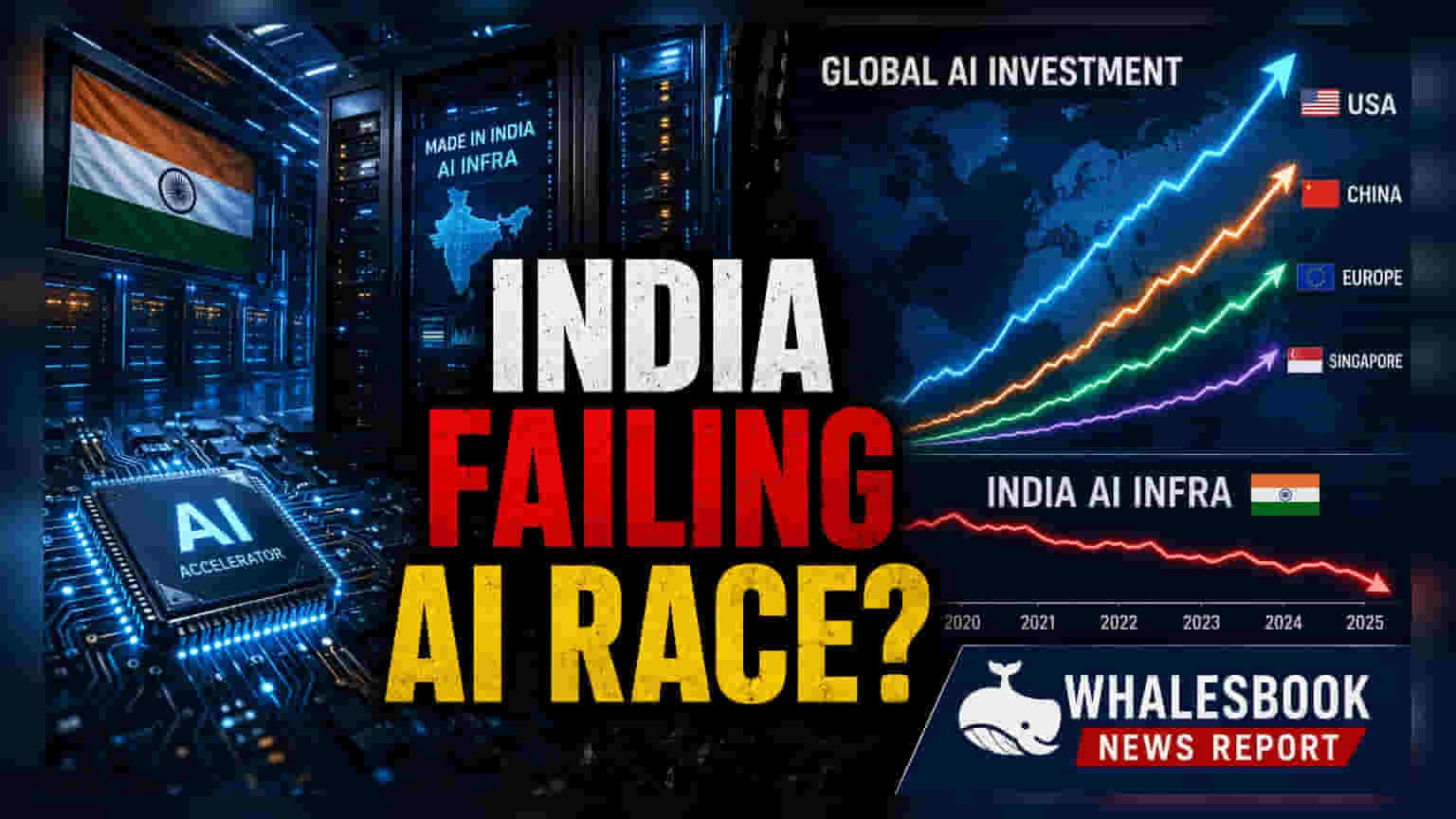
A report by Mitsubishi UFJ Financial Group (MUFG) warns that India risks falling behind in the global AI race due to insufficient investment in hardware and energy. With the US projected to spend $2 trillion on AI infrastructure by 2026 against India's $95 billion, the study highlights an urgent need to build data centers, semiconductors, and power capacity to keep pace.
What Happened
India may struggle to maintain its competitive edge in the global artificial intelligence sector unless it significantly boosts spending on physical infrastructure. A new report titled "The AI Capital Expenditure Supercycle" by the Mitsubishi UFJ Financial Group (MUFG) points out that the global AI landscape is shifting from software innovation to physical capacity. To lead in this space, countries now need massive investments in semiconductor manufacturing, data centers, advanced chips, and reliable electricity supply. The report suggests that India’s current investment trajectory may not be enough to catch up with global leaders in this new hardware-driven phase of AI development.
The Investment Gap
The report highlights a major difference in spending power between India and developed economies. By 2026, the United States is expected to invest $2 trillion in AI-related infrastructure, software, and services. In contrast, India’s estimated investment is $95 billion. This disparity is also visible in corporate capital spending. Currently, AI-related projects make up about 23% of total capital expenditure in the US, while in India, this figure sits at only 0.6%. This indicates that while the US is aggressively building the hardware foundation for AI, India is lagging behind in allocating funds toward the physical assets required for long-term growth.
Why This Matters For Investors
For investors, this shift is critical because the future of AI value is moving toward hardware and infrastructure. India’s strong IT services sector has historically focused on software development and digital transformation. However, the MUFG report argues that future AI leadership will depend on "physical capital," such as the availability of advanced chips and massive data centers. If India remains a service-heavy hub without building the underlying infrastructure, it could face a long-term disadvantage. The ability of the country to scale up its data center capacity and secure reliable energy sources will likely determine how well its tech industry participates in the next wave of AI growth.
The Bottlenecks To Watch
MUFG identified several key risks that could hinder AI adoption, with electricity and hardware availability at the top of the list. Advanced AI systems require immense amounts of energy, making power generation and grid stability a potential defining constraint for companies building large data centers. Furthermore, the global reliance on a few regions, particularly Taiwan, for advanced semiconductor manufacturing remains a significant geopolitical risk. As global companies increase spending to secure memory chips and raw materials, India’s ability to participate in this supply chain will be a key factor for its economic trajectory.
What Investors Should Track
Investors may want to monitor developments in India’s data center real estate, power sector capacity, and the government’s efforts to incentivize semiconductor manufacturing. The key monitorable will be whether Indian companies, especially those in the IT and industrial sectors, can successfully expand their hardware-integrated AI services or if they remain tied to traditional software models. Tracking the capital spending trends of major Indian tech and infrastructure firms compared to their global peers could provide insight into how the country is closing the infrastructure gap.