 Whalesbook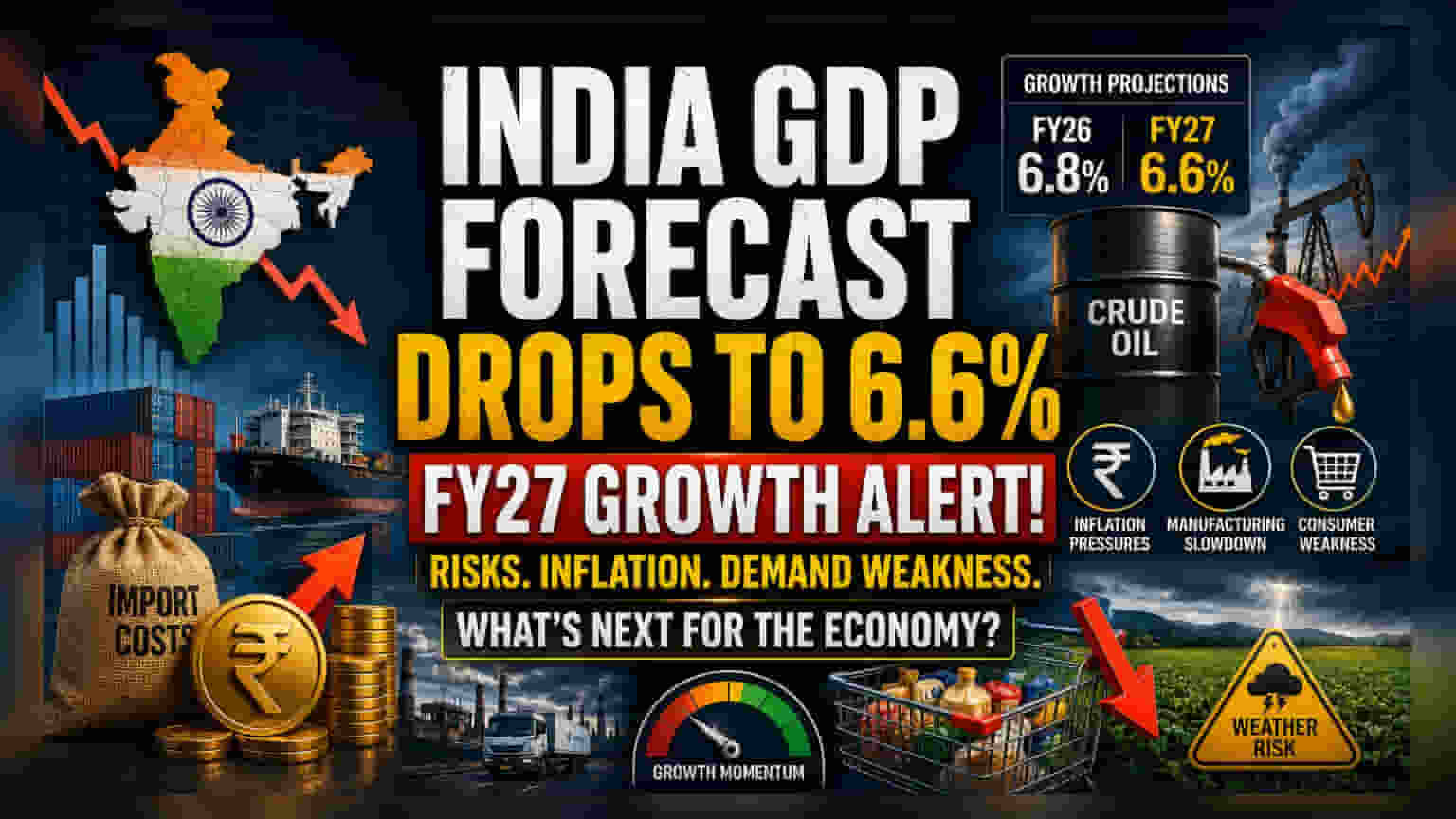


The Macro Compression
The projected deceleration to 6.6% for fiscal year 2027 represents a critical inflection point for the Indian economy, signaling that the post-pandemic recovery tailwinds are effectively exhausted. While recent quarters benefitted from strong government-led capital formation, the shift toward a more cautious output forecast reflects a vulnerability to external variables that domestic policy alone cannot offset. The primary friction stems from the interplay between persistent supply-chain fragility in West Asia and the resulting upward pressure on global commodity pricing, which directly threatens the cost-plus models of Indian manufacturers.
Industrial Friction and Consumption Divergence
Recent data points toward a widening gap between urban discretionary spending and essential consumption. While the automotive sector maintained a high-velocity trend through the final quarter, the softness in Fast-Moving Consumer Goods indicates that the household budget is becoming increasingly strained by inflationary pressures. Manufacturing output, which slowed to a 4.9% expansion rate in the most recent quarter, is clearly struggling against the weight of logistical inefficiencies. When measured against peer emerging markets, India’s reliance on capital expenditure as a singular engine of growth appears increasingly risky if private consumption fails to provide a stabilizing floor during the coming fiscal cycle.
The Structural Risk Assessment
Beyond the immediate geopolitical concerns, the structural integrity of the FY27 growth target faces severe stress from potential monetary policy tightening. If global energy prices maintain their current elevated profile, the Reserve Bank of India may find its capacity to stimulate growth constrained by the need to manage imported inflation. Furthermore, the reliance on public sector spending, while effective in the short term, introduces a dependency trap. Should the fiscal deficit expand due to higher fertilizer and fuel subsidies, the government’s ability to sustain its aggressive capital expenditure program will be tested. Any deviation from the current fiscal consolidation path could trigger market volatility and raise borrowing costs for private enterprises already struggling with demand uncertainty.
The Sensitivity of Future Growth
Looking beyond the fiscal projections, the agricultural outlook serves as a significant wildcard. The possibility of weather-driven disruptions remains a non-zero risk, capable of triggering localized food inflation that would inevitably stifle rural demand. While the government’s implementation of stabilization funds for aviation fuel suggests a proactive stance toward supply chain protection, these measures represent a reactive rather than a generative approach to economic resilience. Investors should monitor the divergence between service sector performance and industrial output as the most reliable leading indicator for potential further downward revisions to growth guidance in subsequent quarters.