

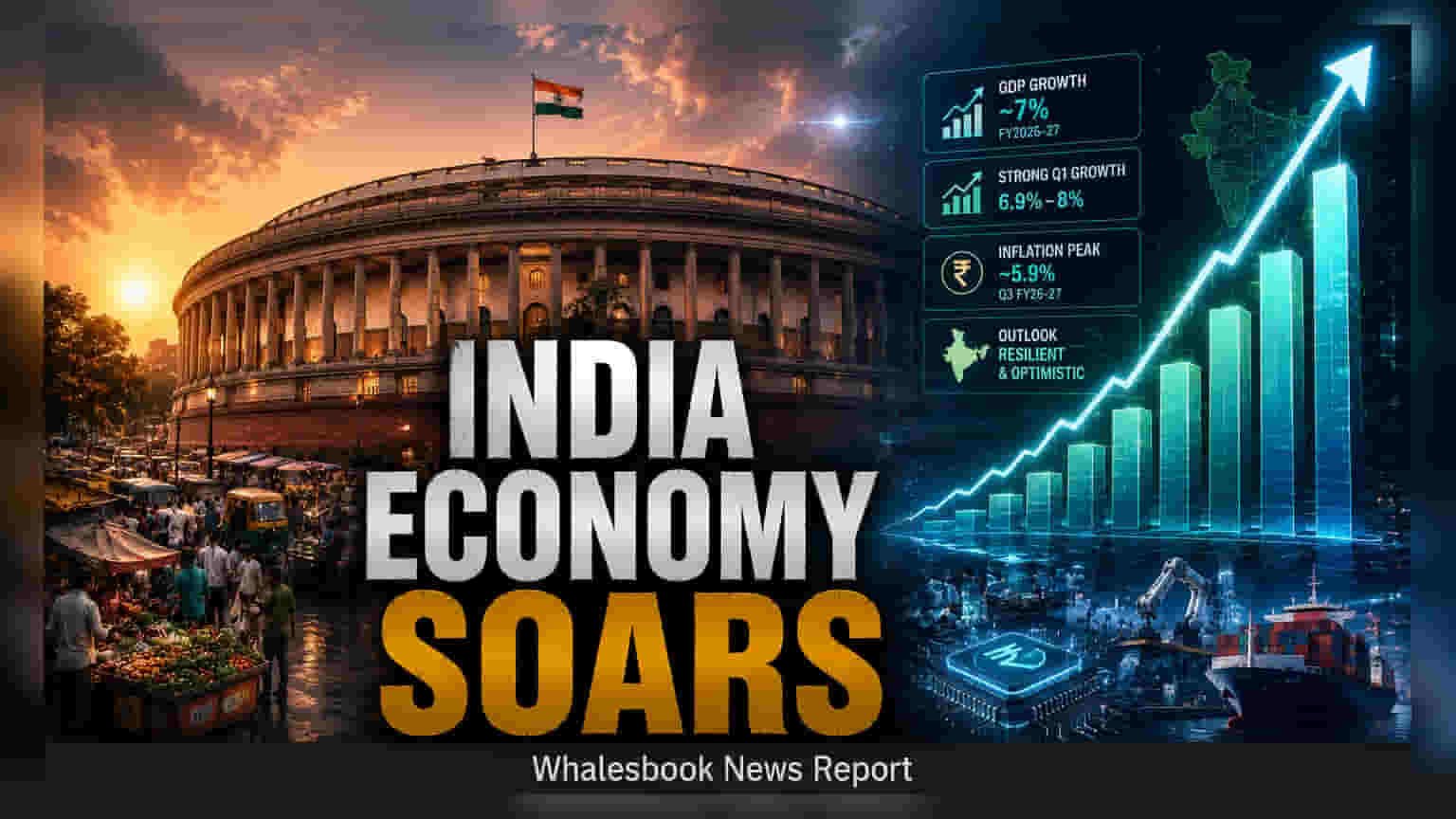
India's economy is expected to grow near 7% in the current fiscal year, outpacing the Reserve Bank of India's earlier 6.7% estimate. Despite this strong outlook, the potential for interest rate hikes to manage inflation remains a key monitorable for investors and businesses.
India's economic growth could reach nearly 7% in the current financial year (FY2026-27), performing better than the Reserve Bank of India’s (RBI) initial projection of 6.7%. This optimistic outlook, shared by RBI Deputy Governor Dr. Poonam Gupta, is largely driven by robust activity during the April-June first quarter. Economists are currently estimating growth for this period to land between 6.9% and 8%, signaling a strong start to the year.
While the growth narrative remains positive, the central bank’s approach to interest rates is a critical factor for investors. In the August 2026 meeting, the RBI maintained the repo rate at 5.25% with a neutral stance. However, minutes released on August 19, 2026, suggest a shift in tone. Some members, including Dr. Gupta, have signaled that the central bank may consider raising interest rates later this year if inflationary pressures intensify.
This hawkish leaning highlights the RBI's ongoing challenge: balancing economic expansion with the need to curb inflation, which is projected to peak at approximately 5.9% in the third quarter of 2026-27. For the stock market, sustained high interest rates can increase borrowing costs for companies, potentially affecting profit margins for debt-heavy sectors.
Beyond domestic policy, the Indian economy is currently navigating a complex global environment often described as a 'triple shock.' This includes elevated global energy prices, the impact of new trade tariffs from the United States, and broader geopolitical uncertainty in West Asia. These factors, alongside climate risks such as uneven monsoon patterns that can affect agricultural output and rural consumer demand, form a significant part of the economic outlook.
Despite these hurdles, the country's external accounts are showing signs of improvement, with expectations of a potential shift to a balance of payments surplus this year. Investors should continue to monitor upcoming RBI Monetary Policy Committee (MPC) meetings and high-frequency data on inflation. The central bank’s decision on whether to hold or hike rates will be the next major trigger, as it will determine the cost of capital for businesses and the sentiment for interest-rate-sensitive sectors in the coming months.