

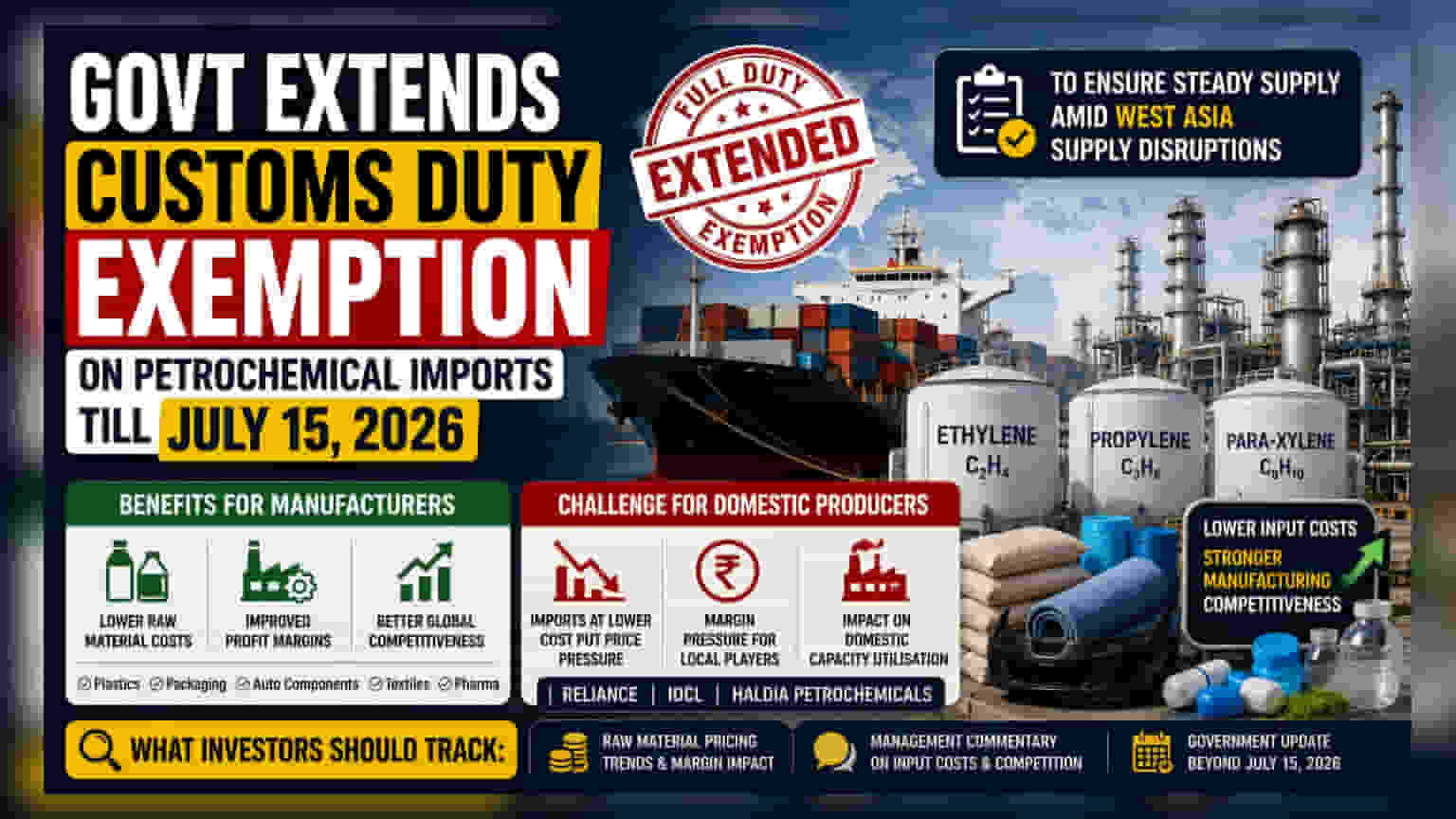
The Indian government has extended the customs duty exemption on select petrochemical imports until July 15, 2026. This policy aims to lower raw material costs for domestic manufacturers facing supply chain volatility. While this provides relief to downstream industries, it introduces competitive pricing dynamics for domestic producers.
What Happened
The central government has extended the full customs duty exemption on the import of specific petrochemical products until July 15, 2026. This policy update is designed to ensure a steady supply of critical industrial raw materials, which have seen supply chain disruptions due to geopolitical tensions in West Asia. By allowing these imports without the standard customs duties, the government aims to keep manufacturing input costs manageable for Indian companies.
Impact On Manufacturers
This decision provides immediate relief to industries that rely heavily on petrochemicals as a primary raw material. Sectors such as plastics, packaging, automotive components, textiles, and pharmaceuticals stand to benefit from lower procurement costs. When raw material costs are predictable and stable, these companies can manage their profit margins more effectively. For these downstream manufacturers—those who convert raw petrochemicals into finished goods—this duty waiver helps them maintain competitiveness against global alternatives.
The View For Domestic Producers
While downstream manufacturers benefit from cheaper imports, this policy creates a different environment for large domestic petrochemical producers. When the cost of imported raw materials is reduced, it creates price pressure on local manufacturers like Reliance Industries, Indian Oil Corporation (IOCL), and Haldia Petrochemicals. These domestic companies must often adjust their prices to remain competitive with the influx of duty-free imports. If the price difference becomes too wide, it can put pressure on the profit margins of these producers. Investors often watch this dynamic closely, as it represents a balance between supporting manufacturing growth and protecting domestic industrial capacity.
Why Global Supply Chain Matters
Petrochemical prices are often tied to global crude oil and natural gas prices, as well as the stability of shipping routes. Geopolitical conflicts, particularly in West Asia, have historically caused volatility in shipping and supply, leading to shortages or price spikes. The government’s decision to extend this waiver is a direct response to this instability, ensuring that Indian factories do not face a raw material crunch while global supply chains are still finding their footing.
What Investors Should Track Next
Investors may monitor the raw material pricing trends in upcoming quarterly results for companies across these sectors. Specifically, keep an eye on management commentary regarding input cost management for downstream users and the impact of import competition on the margins of major domestic petrochemical producers. Additionally, watch for any government updates closer to July 15 regarding whether this duty exemption will be phased out or extended further, as this will have a direct impact on the cost structures of affected industries.