

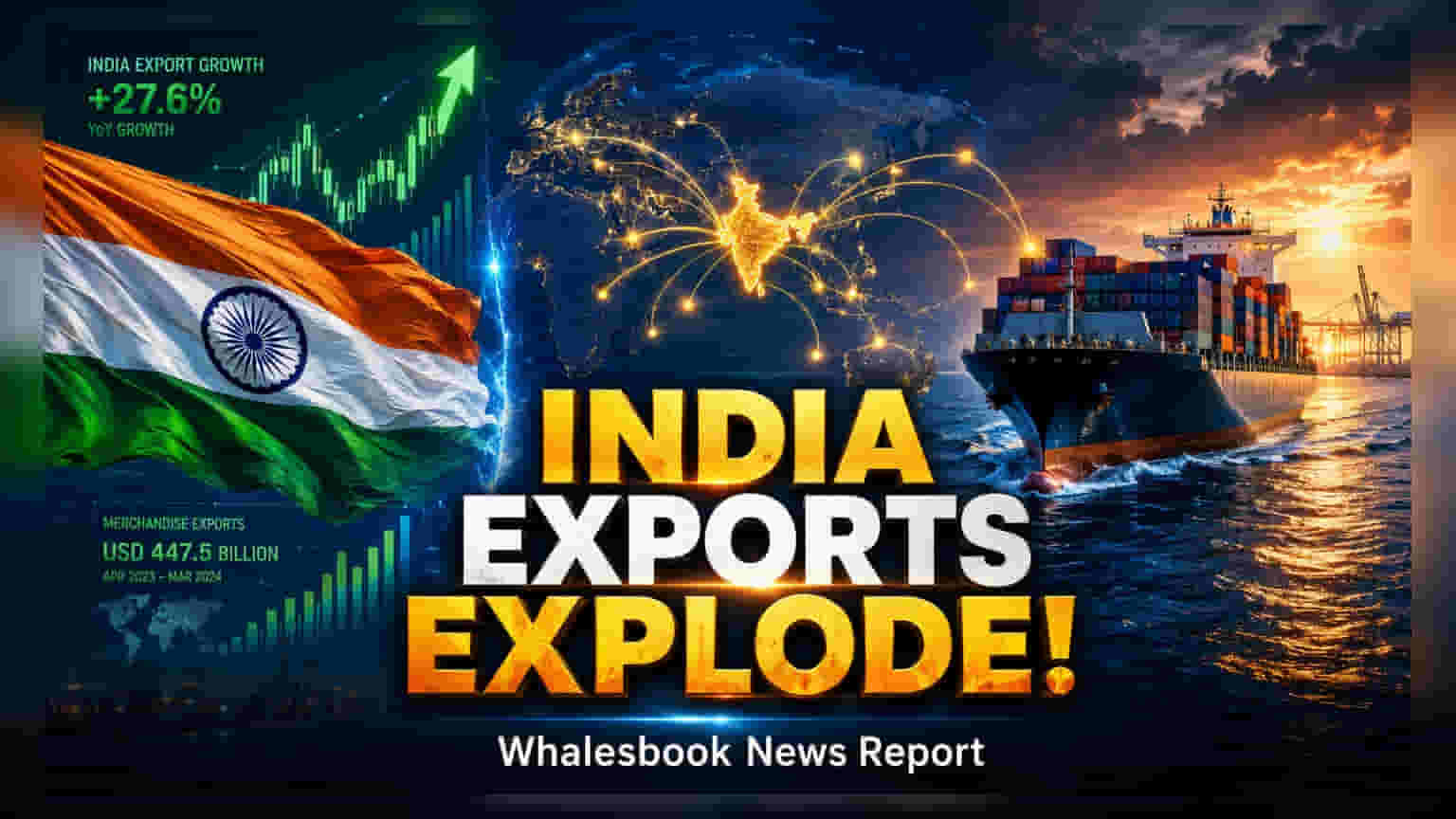
India’s exports to Singapore and Sri Lanka surged over 100% in the April-June 2026 quarter, boosting total trade performance. While increased use of Free Trade Agreements is driving this growth, the overall economy faces pressure from a widening trade deficit.
India’s international trade saw a strong start in the 2026-27 fiscal year, with exports to key Free Trade Agreement (FTA) partners registering sharp growth during the first quarter. Data for April-June 2026 shows that shipments to Singapore and Sri Lanka more than doubled compared to the same period in the previous year, highlighting the growing impact of trade pacts on the country’s outbound shipments.
Exports to Singapore climbed 101.2% to reach $6.52 billion, while shipments to Sri Lanka saw an even higher rise of 123.8%, totaling $2.35 billion. These gains were supported by a broader increase in trade across the ASEAN and SAFTA regions. For instance, exports to the ASEAN region grew by 61.6% to $14.61 billion, while SAFTA-bound shipments rose 36.6% to $8.40 billion.
The increase in trade volume coincides with a rising number of businesses utilizing trade pacts. The issuance of Certificates of Origin, which allow exporters to claim lower tariffs under these agreements, jumped to 7.8 lakh during the quarter. This indicates that Indian exporters are increasingly leveraging lower duties to make their products more competitive in these international markets.
Despite the positive export momentum, investors and policymakers are keeping a close watch on the country's broader trade balance. While total merchandise exports rose 16% to $129.32 billion in the first quarter, India's merchandise trade deficit hit a six-month high of $31.98 billion in July 2026. This widening gap is driven by faster growth in imports, particularly in essential categories like electronics, crude oil, and gold. A consistently high trade deficit can put pressure on the Indian rupee and impact the country's current account balance.
Looking ahead, the market will monitor how these trade dynamics evolve, especially following the operationalization of the India-UK trade agreement on July 15, 2026. The effectiveness of these partnerships in balancing trade flows, rather than just increasing export volumes, will be a key factor for the domestic economy. Investors may also track whether global supply chain shifts and potential tariff changes by major economies impact the sustainability of this export growth in the coming quarters.