

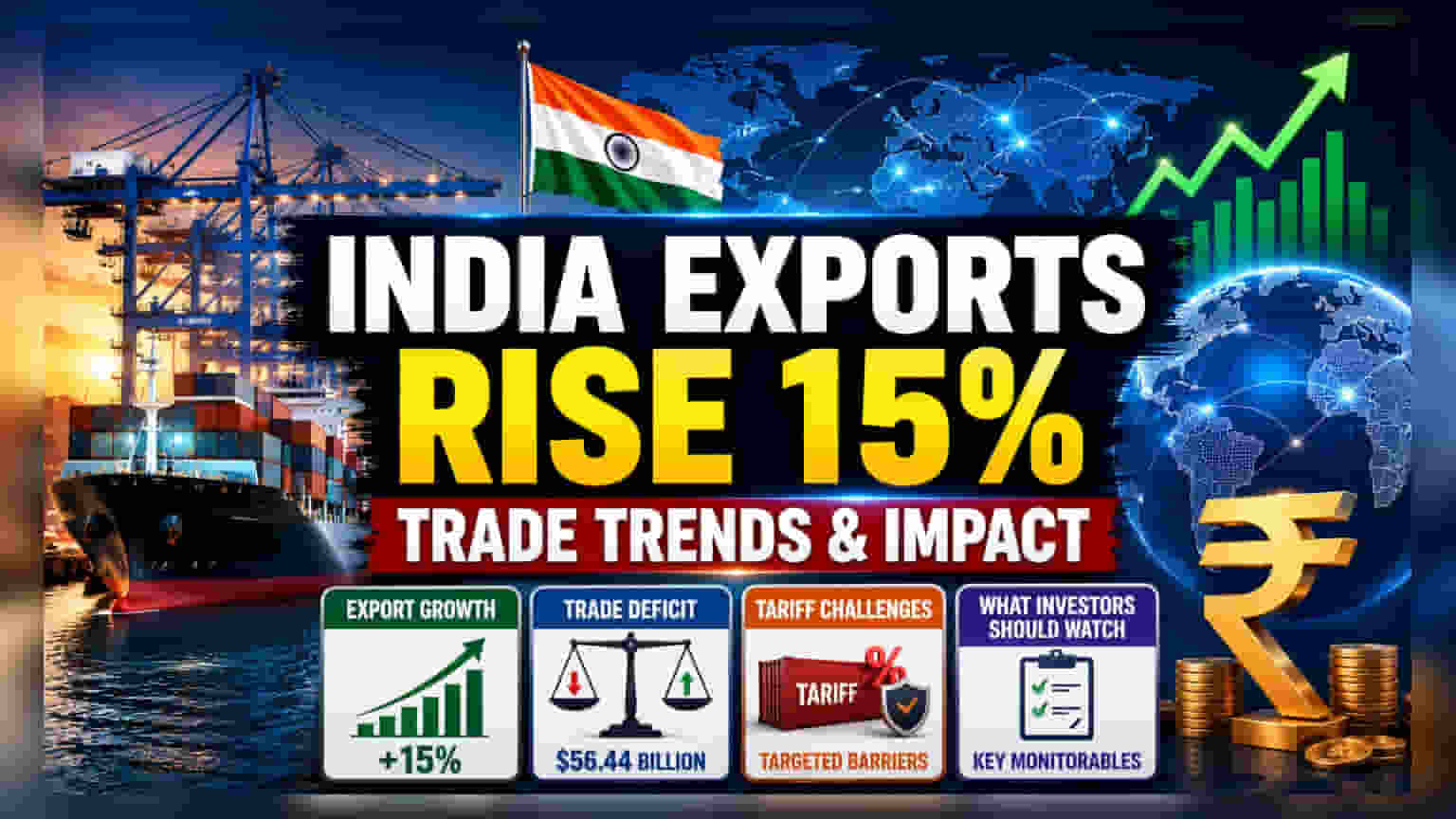
India’s merchandise exports rose by 15% between April 1 and June 14, 2026, showing resilience despite global economic challenges and specific US tariff actions. While the export growth is positive, the widening trade deficit—reaching $56.44 billion for April and May—remains a concern. Investors should watch how these trade trends impact the Indian Rupee and the performance of export-oriented sectors.
What Happened
India's merchandise exports have shown steady growth in the first quarter of the 2026-27 fiscal year. Between April 1 and June 14, 2026, the country's exports grew by approximately 15%, according to updates shared by Commerce and Industry Minister Piyush Goyal. This growth comes at a time when global trade is facing significant uncertainty and some international markets, including the United States, have implemented specific tariff barriers. This performance follows a strong May, where exports hit a six-month high of $45.2 billion.
Why The Trade Balance Matters
While the 15% growth in exports is a positive sign for the economy, the overall trade balance tells a more complex story. For the April-May 2026 period, while exports reached $88.91 billion, imports grew by 15.14% to $145.35 billion. This resulted in a trade deficit of $56.44 billion for the two-month period.
For investors, the trade deficit is a critical metric to watch. It represents the gap between what a country sells to the rest of the world and what it buys. When the deficit widens, it can put pressure on the Indian Rupee, as more foreign currency is required to pay for imports. If import bills—particularly for essentials like crude oil—continue to rise faster than export earnings, it can create risks for macroeconomic stability and currency value.
Understanding The Tariff Impact
Minister Goyal noted that this export performance is holding up even as some US policies include high tariffs on specific goods. It is important for investors to understand that these tariffs are not usually blanket taxes on all Indian products. Instead, they often target specific categories. The resilience in export growth suggests that Indian manufacturers are finding demand in other markets or that their specific products remain competitive despite these barriers. However, if such protectionist measures expand to other key sectors, export-oriented companies may face higher costs or lower margins in those markets.
Sectoral Implications
Export-heavy industries such as engineering goods, chemicals, and pharmaceuticals are usually the first to be affected by shifting trade policies. Investors in these sectors should look beyond overall growth numbers and track whether these companies are able to maintain profit margins. If global demand slows down or if more countries introduce similar tariff barriers, companies that rely heavily on the US market might see a dip in their volume or pricing power.
What Investors Should Track Next
Investors should monitor the following areas to understand the health of the trade sector:
- The Monthly Trade Deficit: Watch the official data releases for June and July. If the deficit continues to widen, it may signal pressure on the Rupee.
- Import Trends: Look for details on whether the import growth is driven by rising oil prices (which increases the import bill) or by non-oil imports (which might indicate industrial demand).
- Company-Specific Commentary: During the upcoming earnings season, look for management comments on how export-oriented firms are handling global tariff pressures and whether they are successfully diversifying into new markets.
- Global Demand: Track economic updates from major trading partners. If major economies see a slowdown, it could impact the demand for Indian goods in the second half of the year.