

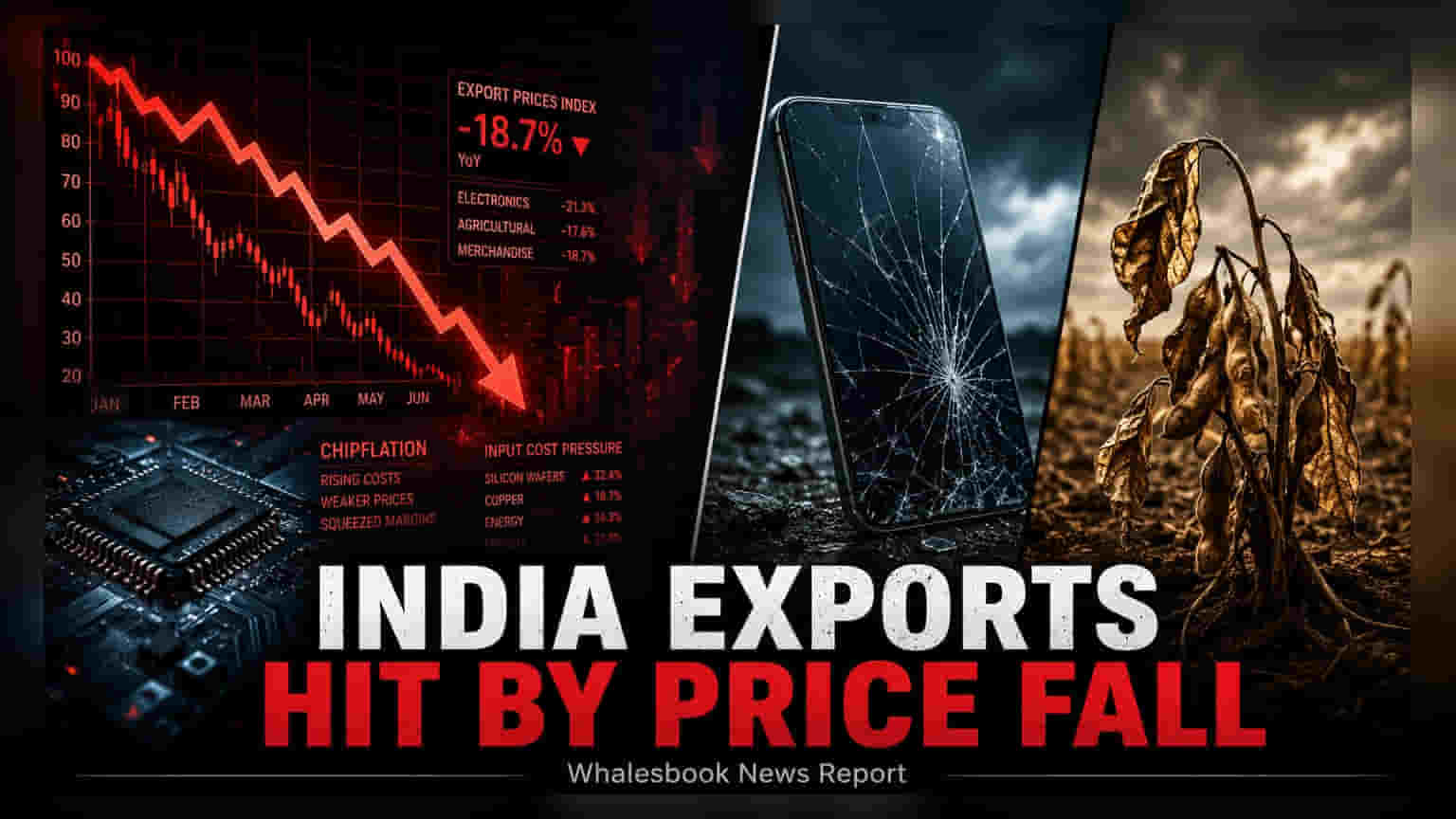
India's merchandise exports show value growth, but volume is struggling as rising prices hide underlying weakness. Global demand slowdowns in electronics and agricultural output risks threaten future export performance. Recent trade agreements provide long-term hope, but immediate pressure persists.
India's export sector is facing a complex reality where overall value figures are failing to reflect the true health of trade volumes. While recent data showed a 16% increase in export value for the first quarter of this fiscal year, this growth was largely inflated by a 35% rise in petroleum product exports. Because petroleum products make up roughly 12% of India's merchandise exports, this performance was highly sensitive to global crude oil price fluctuations rather than an actual increase in goods sold. As global oil prices stabilize or retreat, this primary driver of export value may see a correction, exposing the lack of genuine volume growth in other sectors.
Challenges in Electronics and Agriculture
Two critical pillars of India’s export engine—smartphones and agriculture—are currently hitting significant roadblocks. Smartphones have quickly become India's leading export category, bolstered by government production incentives. However, the sector is now bracing for a slowdown as rising component costs, particularly for memory chips, increase final device prices for consumers. This trend, often described as chipflation, threatens to dampen global demand for electronic goods, which account for about 11% of India's total merchandise exports.
Simultaneously, the agricultural sector is managing its own set of internal and external pressures. Agricultural output faces uncertainty due to climate patterns, specifically the impact of a weak monsoon and El Niño conditions on domestic crop yields. Several major agricultural export categories, such as basmati rice, spices, and sugar, have reported a sluggish start to the current fiscal year. Given that electronics and agriculture together account for over 20% of India's total export basket, any sustained weakness in these segments could significantly impact national trade momentum.
Global Demand and Trade Policy Uncertainty
External factors are further complicating the outlook for Indian exporters. Global economic forecasts have been revised downward, partly due to supply chain disruptions connected to geopolitical instability in West Asia. Slower growth in key trading partner regions is expected to reduce demand for Indian-made goods. Additionally, exporters are navigating a difficult trade policy environment. The European Commission has adjusted its tariff-free steel import quotas, and there remains ongoing uncertainty regarding potential changes to US trade tariffs. These policy shifts can directly affect the cost-competitiveness of Indian products in international markets.
While these hurdles present immediate concerns, the government is looking toward Free Trade Agreements (FTAs) as a long-term solution. India has successfully signed agreements with several major global importers, which are designed to improve market access and reduce tariffs on Indian goods. Investors and businesses will be monitoring how effectively exporters can utilize these new trade windows to offset the current slowdown in global demand and improve their competitive standing in international markets.