 Whalesbook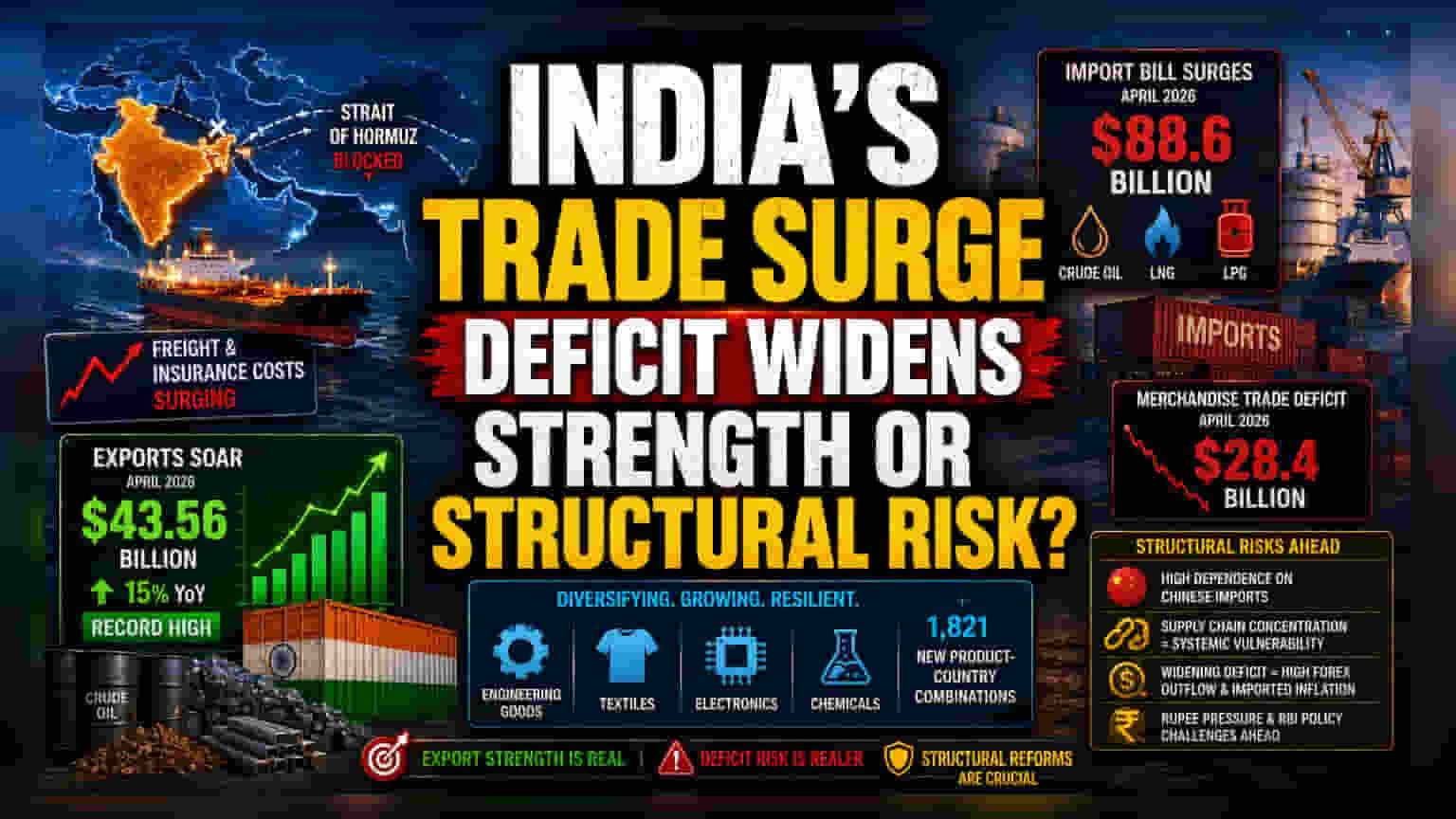


The Geopolitical Trade Paradox
India’s external trade sector has entered the new fiscal year under a dual reality: while export growth is demonstrating unexpected agility, the structural vulnerabilities of the national import bill are intensifying. The 15% growth observed in April and May highlights a successful pivot by Indian manufacturers, yet this resilience is being tested by the ongoing closure of the Strait of Hormuz. Since late February 2026, the blockade of this critical energy artery has forced a rerouting of tanker traffic, driving up freight and insurance premiums that are directly inflating the cost of essential energy imports.
The Anatomy of the Trade Deficit
Although goods exports hit a monthly record of $43.56 billion in April—a significant rise from $38.28 billion in the same period last year—the total import bill surged to $88.6 billion. This expansion has been primarily driven by higher energy and raw material costs, as India maintains its reliance on imported crude, LNG, and LPG to fuel its industrial base. The merchandise trade deficit of $28.4 billion serves as a clear indicator that while the volume of goods leaving the country is at historical highs, the premium paid to secure necessary inputs in a volatile energy market is increasingly burdensome to the national balance sheet.
Strategic Shifts and Market Diversification
The government’s aggressive push into new geographic markets has been the primary defense against global economic fragmentation. By identifying 1,821 new product-country combinations in the previous fiscal year, Indian firms have successfully buffered themselves against shocks in traditional trade corridors. Sectors like high-value engineering goods and textiles are leading this expansion. However, despite these gains, the long-term goal of hitting $1 trillion in annual exports by fiscal 2027 requires more than just market entry; it demands deep structural improvements in logistics and a reduction in the reliance on concentrated supply chains that remain tethered to single-source inputs from nations like China.
The Forensic Bear Case: Structural Dependencies
The current trade data masks a significant and growing supply chain fragility. Dependence on Chinese imports for core industrial inputs—such as electronics components, specialty chemicals, and machinery—remains high, with recent analysis indicating these categories account for a dominant share of imports from Beijing. As geopolitical tensions fluctuate, this concentration creates a systemic risk: any escalation in trade barriers or supply chain bottlenecks directly threatens India's domestic manufacturing output. Furthermore, the persistent widening of the trade deficit suggests that India’s growth is currently capital-intensive, requiring massive, potentially unsustainable, foreign exchange outflows to keep the manufacturing engine running. If energy prices remain elevated due to the prolonged Hormuz crisis, the strain on the rupee and the potential for imported inflation could complicate the Reserve Bank of India's efforts to maintain monetary stability throughout the remainder of the year.