 Whalesbook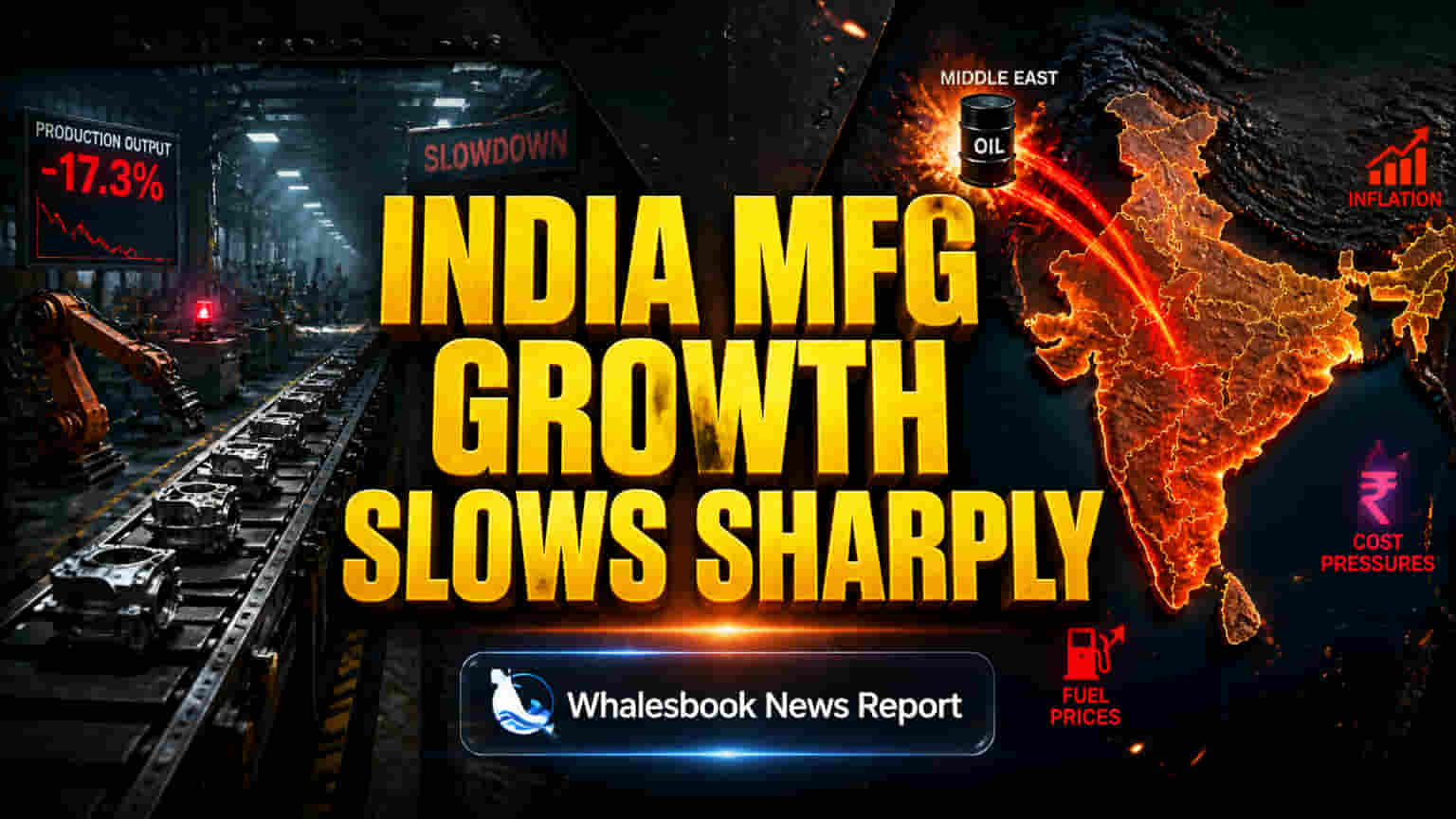


April data reveals a mixed picture for India's manufacturing sector. While export orders boosted growth, a slowdown in domestic demand and rising costs created significant challenges. The HSBC Purchasing Managers' Index (PMI) edged up slightly to 54.7, but the overall trend shows manufacturers navigating a difficult environment.
A Tale of Two Demand Drivers
India's manufacturing sector is increasingly relying on its export engine, which showed remarkable strength in April. New export orders surged to a seven-month high, buoyed by demand from diverse international markets. This global demand served as a critical support, contrasting sharply with the muted growth in domestic new orders and production, which remain at their slowest pace in over three-and-a-half years.
Soaring Input Costs Fuel Inflation
The geopolitical tensions stemming from the Middle East conflict are directly translating into inflationary pressures for Indian manufacturers. Input costs recorded their steepest ascent since August 2022, driven by surging prices for commodities like aluminum, chemicals, and fuel. Consequently, manufacturers were compelled to pass on a portion of these elevated costs, leading to output price inflation reaching a six-month peak. This situation poses a significant threat to margins, as competitive conditions and client reluctance to approve quotes temper the ability to fully pass on expenses.
Global Context: Similar Pressures
Globally, manufacturing activity in April showed similar trends of cost pressures. While China's manufacturing PMI held steady at 50.3, indicating continued expansion, the broader global PMI for March registered 51.8, signaling a slowdown. The US and Eurozone experienced mild growth accelerations in March, but input cost inflation was a common theme, exacerbated by energy price spikes and supply chain disruptions linked to the Middle East conflict. India's performance, while showing export resilience, reflects this global pattern.
Looking Back: Past Challenges and Outlook
The current scenario brings to mind past periods where external shocks impacted Indian manufacturing. The sector's output price inflation is now at its highest in six months, mirroring past instances of similar external pressures. Analysts predict India's manufacturing output to grow by 5% in 2026, suggesting a positive long-term outlook despite near-term volatility.
Key Risks and Domestic Weakness
Despite the positive export performance and employment growth, significant risks persist. The sector's heavy reliance on international demand makes it vulnerable to global trade slowdowns or further geopolitical escalations. The widening gap between rising input costs and output prices suggests potential margin compression if inflationary pressures continue unabated. Domestic demand remains a key concern, with new orders and output growth significantly subdued, indicating underlying weaknesses. Furthermore, the 'Make in India' initiative faces challenges from operational unevenness and market volatility.
Future Growth Prospects
Looking ahead, manufacturers express cautious optimism, with sentiment pinned on marketing efforts and project approvals. India's manufacturing sector is projected for substantial growth, with output potentially reaching US$1 trillion by FY26 and the market size expected to reach USD 1.74 trillion in 2026, growing at a CAGR of 7.26% through 2031. However, this optimistic outlook is contingent on effectively managing the dual challenges of external inflation and domestic demand revitalization.