 Whalesbook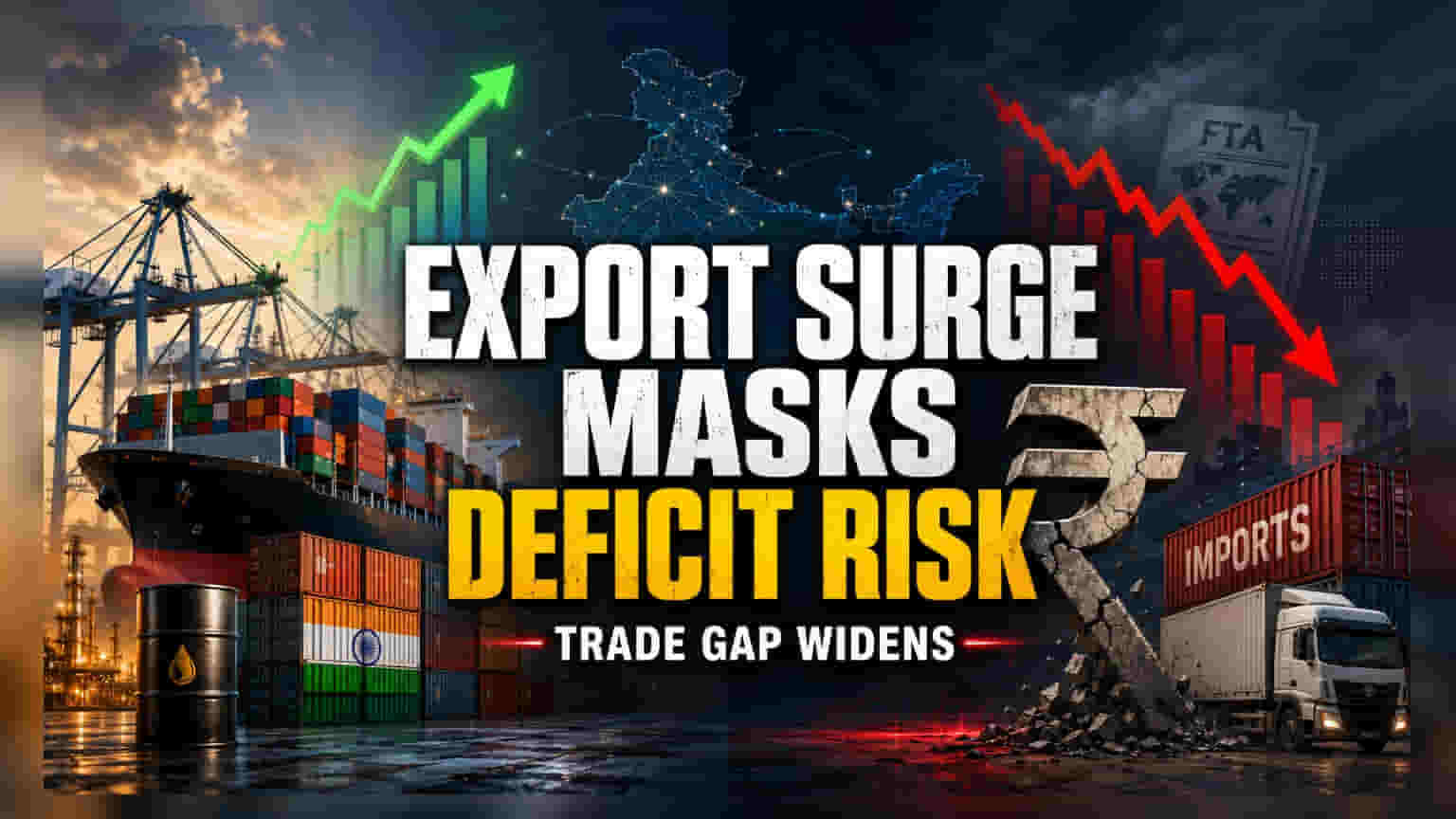


The Illusion of Export Momentum
The recent double-digit expansion in India’s outbound shipments masks a more nuanced reality regarding the quality of growth. While the 13.78% climb in April exports to USD 43.56 billion captures headlines, the reliance on petroleum products—a segment heavily indexed to the current volatility in global crude prices—renders these gains fragile. When external price factors fluctuate, the volume-based growth often tells a less optimistic story. The jump in shipments, while statistically significant, mirrors historical trends where transient energy price spikes inflate export value without necessarily indicating a structural improvement in domestic manufacturing productivity or competitiveness.
The Mechanics of the Trade Gap
Expansion in the trade deficit to USD 28.38 billion confirms that domestic consumption of imports is outpacing the nation's export capabilities. This widening gap often places downward pressure on the rupee and necessitates careful management of foreign exchange reserves. Historically, when the trade deficit hits multi-month highs this early in the fiscal year, it creates a persistent drag on the current account balance. Unlike regional peers that have moved aggressively into high-value electronics or capital goods manufacturing, India remains heavily tethered to commodity-linked exports, leaving the trade balance susceptible to the whims of global energy markets and supply chain shifts in the Middle East and Russia.
The Operational Reality of FTA Proliferation
The Ministry of Commerce’s decision to recruit 1,000 personnel to promote Free Trade Agreements represents a bureaucratic recognition that past pacts have been underutilized. While the government highlights successful agreements with the EFTA bloc, the UAE, and Australia, the actual trade utilization rates for these deals often lag behind potential. Recruiting for linguistic diversity suggests a pivot toward ground-level sensitization, yet this initiative carries significant overhead costs. Transforming these signed agreements into tangible trade volume requires more than information dissemination; it requires domestic industry to overcome entrenched bottlenecks in logistics and power costs that continue to hinder competitive pricing against manufacturers in Southeast Asia.
The Structural Bear Case
From a risk perspective, the aggressive goal of hitting one trillion dollars in annual exports appears disconnected from current global demand cycles. Negotiating new preferential pacts with volatile markets like Central Asia or Russia presents complex geopolitical and settlement risks that could complicate future fiscal targets. Furthermore, the reliance on petroleum-heavy exports during periods of supply chain uncertainty is a high-beta strategy. Should oil prices retract, the export growth narrative will likely collapse, leaving the country with a permanent import bill that is structurally higher than its export revenue. Investors should monitor the gap between real volume growth and nominal dollar value, as the current inflationary environment for commodities may be providing a temporary, unsustainable mask for deeper manufacturing deficits.