

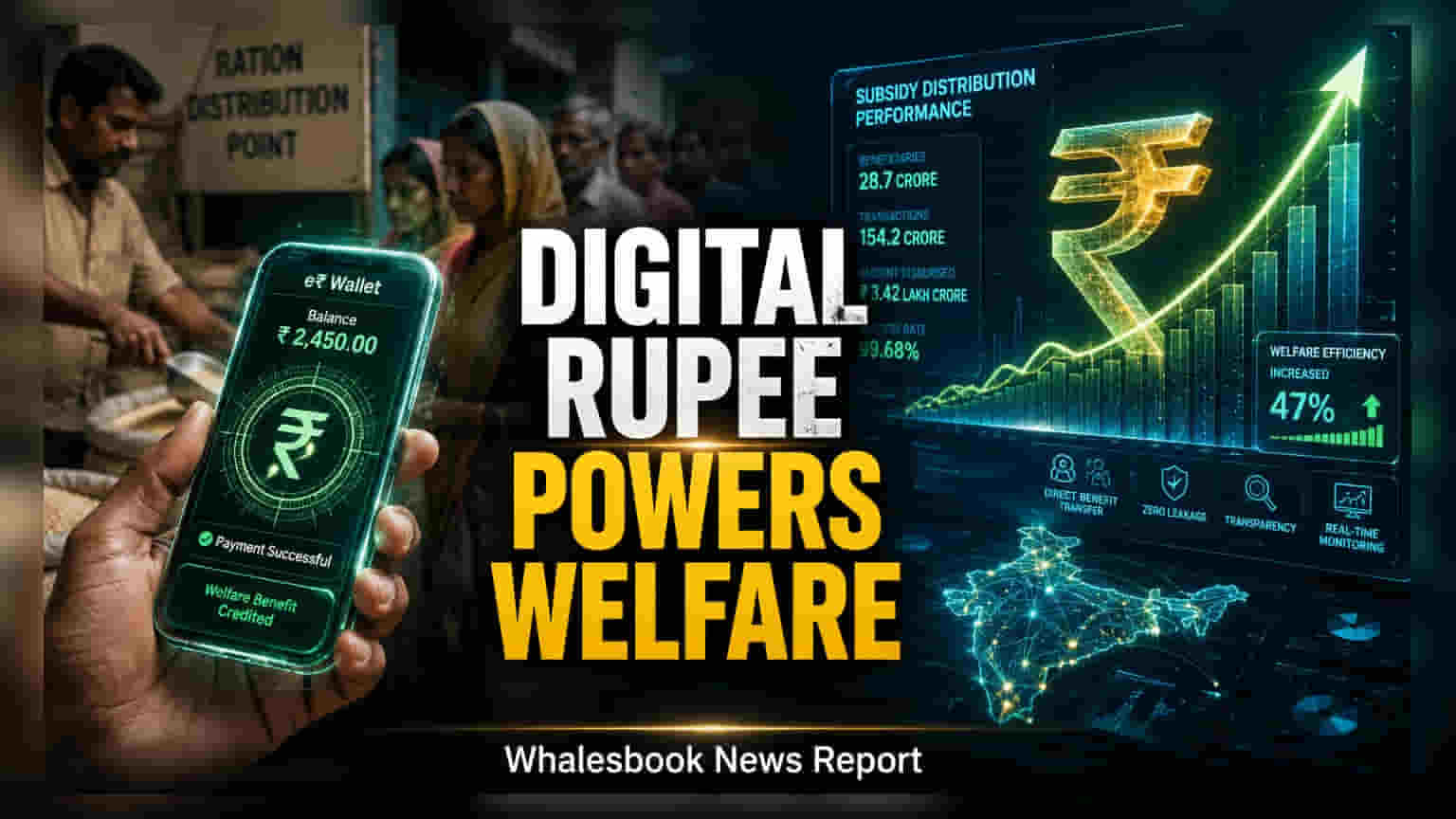
India will launch a Central Bank Digital Currency (CBDC)-based subsidy system for the Pradhan Mantri Garib Kalyan Anna Yojana (PMGKAY) in Chandigarh and Dadra & Nagar Haveli on August 14, 2026. This initiative aims to improve welfare delivery by using programmable digital tokens that ensure funds are used only for intended purchases.
India is set to take a major step in the digitization of its welfare system as it rolls out the Central Bank Digital Currency (CBDC)-based Direct Benefit Transfer (DBT) mechanism for the Pradhan Mantri Garib Kalyan Anna Yojana (PMGKAY). Starting August 14, 2026, beneficiaries in the Union Territories of Chandigarh and Dadra & Nagar Haveli will begin receiving their food subsidies as programmable digital rupee tokens directly into their CBDC wallets, rather than through traditional bank accounts.
Programmable Money for Welfare
This shift marks a technical evolution in how government subsidies are distributed. The digital rupee is programmable, meaning the government can set specific rules for how the money is spent. In this case, the tokens received by beneficiaries are designed for use at empanelled merchants to purchase foodgrains. This mechanism is intended to act as a safeguard, ensuring that welfare funds are used strictly for their intended purpose, which could significantly reduce the risk of diversion or leakage often associated with conventional cash transfers.
Building on Earlier Pilots
The upcoming rollout is not a sudden change but part of a gradual expansion of India's digital currency trials. Previous pilot programs for similar welfare initiatives were successfully conducted in Puducherry and Gujarat earlier this year. These initial tests were used to assess the system's stability, user experience, and the feasibility of processing digital payments at the point of sale for essential goods. The expansion to Chandigarh and Dadra & Nagar Haveli serves as the next phase in establishing a scalable model that could eventually be deployed across the country.
Digital Infrastructure and Market Impact
The move aligns with the government's broader objective to strengthen Digital Public Infrastructure. For the financial sector, this transition highlights a growing emphasis on non-bank payment channels for welfare. By routing subsidies through CBDC wallets, the government is creating a more direct link between the beneficiary and the service provider, potentially reducing reliance on intermediaries within the banking system. FinTech companies providing digital wallet services and payment infrastructure may find an expanding scope for involvement as these programs scale.
Implementation Challenges
While the technology offers significant improvements in transparency, successful mass adoption depends on several practical factors. The primary challenges for the government will include ensuring robust digital literacy among all beneficiaries, maintaining reliable mobile and internet connectivity in diverse locations, and ensuring the interoperability of these new digital wallets with existing retail merchant systems. The speed at which this technology is adopted will also depend on how easily beneficiaries can navigate these new digital tools compared to traditional banking or physical ration cards. Investors and market participants will monitor the progress of these Union Territories to gauge the speed and efficiency of the government's digital welfare roadmap.