 Whalesbook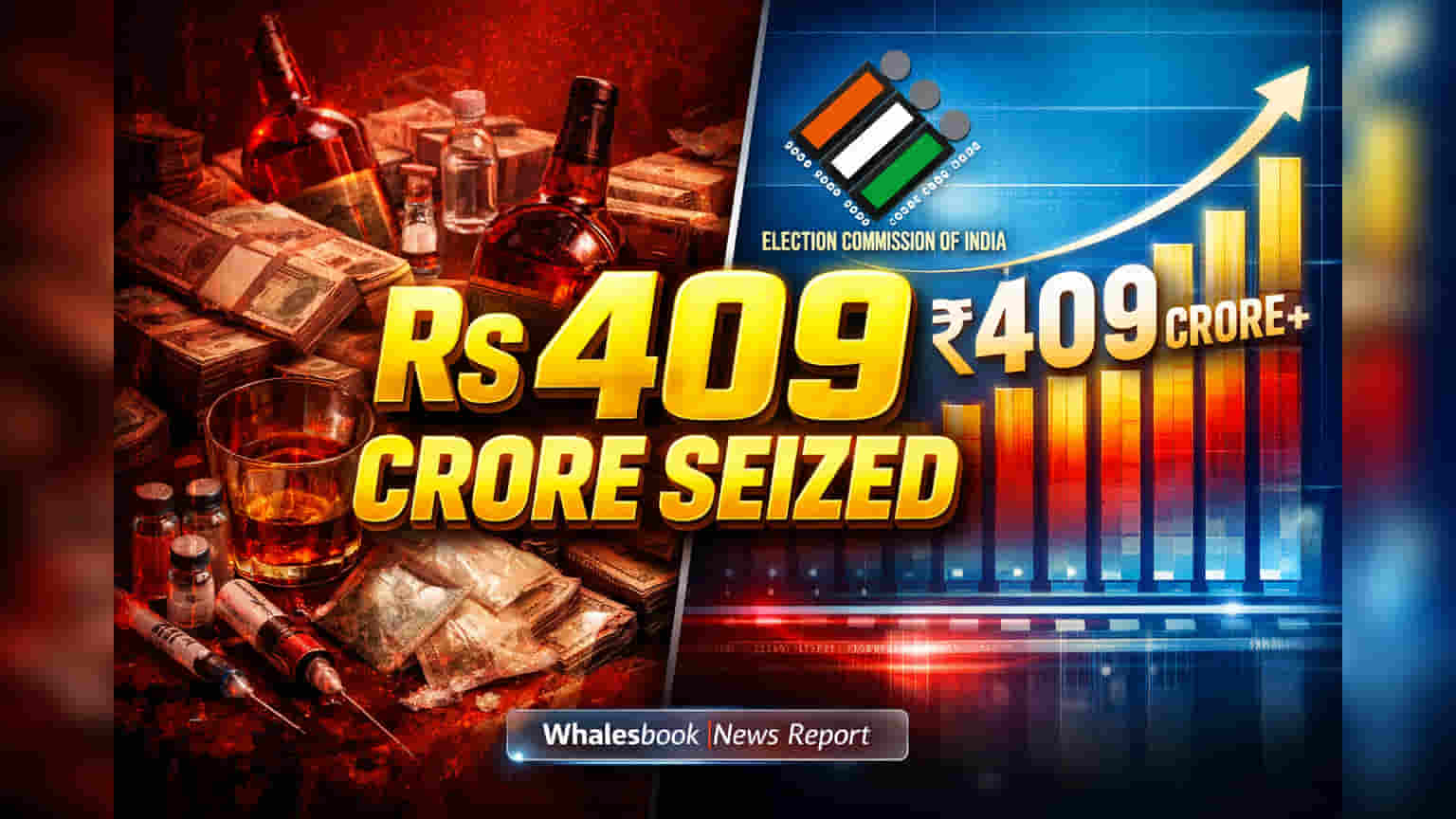
Record Election Seizures Reveal Scale of Illicit Funds
The Election Commission (EC) of India has seized over ₹409 crore in illicit poll inducements. This large sum highlights the financial scale and complexity fueling electoral competition, signaling risks to governance and market stability.
The Scale of Illicit Flows
Enforcement agencies, coordinating through the Electronic Seizure Management System (ESMS), have confiscated a staggering ₹408.82 crore in illicit inducements ahead of recent assembly and by-elections. This haul, spanning February 26 to March 25, 2026, includes ₹17.44 crore in cash, ₹37.68 crore in liquor, a substantial ₹167.38 crore in drugs, ₹23 crore in precious metals, and over ₹163.30 crore in other freebies. This figure significantly surpasses previous election cycles. For instance, seizures during the 2024 Lok Sabha elections reportedly exceeded ₹10,000 crore, a massive leap from the ₹3,500 crore recorded in 2019. Even the 2023 assembly elections saw Rs 2,014.26 crore seized, compared to Rs 239.35 crore in the prior cycle. A large part of the seizures involved drugs and precious metals, showing how electoral funding is linked to wider illegal activities.
Regional Hotspots and Enforcement Efforts
Tamil Nadu continues to be a focal point for such seizures. By March 24, the state had accounted for ₹152 crore in cumulative seizures, comprising cash, precious metals, drugs, liquor, and other goods. Historically, Tamil Nadu has registered high seizure values, with ₹460.85 crore noted during the 2024 Lok Sabha polls and cash seizures alone reaching approximately ₹215 crore in the 2019 Lok Sabha elections. To combat these flows, the EC has deployed over 5,173 flying squads and more than 5,200 static surveillance teams nationwide, tasked with rapid response to complaints and surprise checks. The C-Vigil app has facilitated citizen reporting, with tens of thousands of complaints lodged and largely resolved within a 100-minute target timeframe.
Governance Risks and Market Impact
The large amounts of money used for electoral inducement point to a deep-seated risk to effective governance. Political stability is crucial for attracting foreign investment (FDI), but can be undermined by widespread corruption and illegal financial networks. While studies suggest election outcomes primarily cause short-term market volatility rather than long-term impacts, uncertainty and possible policy changes can affect investor confidence. Periods of high political uncertainty, often made worse by claims of electoral malpractice, can temporarily depress market returns and deter foreign investment due to higher perceived risk. The link between drug and precious metal smuggling and election funding also suggests organized crime could influence political and economic policy.
Challenges to Election Integrity
While the Election Commission's efforts are extensive, they are measures against deeply rooted electoral financing systems. Claims of selective enforcement of the Model Code of Conduct and questions about the EC's impartiality have damaged public trust. This erosion of confidence in the election body raises concerns about the process's integrity, potentially allowing illicit money to wield excessive influence. The EC's core challenge is maintaining public faith in democracy. When this faith wavers, perceived political and economic risks increase, leading to greater market volatility. The large seizure of drugs also suggests links to organized crime, posing wider security and economic stability risks.
Future Outlook
The Election Commission remains committed to its goal of ensuring free, fair elections without inducements. Stronger surveillance, technology, and inter-agency coordination are central to its strategy to curb electoral wrongdoing. The scale of seizures, while concerning, shows the EC's strong focus on financial integrity in the electoral process. Constant monitoring and strict enforcement will remain critical in tackling the challenges posed by money in politics.