

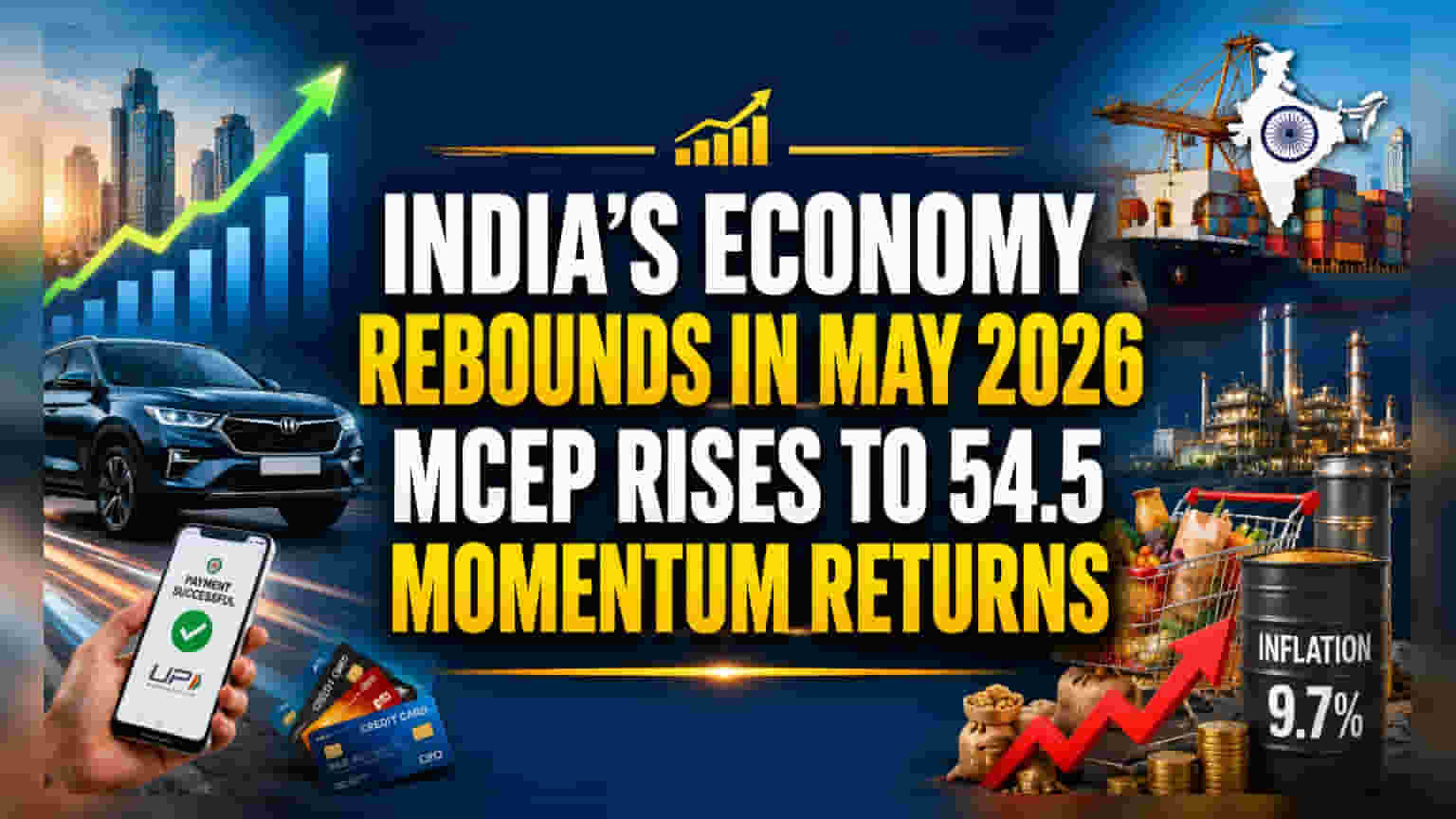
India's economic activity gained speed in May, as the Moneycontrol Eco Pulse Index moved to 54.5. Strong growth in vehicle sales, digital transactions, and services pushed the numbers higher. Investors are now balancing this expansion against rising wholesale inflation, which could impact company profit margins.
What Happened
India's economic activity showed a clear rebound in May 2026. The Moneycontrol Eco Pulse (MCEP) index, which tracks 38 different high-frequency economic indicators, rose to 54.5 compared to 51.2 in April. A reading above 50 indicates that the economy is expanding. This improvement suggests that the momentum seen earlier in the year has regained strength after a slower period in April.
Why Investors Track This Pulse
For investors, indices like the MCEP provide an early look at how the economy is performing before official government GDP data is released. When this index rises, it often suggests that companies are seeing higher demand and better activity levels across various sectors. Tracking these monthly shifts helps investors understand the broader environment in which Indian companies operate, from consumer spending habits to industrial activity.
Key Growth Drivers
Several areas of the economy contributed to this rise in May. Consumer demand was a standout, with four-wheeler sales growing by 30.8 percent, a significant jump from 17.7 percent in April. This suggests that people are spending more on large purchases. Digital habits also remained strong, with UPI transactions growing by roughly 24 percent and credit card spending showing consistent acceleration.
The services sector also played a vital role, with the HSBC India Services PMI reaching a six-month high of 59.8. This PMI number measures business activity, new orders, and employment in the services industry. Additionally, merchandise exports grew by 18 percent in May, up from 13.8 percent in April, pointing to stronger trade performance.
Inflation and Business Risks
Despite the positive growth, there are risks that investors should watch. Wholesale inflation climbed to 9.7 percent in May. When wholesale prices rise, it often means that the cost of raw materials and inputs increases for companies. If companies cannot pass these higher costs on to customers, their profit margins may come under pressure. Investors usually keep a close eye on this, as higher input costs can hurt company profitability over time.
There were also mixed signals from rural markets. While the situation is better than last year, the demand for tractors and two-wheelers showed signs of normalizing rather than surging. Additionally, energy demand, specifically for petrol, showed slower growth, which can sometimes hint at cooling activity in specific consumer transport segments.
What To Watch Next
The most important monitorable for investors will be whether this momentum continues in the coming months or if rising inflation begins to cool down consumer demand. Investors may look for upcoming quarterly results to see if the growth in sales, reported in the May index, is effectively translating into higher profits, or if rising costs are squeezing margins. Watching how companies manage pricing in response to the 9.7 percent wholesale inflation will also be a key factor for the next few months.