

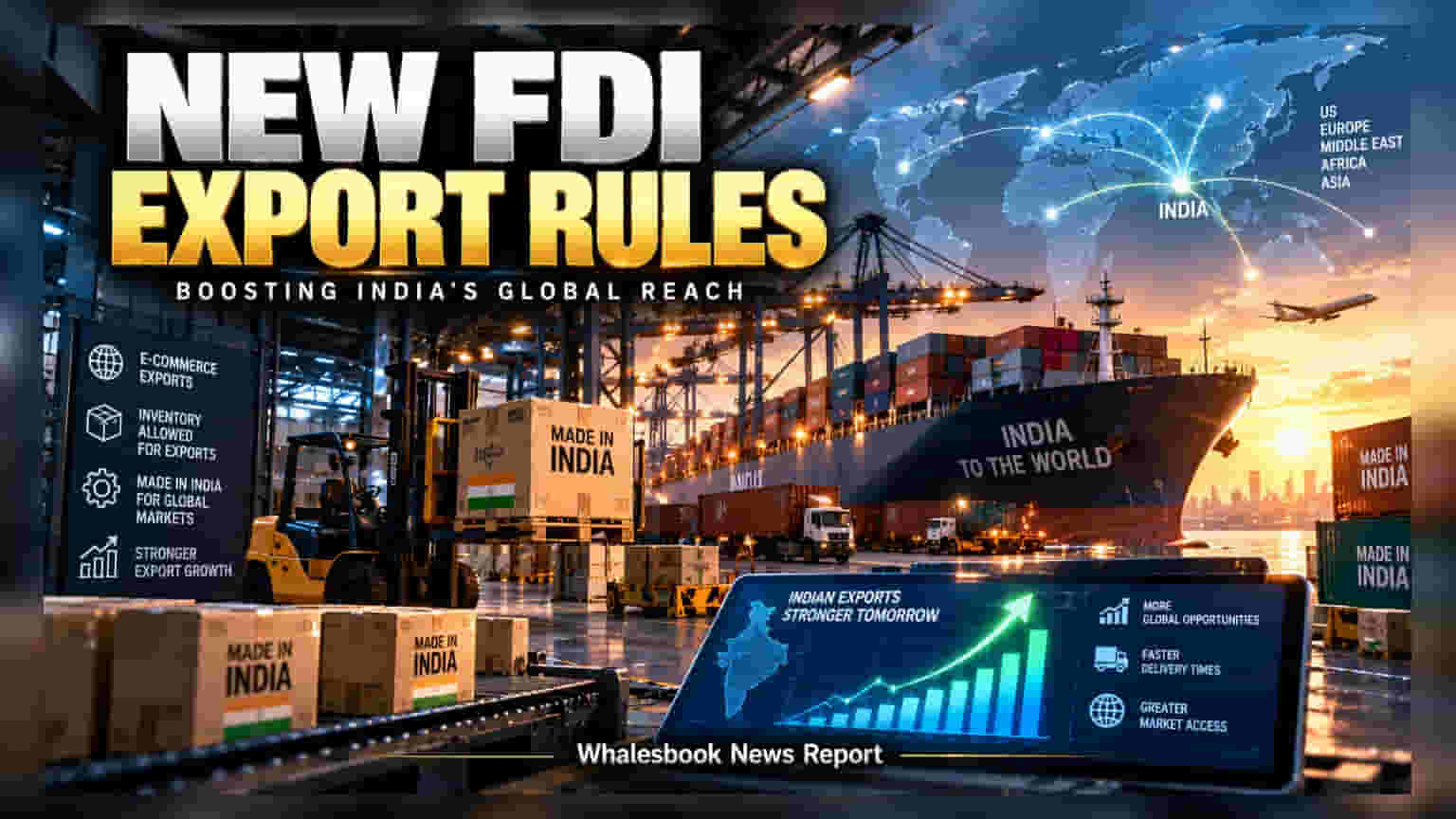
India has updated FDI norms to allow foreign-funded e-commerce firms to hold inventory exclusively for exports. While this opens a new channel for Indian manufacturers, strict bans on domestic B2C inventory models remain in place. Investors should note the increased compliance requirements for tracking goods.
The Indian government has officially amended Foreign Direct Investment (FDI) regulations to allow e-commerce entities with foreign capital to maintain inventory, provided the goods are strictly intended for export markets. The Department of Economic Affairs integrated these changes into the Foreign Exchange Management (Non-debt Instruments) Rules, 2019, following a notification released earlier this week.
This policy update creates a specific carve-out for export-oriented operations. For years, the Indian e-commerce sector has operated under a model where foreign-funded platforms function primarily as marketplaces, prohibited from holding inventory for domestic Business-to-Consumer (B2C) sales. This restriction was designed to protect the interests of local brick-and-mortar stores and small retailers from aggressive competition. The new rules maintain this protection for the domestic market, ensuring that large platforms cannot use the new inventory model to serve local customers.
For companies looking to leverage this policy, the primary operational focus will be strict compliance. The rules mandate that any inventory held under this new provision must consist of goods manufactured or produced in India. Furthermore, entities must adhere to the Foreign Trade Policy 2023 and the Foreign Exchange Management (Export of Goods & Services) Regulations, 2015.
From a business perspective, the change allows global e-commerce players to better utilize their logistics and warehousing infrastructure to help Indian exporters reach international buyers. By holding stock closer to export hubs or fulfillment centers, companies may be able to reduce delivery times and improve the competitiveness of Indian-made products in global markets.
However, the operational risk remains significant. The government has emphasized the need for transactional proof confirming the Indian origin of all goods. The regulatory burden involves ensuring a clear, audited separation between inventory meant for international buyers and any domestic-bound goods. The potential for 'inventory leakage,' where export-designated stock might be diverted to the domestic market, is a clear enforcement concern. Regulators have indicated that any failure to maintain this separation or report export proceeds accurately could trigger standard FEMA penalties.
For investors and market observers, the next important development will be how major e-commerce platforms and logistics providers adjust their supply chain structures to accommodate this dual-model requirement. Success will depend on the ability of these companies to demonstrate rigorous inventory management and compliance, while simultaneously scaling their export-focused operations without falling foul of the strict domestic retail regulations.