

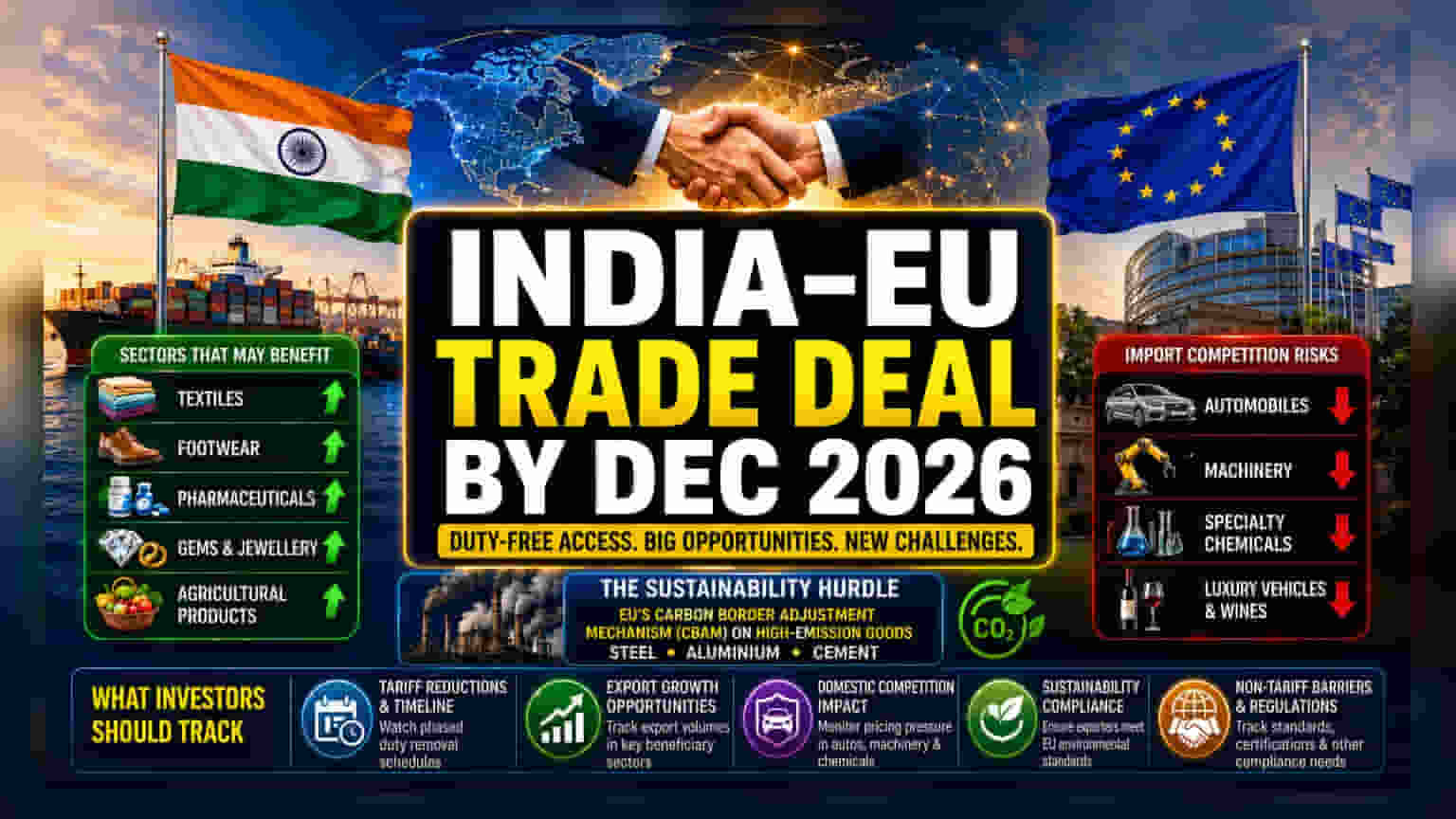
India and the European Union are set to sign a comprehensive free trade agreement by December 2026, with implementation expected in early 2027. The deal grants duty-free access to 93% of Indian exports but also opens domestic markets to European goods. Investors should watch for sector-specific benefits in exports and potential margin pressure from increased competition in areas like automobiles and chemicals.
What Happened
India and the European Union are on track to sign a comprehensive free trade agreement (FTA) by December 2026. Following the conclusion of negotiations, the pact is expected to be implemented by February or March of the following year. Commerce and Industry Minister Piyush Goyal has confirmed the timeline, which marks a significant development for bilateral economic relations. The agreement is designed to enhance trade by providing duty-free access to approximately 93% of Indian export shipments, potentially streamlining trade flows between the two major economic blocs.
Sectors That May Benefit
The trade agreement is expected to create new opportunities for several Indian industries that rely heavily on the European market. Sectors such as textiles, footwear, pharmaceuticals, gems and jewellery, and agricultural products are likely to gain from the removal of import duties. By reducing tariff barriers, Indian exporters in these categories may become more price-competitive, potentially allowing them to expand their market share within the 27-nation EU bloc. For investors, this could lead to better export volumes and revenue growth for companies with significant exposure to European markets in these specific segments.
Import Competition and Margin Pressure
While the deal opens doors for Indian exporters, it also lowers entry barriers for European goods into India. This is expected to intensify competition for domestic manufacturers, particularly in sectors such as automobiles, machinery, and specialty chemicals. Products like luxury vehicles and premium wines from the EU are expected to become more affordable, which may create pricing pressure for Indian manufacturers in similar categories. Companies with high reliance on the domestic market in these sectors may face challenges in maintaining profit margins if they are forced to lower prices to compete with high-quality European imports.
The Sustainability Hurdle
A key factor for investors to consider is the European Union’s Carbon Border Adjustment Mechanism (CBAM). This policy imposes a carbon tax on imports of high-emission goods, such as steel, aluminium, and cement. Even with a trade agreement in place, Indian exporters of these materials will need to comply with stringent environmental standards and reporting requirements. Meeting these sustainability benchmarks involves additional compliance costs and operational adjustments, which could impact the short-term profitability of energy-intensive industries.
What Investors Should Track
The primary focus for investors should be the final list of tariff reductions and the specific timeline for each sector, as some duty changes may be phased in over several years rather than being removed immediately. Additionally, tracking how domestic companies in sectors like autos and chemicals adjust their strategies to handle increased European competition will be essential. Investors should also monitor the ability of Indian exporters to comply with EU sustainability norms and non-tariff barriers, as failure to meet these standards could limit the benefits of the duty-free access provided by the deal.