

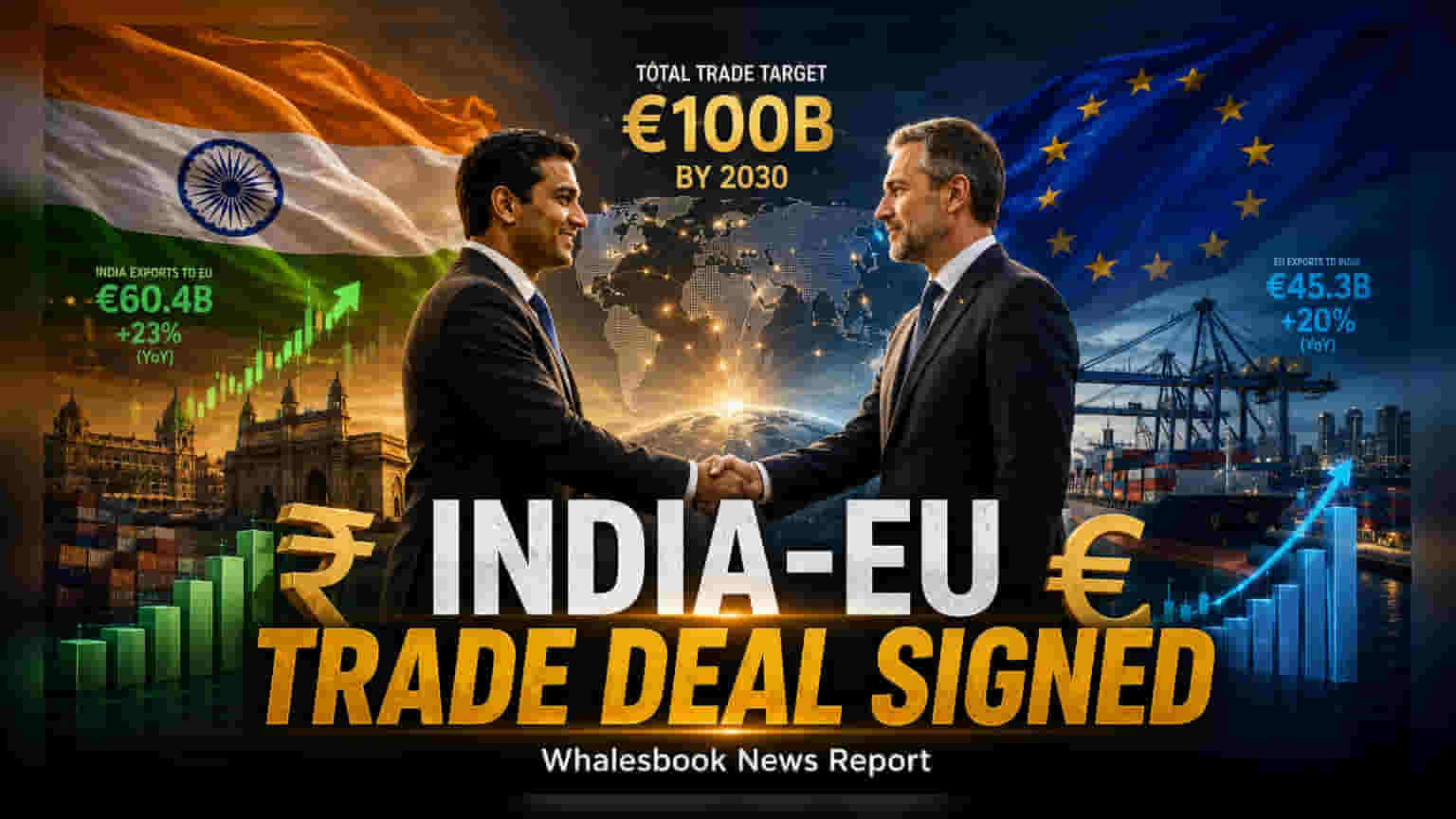
India and the European Union aim to finalize a landmark free trade agreement by late 2026, with official implementation expected by early 2027. The deal promises duty-free access for 93% of Indian exports, significantly altering trade dynamics. Investors should monitor how tariff reductions on sectors like agriculture, spirits, and services influence competitive positioning for domestic and European firms.
India and the European Union have committed to a firm timeline for finalizing a comprehensive Free Trade Agreement, aiming to complete negotiations by the end of 2026. If successful, the pact is scheduled to go into effect in early 2027. Commerce and Industry Minister Piyush Goyal confirmed that the framework is designed to open new avenues for commerce between India and the 27-nation EU bloc, concluding a discussion process that has spanned two decades.
Impact on Trade and Tariffs
The agreement is structured to significantly lower trade barriers. Current projections indicate that 93% of Indian exports will gain duty-free entry into the European market. Conversely, the EU is set to benefit from reduced tariffs on 96.6% of its products exported to India, with expectations that its goods exports to the country could double by 2032. For European businesses, this is expected to lower annual duty costs by approximately €4 billion.
The sector-specific shifts include notable changes in the agricultural and food processing industries. EU agri-food exports, which currently face average tariffs exceeding 36%, will see substantial reductions. In the spirits sector, India is planning a phased reduction of wine tariffs from the current 150% level down to 75%, with a long-term goal of reaching 20%. Additionally, tariffs on several processed food items such as confectionery and bread are slated for elimination, while EU service providers will gain improved access to the Indian market.
Strategic Bilateral Cooperation
Recent discussions between Minister Goyal and Finland’s Minister of Economic Affairs, Dr. Sakari Puisto, underscore the broader scope of these engagements. Beyond trade volume, the focus has shifted toward collaborative efforts in innovation, financial market integration, and enterprise financing. The Indian government has actively invited Finnish investment into areas such as clean energy, biotechnology, and advanced storage solutions. This signaling suggests that the agreement is intended to foster long-term industrial partnerships rather than just facilitating the movement of goods.
For investors, the primary monitorable will be the transition period for tariff adjustments. As these duties are phased out, companies in export-oriented sectors like textiles, engineering goods, and processed agriculture may see improved margins due to better European market penetration. Conversely, domestic manufacturers in segments facing higher import competition—such as wine and specialized food processing—may need to adjust their pricing and operational efficiency to remain competitive against incoming European products. The next key updates to track include the finalization of the specific product-wise phased tariff schedules and any parliamentary approvals required by member states within the EU.