 Whalesbook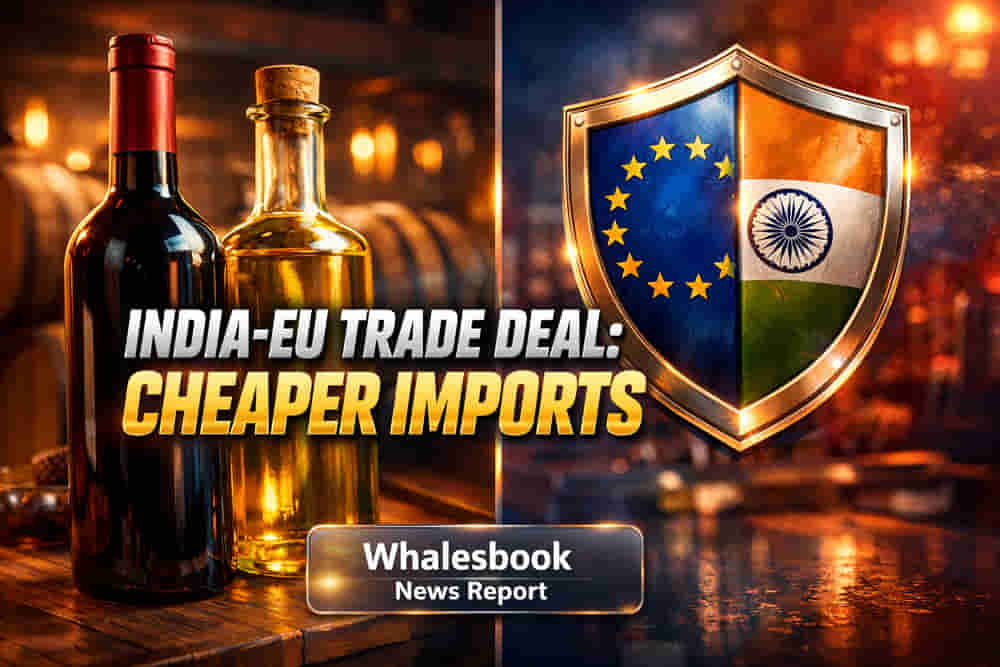


THE SEAMLESS LINK
This landmark Free Trade Agreement between India and the European Union is poised to recalibrate the market for essential European agri-food products, promising a notable shift in import dynamics and consumer access within India. The pact mandates substantial cuts to India's existing import duties, which previously averaged over 36% for affected goods, signaling a calculated opening for European producers in India's rapidly expanding market.
The Tariff Cut Impact
Under the agreement's terms, India has committed to deep tariff reductions on select agri-food categories originating from the EU. Duties on wine, which currently stand at a considerable 150%, will be halved to 75% upon implementation and are slated for further progressive reductions down to 20%. For olive oil, tariffs will be systematically decreased from 45% to zero over a five-year period. Additionally, tariffs of up to 50% on processed agricultural products, including confectionery and bread, will be eliminated entirely. These concessions are expected to grant European wines, spirits, beers, olive oil, and confectionery preferential access, potentially leading to lower shelf prices for Indian consumers.
Strategic Sectoral Protection
Despite these concessions, the trade deal meticulously excludes several politically sensitive agricultural products from any liberalization measures. Key staples such as beef, chicken meat, rice, and sugar will remain outside the scope of tariff cuts. This strategic exclusion reflects India's deliberate approach to safeguarding its domestic farming base and its most vulnerable agricultural sectors from immediate competitive pressures, ensuring continued protection for local producers.
Beyond Tariffs: Standards and GIs
Consumers can rest assured that all agri-food imports entering India under this agreement will continue to be subject to the EU's rigorous health and food safety standards, which remain unchanged and fully enforceable. In parallel, India and the EU are progressing with separate negotiations focused on Geographical Indications (GIs). These discussions aim to protect traditional European food and beverage products from imitation and unfair competition, further solidifying the market entry and recognition of authentic regional specialties.
Broader Market Context and Outlook
European Commissioner for Agriculture and Food, Christophe Hansen, characterized the agri-food chapter of the FTA as 'historic,' emphasizing its potential to connect markets serving nearly two billion people. Hansen highlighted the agreement's success in balancing expanded market access with robust protections for European farmers, ensuring that sensitive products like beef, sugar, ethanol, rice, and poultry retain their existing tariffs. This agreement is anticipated to significantly boost EU agri-food exports to India. The Indian market shows a growing consumer appetite for premium imported goods, driven by an expanding middle class and evolving lifestyle trends. India's domestic wine and olive oil markets, while developing, have historically relied heavily on imports for premium and specialized products, suggesting strong potential for EU brands under the new tariff regime. India's approach to trade liberalization, particularly in agriculture, has historically been cautious, often prioritizing domestic support, making this calibrated opening a notable development. The broader India-EU trade agenda continues, with ongoing discussions across various sectors, indicating a sustained effort to deepen economic ties.