

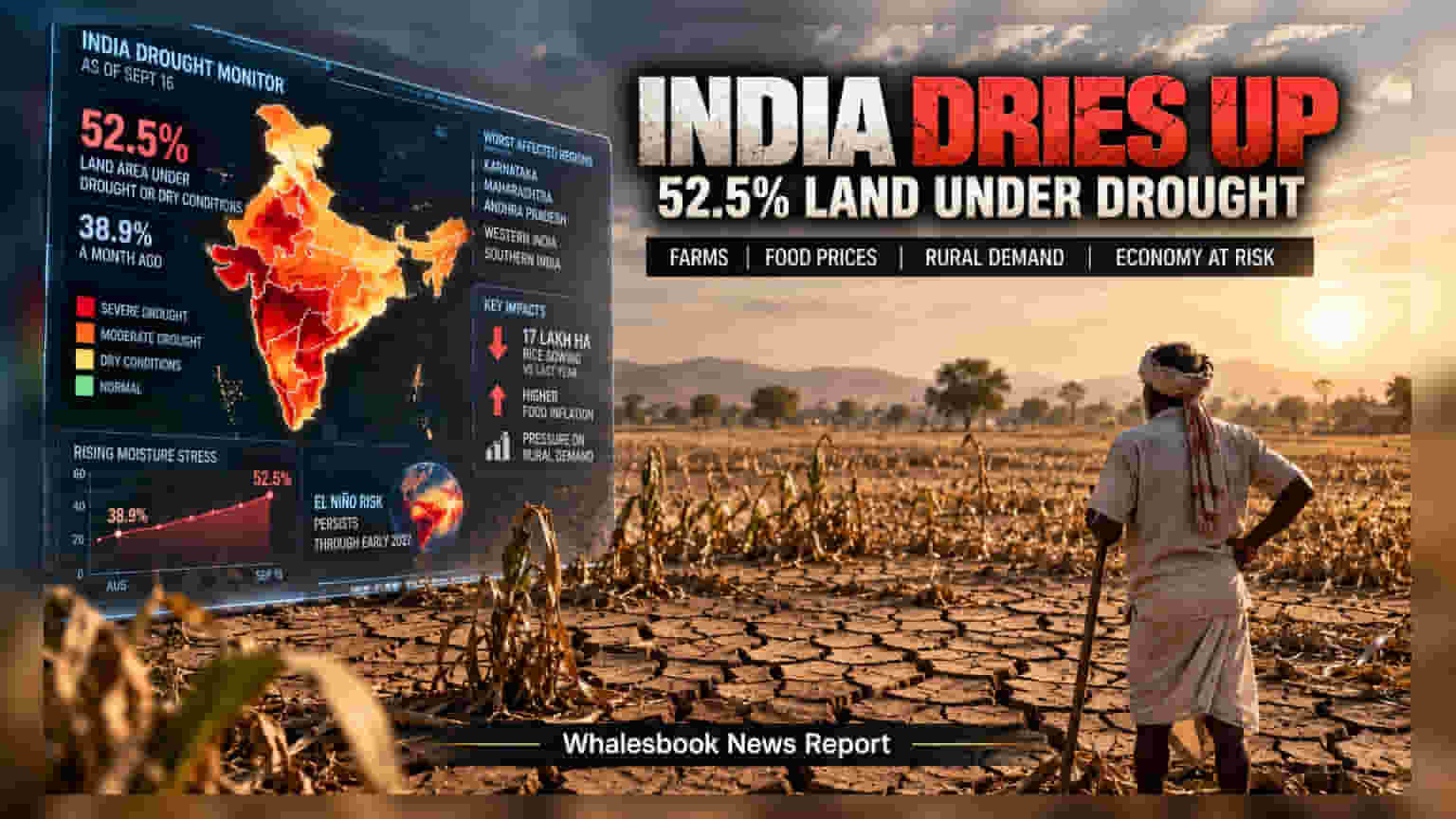
Over 52% of India is facing drought-like conditions as the monsoon withdraws, raising concerns for rural demand and food inflation. Investors are monitoring the impact on agricultural yields, specifically rice production and the upcoming rabi season, which may influence consumer spending and RBI policy.
India is witnessing significant moisture stress, with 52.5% of the land area currently under drought or dry conditions, according to data from the IIT Gandhinagar India Drought Monitor as of September 16. This is a sharp increase from 38.9% just a month ago. As the southwest monsoon retreats, this rapid rise in dryness across more than half the country creates immediate challenges for the agricultural sector, which accounts for a large portion of rural employment and income.
The impact is unevenly spread, with western and southern regions—including states like Karnataka, Maharashtra, and Andhra Pradesh—facing the highest levels of soil moisture deficiency. These states are critical for India's agricultural output. Government data indicates that rice sowing has already seen a decline of approximately 17 lakh hectares compared to the previous year. For investors, this creates a ripple effect: reduced agricultural income often leads to a slowdown in rural demand for fast-moving consumer goods (FMCG) and discretionary items. Companies with significant exposure to rural markets frequently see sales volume growth soften when crop yields and farm incomes are under pressure.
Beyond consumer demand, the broader economic concern is food inflation. Essential crops impacted by soil moisture deficits can lead to supply-side constraints, pushing up retail food prices. Since food prices are a primary component of the Consumer Price Index (CPI), any sustained spike can influence the Reserve Bank of India’s stance on interest rates. High food inflation often forces the central bank to keep interest rates elevated for longer than expected to manage overall price stability.
Looking ahead, the intensifying El Niño pattern is expected to continue impacting climate conditions through early 2027. This poses a potential risk for the upcoming rabi (winter) crop season, as farmers rely on residual soil moisture to establish these crops. With 55% to 60% of India’s net sown area dependent on rainfall rather than assured irrigation, the risk of moisture deficit is high for those areas.
Investors may monitor official government estimates on crop harvests, monthly rural consumption data from FMCG companies, and updates on retail inflation in the coming quarters. Market participants will also track government interventions, such as export controls or supply-side measures, which are often used to stabilize domestic food prices during periods of agricultural stress.