 Whalesbook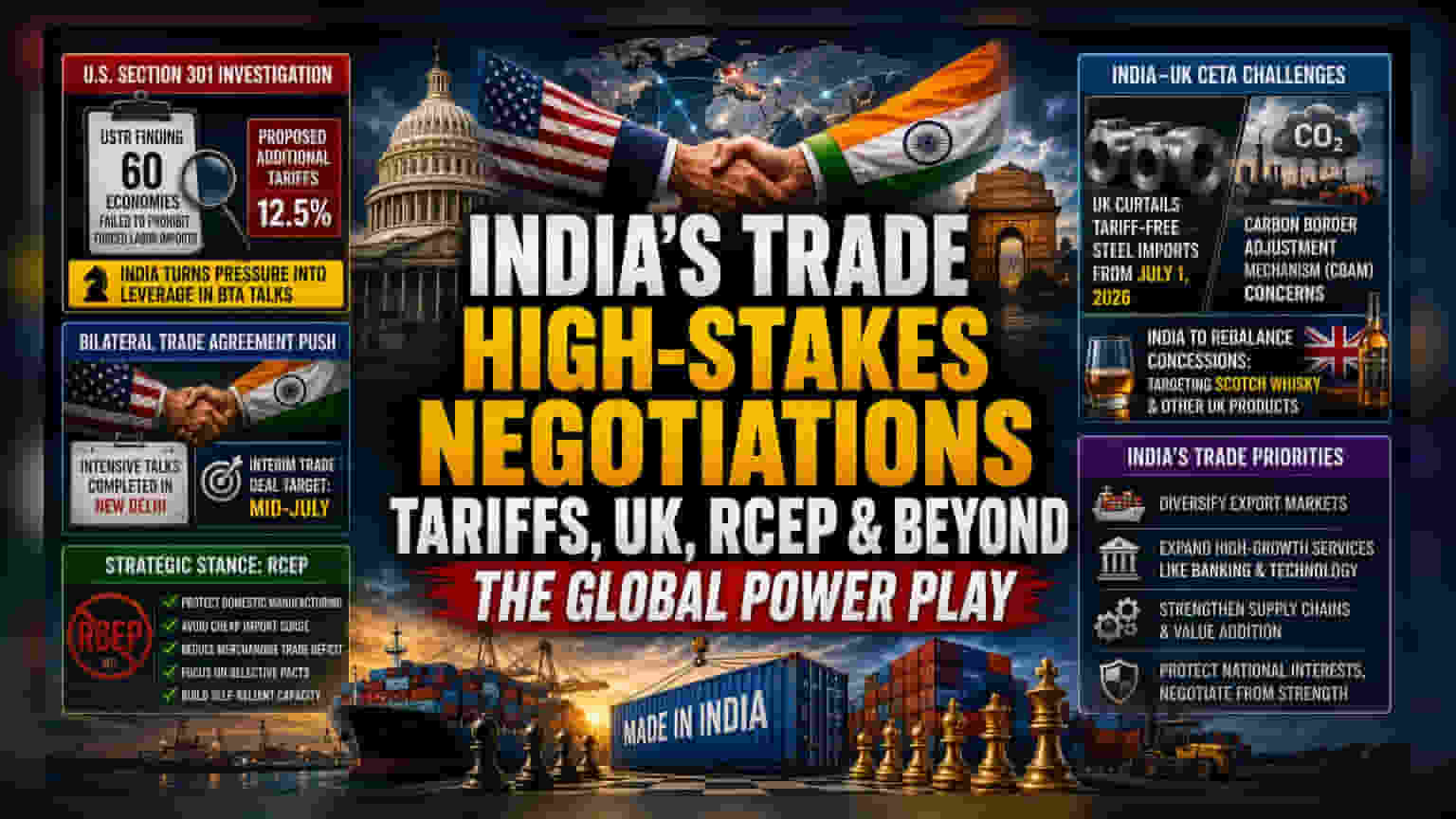


The Geopolitical Trade Gambit
The narrative surrounding the latest Section 301 investigation has been aggressively recalibrated by Indian trade leadership. While the U.S. Trade Representative (USTR) recently determined that 60 economies—including India—failed to effectively prohibit imports of goods produced with forced labor, Commerce Minister Piyush Goyal has dismissed the accompanying proposal for 12.5% additional tariffs. Instead of viewing these findings as a punitive end-state, New Delhi is positioning the investigation as a bargaining chip within the broader U.S.-India Bilateral Trade Agreement (BTA) framework.
Negotiating Under Fire
The USTR’s investigation, which concluded on June 2, 2026, places India alongside major economies like China and Japan in a higher-tariff tier. However, Indian negotiators are operating on a parallel track, having recently completed intensive discussions in New Delhi with U.S. counterparts. The goal remains a "vibrant" interim trade deal expected by mid-July. This strategy acknowledges that the current U.S. administration, having faced legal hurdles with previous reciprocal tariff initiatives, may be utilizing Section 301 as a mechanism to force concessions that are difficult to secure through standard diplomatic channels.
The UK Steel Friction
Trade tensions are not limited to the trans-Pacific relationship. The implementation of the India-UK Comprehensive Economic and Trade Agreement (CETA) faces significant headwinds due to London’s decision to curtail tariff-free steel imports starting July 1, 2026, and the looming prospect of a Carbon Border Adjustment Mechanism (CBAM). Minister Goyal has indicated that India is prepared to rebalance concessions, specifically targeting British products like Scotch whisky, to offset the impact of the UK's steel safeguards. This reflects a hardening stance, where India is increasingly willing to employ tit-for-tat measures to protect its export competitiveness.
Structural Risks and the RCEP Stance
Beyond bilateral disputes, India remains firm in its exclusion from the Regional Comprehensive Economic Partnership (RCEP). Government analysis maintains that rejoining the China-led pact would undermine domestic manufacturing capacity and expose vulnerable sectors to an influx of low-cost imports. The focus remains on building domestic capacity and selective bilateral agreements, rather than broad, multilateral liberalization that could exacerbate existing merchandise trade deficits. While the U.S. market remains the primary destination for Indian exports, the government is pushing domestic corporations to diversify into high-growth sectors such as banking and technology, aiming to reduce reliance on vulnerable commodity-based supply chains.