 Whalesbook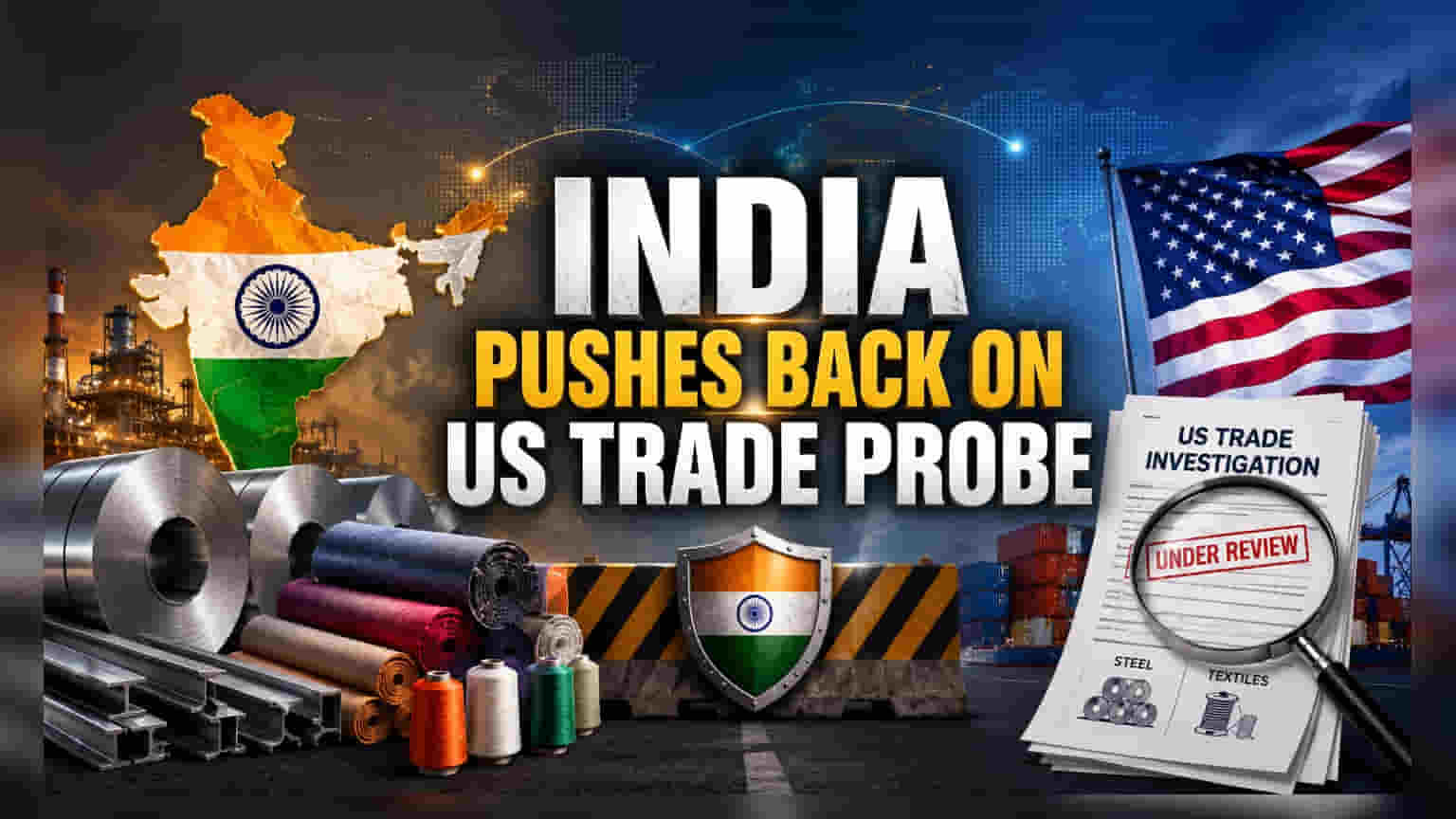


India has rejected US allegations of excess production capacity in its steel and textile sectors during a Section 301 trade investigation. This development is crucial for investors as it links to a potential India-US trade agreement and the upcoming July 24 tariff deadline, which could impact margins for major exporters.
What Happened
India has officially pushed back against a US trade investigation concerning its steel and textile sectors. The probe, conducted under Section 301 of the US Trade Act—a tool used to investigate foreign trade practices deemed unfair—had questioned India's production capacity, alleging that the country holds an unfair surplus. An official from the government stated that India does not maintain excess capacity in these industries. Instead, the government argued that current output levels are directly aligned with the country's massive domestic population and growing local demand. The official noted that India’s per-capita production and consumption figures remain well below those of developed economies, refuting the claim that India is dumping products or producing beyond its own needs.
Why This Matters For Investors
For investors in Indian steel and textile companies, this trade investigation is a key event to monitor. Many large listed entities in these sectors rely on exports to the US as a significant revenue stream. If the US concludes that Indian capacity is excessive, it could lead to the imposition of new tariffs or stricter import restrictions. These barriers often increase costs for exporters and can squeeze profit margins if the companies are unable to pass these costs on to customers. A resolution that avoids further tariffs would provide stability for these export-heavy businesses, while continued friction creates uncertainty about future revenue and margins.
The Trade Agreement Link
The ongoing trade investigation is also closely tied to broader negotiations for a long-awaited India-US trade agreement. Market observers see the conclusion of this probe as a potential gateway to finalizing these talks. India is reportedly seeking clear assurances that no further tariffs will be introduced once a deal is settled. The current environment is particularly sensitive because a temporary 10% tariff regime is scheduled to expire on July 24. After this date, standard Most Favoured Nation (MFN) tariff rates are expected to apply unless a new understanding is reached. This expiration creates a near-term deadline that investors should track for any potential impact on trade flows and company earnings.
Sector Pressure and Business Impact
The steel and textile sectors are inherently sensitive to international trade policies. When global trade tensions rise, Indian exporters often face the double challenge of potential tariff hikes and increased competition from other manufacturing nations. Indian negotiators are reportedly advocating for favorable tariff treatment compared to global competitors, which is a strategic move to help domestic companies maintain their competitive edge in the US market. For investors, the ability of these companies to navigate potential export restrictions while managing their costs will be a critical measure of their business resilience.
What Investors Should Track
Investors may keep a close watch on the outcome of the Section 301 investigation, as it will likely determine the direction of future trade policies between the two nations. The specific date to watch is July 24, when the current 10% tariff regime is set to expire. Any official announcements regarding the trade agreement, updates on tariff negotiations, or changes in US import policy will be important. Additionally, it is worth monitoring management commentary from major steel and textile exporters regarding their exposure to the US market and their strategy to handle potential trade hurdles.