

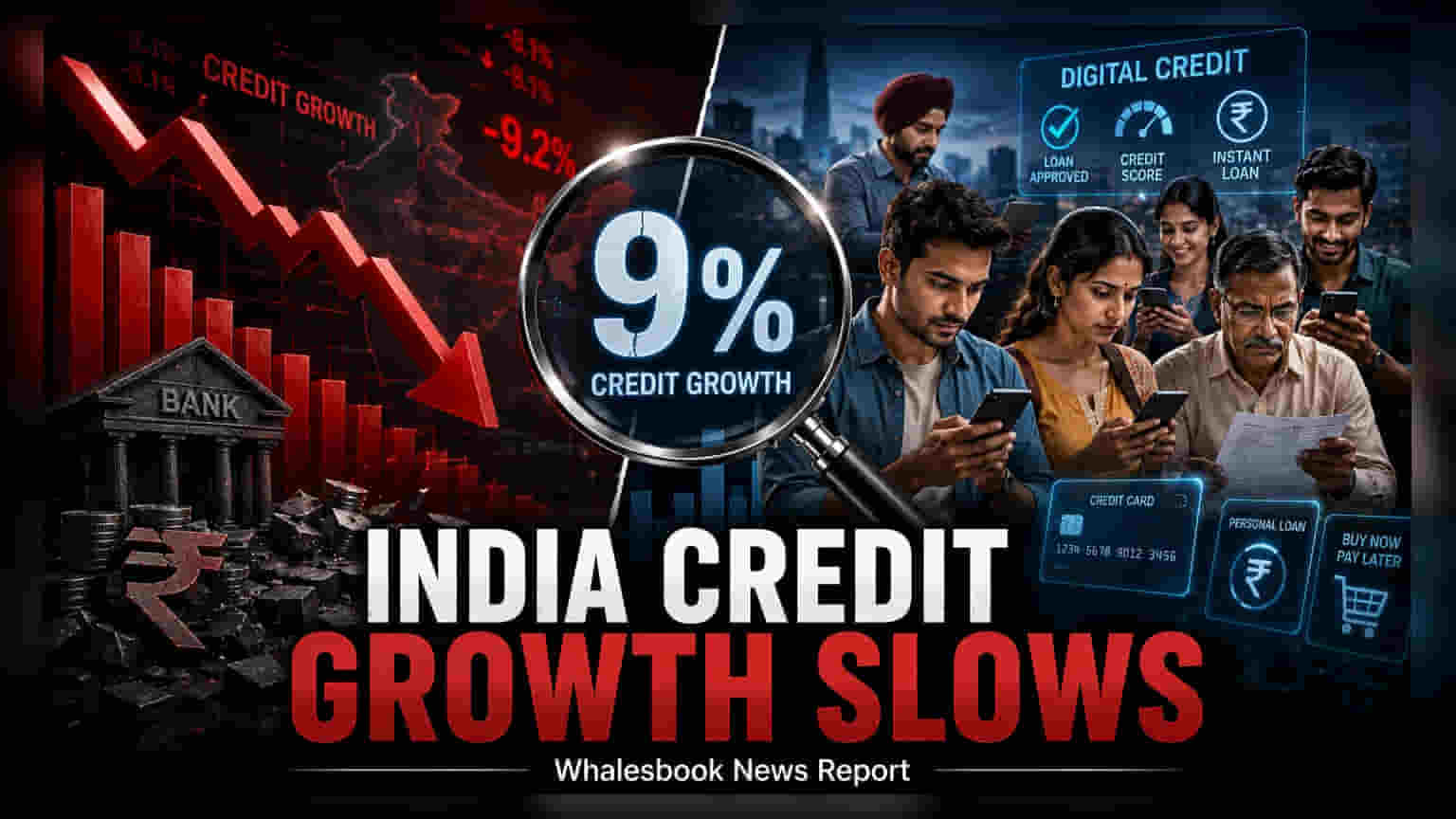
India's credit-active consumer growth rate has moderated to 9% for 2024-2026, down from 14% in the 2017-2019 period, according to a TransUnion CIBIL report. While overall growth has cooled, credit penetration has reached 28% of the eligible population. Lenders are now focusing on sustainable, targeted lending rather than rapid, broad-based expansion to manage this new phase of the credit cycle.
The rapid pace of credit expansion in India is showing signs of cooling. A recent report by TransUnion CIBIL titled 'Unlocking Access: Journey of Credit Expansion in India' reveals that the compounded annual growth rate (CAGR) of new credit-active consumers has slowed to 9% between March 2024 and March 2026. This is a significant shift from the 14% growth observed during the 2017-2019 period, signaling that the Indian credit market is moving away from a phase of explosive, broad-based growth toward a more measured and selective strategy.
Evolving Landscape for Retail and Commercial Borrowers
For investors, this moderation indicates a changing environment for banks and non-banking financial companies (NBFCs). The data shows that the industry is shifting its focus toward responsible and inclusive lending. While credit penetration has improved substantially—reaching nearly 28% of the eligible population by March 2026, compared to just 11% in 2017—the era of easy, mass-market credit acquisition may be plateauing. The number of credit-active consumers has grown steadily, but the intake of 'new-to-credit' (NTC) individuals has declined to 13% as of March 2026, down from 32% in 2017.
Commercial lending is facing even more pronounced headwinds. The proportion of 'credit active' enterprises has dipped to 9% from 10% in 2017, and the share of 'ever credited' businesses has fallen to 41% from 50%. Most notably, new-to-credit originations for enterprises have dropped sharply to 39%, down from 60% in 2017. These trends suggest that while established businesses remain engaged, lenders are becoming more cautious in extending credit to new or smaller enterprises, likely in response to broader economic pressures or risk-mitigation strategies.
Future Growth Opportunities and Monitoring
Despite the cooling growth, the report highlights that India still has significant headroom. With credit penetration around 28%, the market remains well below the 80% levels often seen in developed economies like the US and Canada. Industry experts suggest that the next phase of growth will likely come from deeper engagement with existing borrowers and a renewed, targeted approach toward the MSME sector, which remains an underserved frontier.
Investors may monitor how lenders adapt their balance sheets to this lower-growth environment. The key will be watching for signs of credit quality deterioration or improvements as lenders move toward more targeted strategies. The sustainability of loan books, the ability of financial institutions to maintain profit margins despite slower volume growth, and the success of digital-led lending to reach untapped NTC segments will be important factors to track in upcoming quarterly earnings and management commentary.