

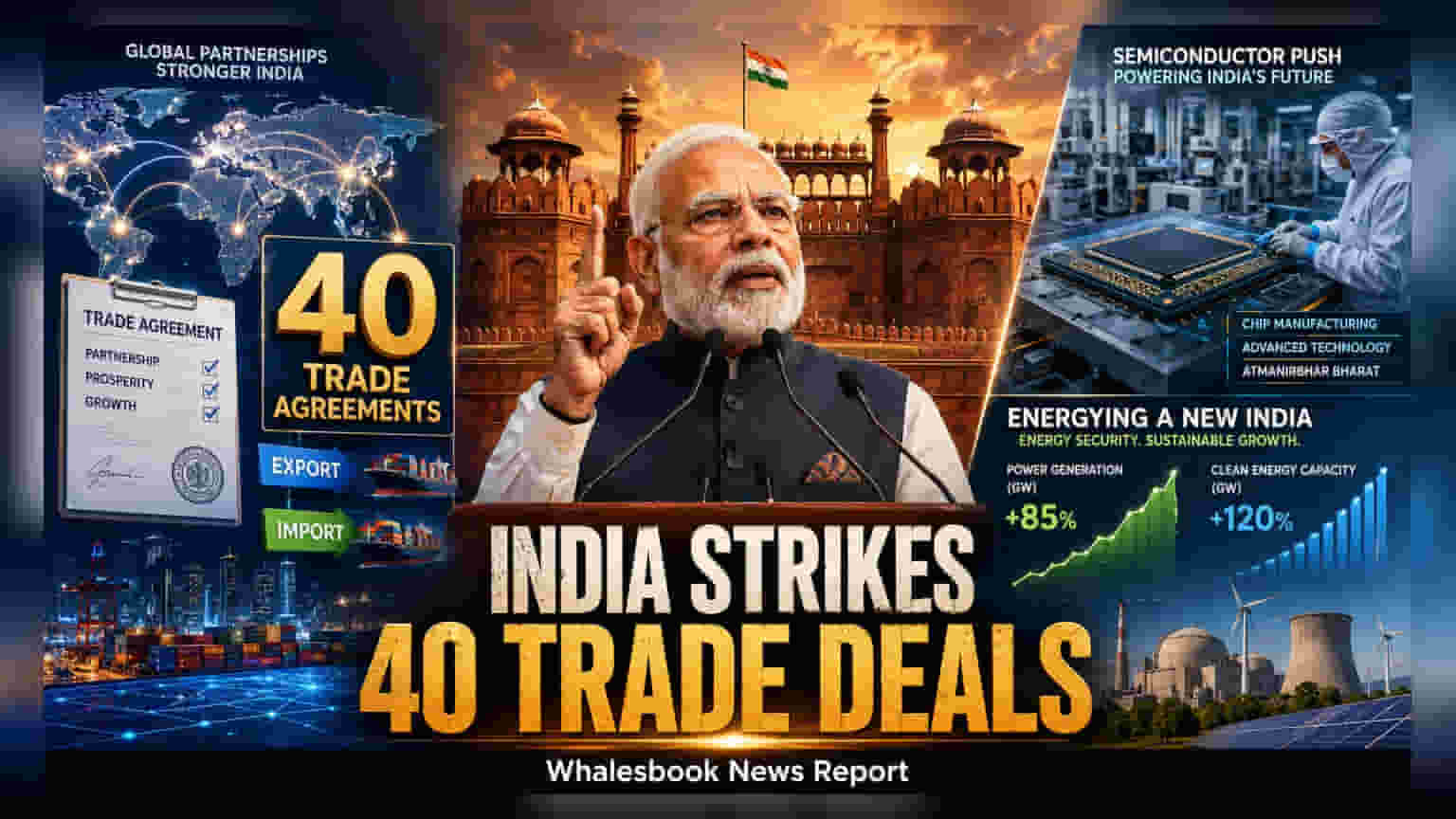
Prime Minister Narendra Modi announced on August 15, 2026, that India has finalized free trade agreements with 40 nations. The speech highlighted significant growth in domestic manufacturing, including a 33-fold rise in mobile production, and outlined long-term national targets for semiconductor and nuclear energy expansion.
In his 80th Independence Day address from the Red Fort, Prime Minister Narendra Modi announced a significant milestone for India’s global trade: the finalization of free trade agreements with 40 nations. These agreements are designed to deepen India’s integration into the global economy, potentially opening new markets for Indian exporters while increasing the flow of goods and services between partner countries.
Manufacturing and Export Momentum
The Prime Minister used the occasion to highlight the success of India's manufacturing drive over the past 12 years. Data shared during the address showed a substantial transformation in industrial capacity, with defense production rising fourfold and electronics manufacturing increasing sevenfold. The most notable expansion was in mobile phone production, which has seen a 33-fold increase. For investors, this shift indicates a sustained policy focus on domestic manufacturing, which often translates into tax incentives, land availability, and infrastructure support for companies operating in these high-growth sectors.
Energy and Semiconductor Capex
Beyond current manufacturing metrics, the address outlined aggressive long-term goals for capital-intensive sectors. The government is pushing for a 200 GW target for nuclear energy, with five new reactors currently under construction. This effort aims to stabilize the energy supply and reduce reliance on imported fuel, which can be a key variable for industrial profit margins.
Additionally, the government is prioritizing the semiconductor industry, with three plants already operational. The plan includes the launch of five to eight new semiconductor manufacturing facilities over the next seven to eight years. These projects require immense capital spending and advanced technical expertise. The success of these initiatives will depend heavily on the government’s ability to attract global technology partners and maintain stable supply chains.
Investor Context and Risks
While the long-term vision aims to position India as a global manufacturing hub, investors should monitor the execution risks associated with these large-scale infrastructure projects. Building a semiconductor ecosystem and expanding nuclear capacity are multi-year tasks that require consistent funding and policy support.
Furthermore, while free trade agreements provide export opportunities, they also increase competition from foreign companies entering the Indian market. Domestic manufacturers will need to ensure they remain cost-competitive to defend their market share. Additionally, the Indian economy remains sensitive to global commodity price fluctuations and supply chain disruptions, which could impact the raw material costs for companies in the manufacturing sector.
Looking ahead, the next monitorable updates for market participants will be the actual commissioning timelines for the announced semiconductor plants and the progress of the nuclear capacity expansion. Investors may also track how specific trade agreements impact the import-export balance for different sectors in the coming quarterly results.