

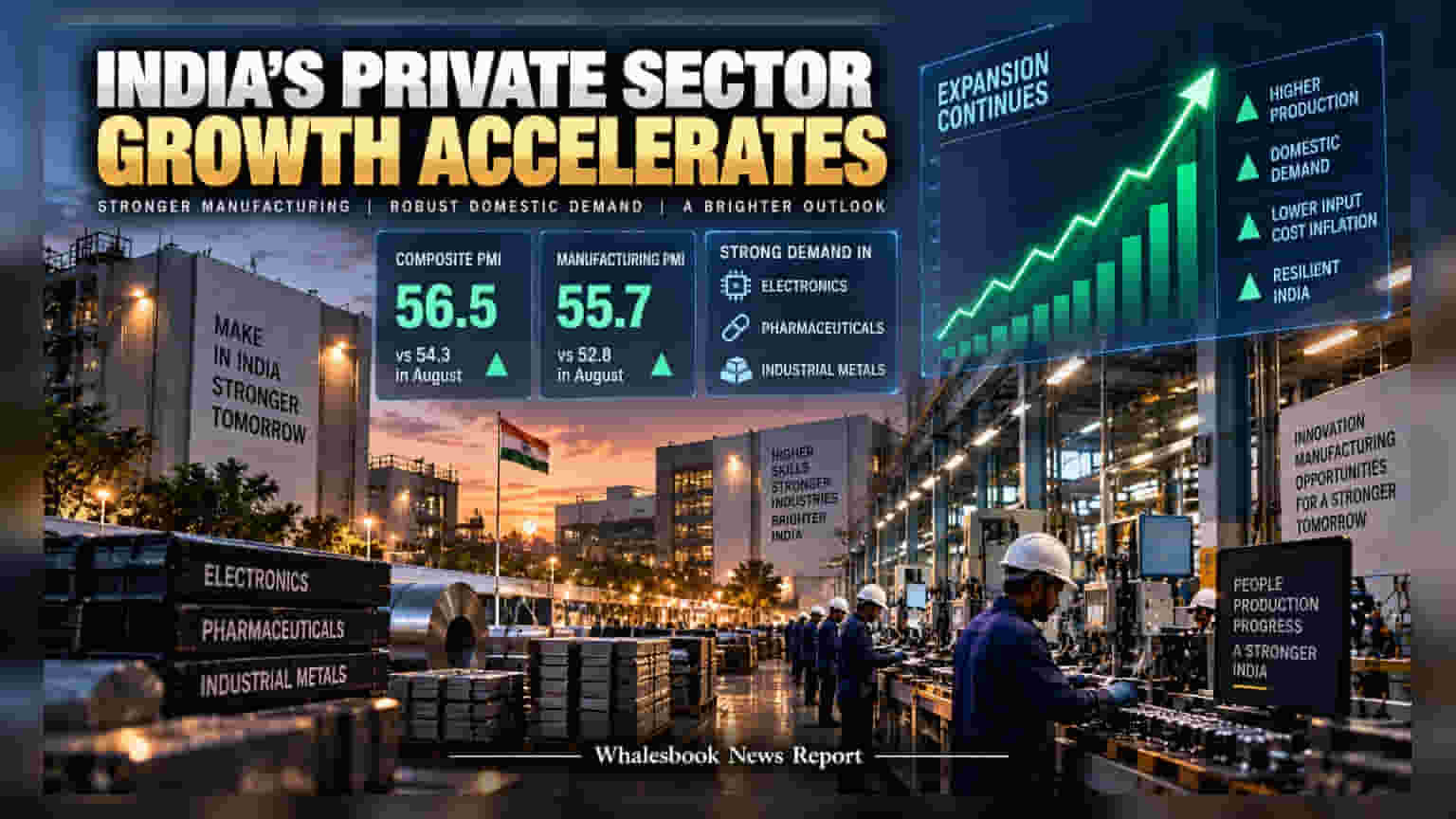
India's private sector activity reached a four-month high in September with a PMI reading of 56.5. Strong manufacturing output is driving domestic growth, but investors should monitor a three-year low in export order growth, which signals potential headwinds for export-oriented sectors.
India’s private sector growth accelerated in September, with the HSBC Flash India Composite Purchasing Managers' Index (PMI) rising to 56.5 from 54.3 in August. A PMI reading above 50 indicates expansion in business activity, and this latest figure marks the most significant increase since June. This growth is primarily driven by the manufacturing sector, which recorded a flash PMI of 55.7, rising from 52.8 in the previous month.
Manufacturing strength is currently centered on sectors like electronics, pharmaceuticals, and industrial metals, where companies are seeing robust demand. This jump in activity suggests that factories are ramping up production to meet domestic consumption. To manage supply chain uncertainties caused by ongoing geopolitical tensions in the Middle East, manufacturers are actively increasing their inventory levels. While this supports production figures, investors should note that holding higher inventory can tie up working capital and potentially impact cash flow if demand does not match these stock levels in the coming months.
While the domestic market shows resilience, there is a clear divide regarding international trade. Growth in new export orders has slowed significantly, reaching a three-year low. This slowdown is particularly notable for service providers, who face a tougher global environment compared to their manufacturing counterparts. The divergence suggests that while the Indian economy is currently benefiting from strong internal demand, companies heavily reliant on international markets may face a more challenging revenue environment.
Inflationary trends across the sector remain mixed. Overall input cost inflation fell to its lowest point since January, which typically supports profit margins. However, this is not uniform across all businesses. Manufacturers are reporting higher costs for essential raw materials like fuel and specific pharmaceutical ingredients, forcing them to raise factory-gate prices. In contrast, price increases in the service sector have moderated.
Looking ahead, the sustainability of this growth depends on how well companies balance rising raw material costs against the cooling export demand. Investors may monitor upcoming quarterly results to see if the increased manufacturing activity and inventory build-up are translating into higher sales and healthy profit margins, or if rising costs are compressing bottom-line performance. Future updates on export growth rates and the stability of supply chains will also be important indicators of how the private sector navigates these uneven conditions.