

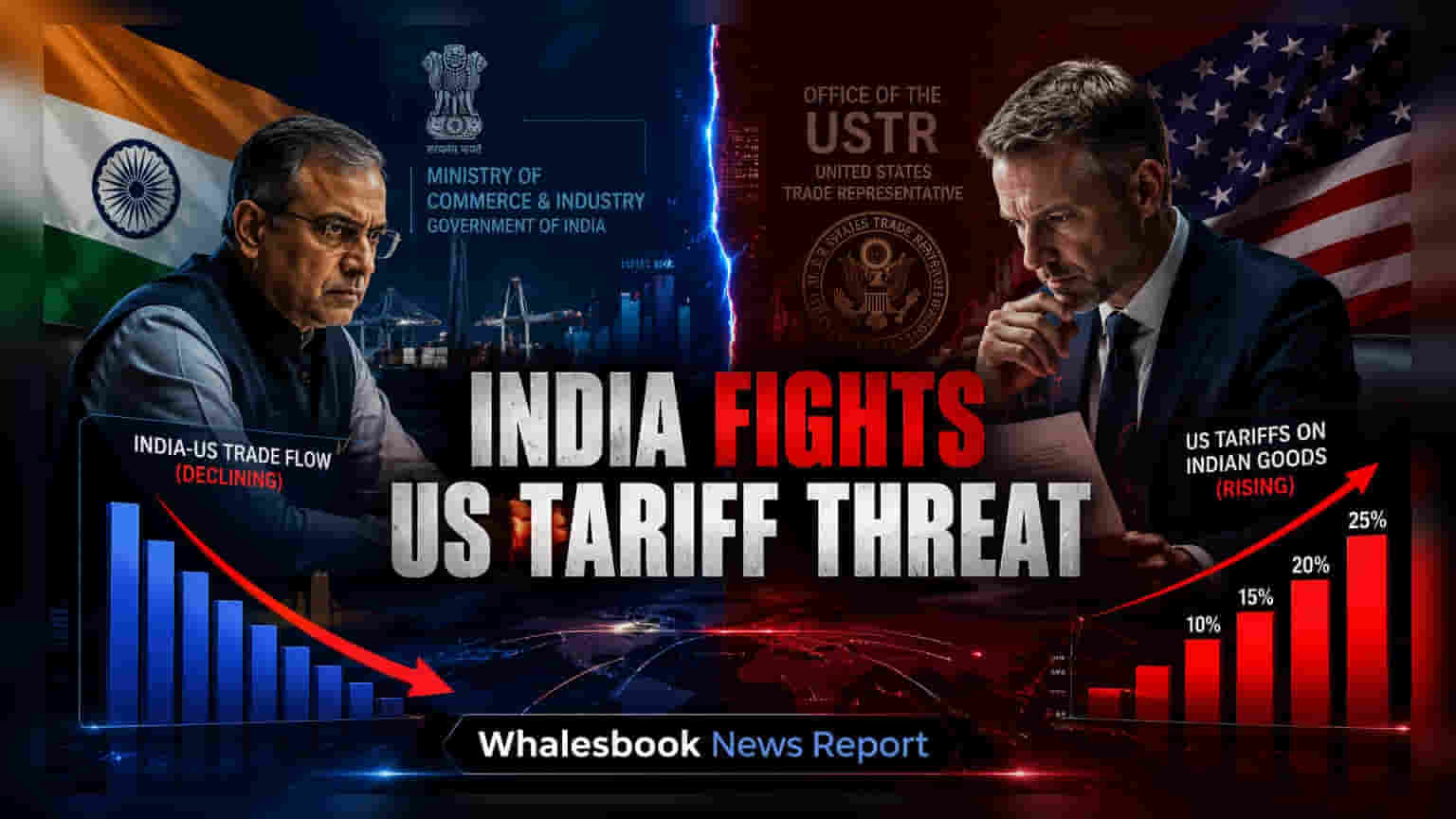
The US has proposed a 12.5% tariff on Indian goods, alleging inadequate action against forced labor. India has officially rejected these claims, citing a lack of evidence and legal justification, creating uncertainty for ongoing bilateral trade negotiations.
The Indian government has formally contested a move by the US administration to impose a 12.5% tariff on a wide range of imports, including those from India. The proposed levy follows a Section 301 investigation by the US Trade Representative (USTR) into labor practices across 60 economies. This potential tax is being monitored by investors as it may replace a 10% tariff scheduled to expire on July 24, 2026.
Legal and Evidentiary Disputes
In its official submission to the USTR, India asserted that the proposal fails to meet the legal requirements under Section 301(d) of the US Trade Act. The government argued that the US has not provided country-specific evidence to support claims that India’s trade policies create an unfair competitive advantage or harm US businesses. India emphasized that its domestic legal frameworks for due diligence and labor enforcement are robust, and noted that the US case relies on general observations rather than concrete, India-specific data.
Furthermore, India presented data in its submission showing that major export sectors are not linked to forced labor. The government also pointed to trade patterns, such as the increase in US imports of Indian cotton and tobacco, as evidence that Indian products are successfully competing in the US market without violating labor standards.
Impact on Domestic Industry
Several large Indian companies have expressed opposition to the proposed tariffs. Reliance Industries and Alok Industries are among the entities challenging the move, arguing that the duties could reintroduce trade barriers that have previously faced legal hurdles. Smaller exporters, particularly those in the agricultural sector such as suppliers of dehydrated onions and garlic, have also raised concerns that the additional 12.5% cost burden will likely be passed on to American consumers, potentially reducing the competitiveness of Indian goods in the US market.
Trade Deal Uncertainty
This development comes at a critical time for US-India trade relations, with negotiations for a bilateral trade agreement currently underway. Market observers note that the outcome of this Section 301 probe could complicate these talks. India has consistently maintained that any trade agreement must provide a competitive advantage to its exporters relative to other manufacturing hubs like China and Vietnam.
Investors are now tracking whether the US will proceed with the new tariff structure or reach a negotiated settlement. The resolution of this investigation is expected to be a primary factor in determining the cost environment for major Indian exporters and the overall stability of the bilateral trade framework in the coming months.