

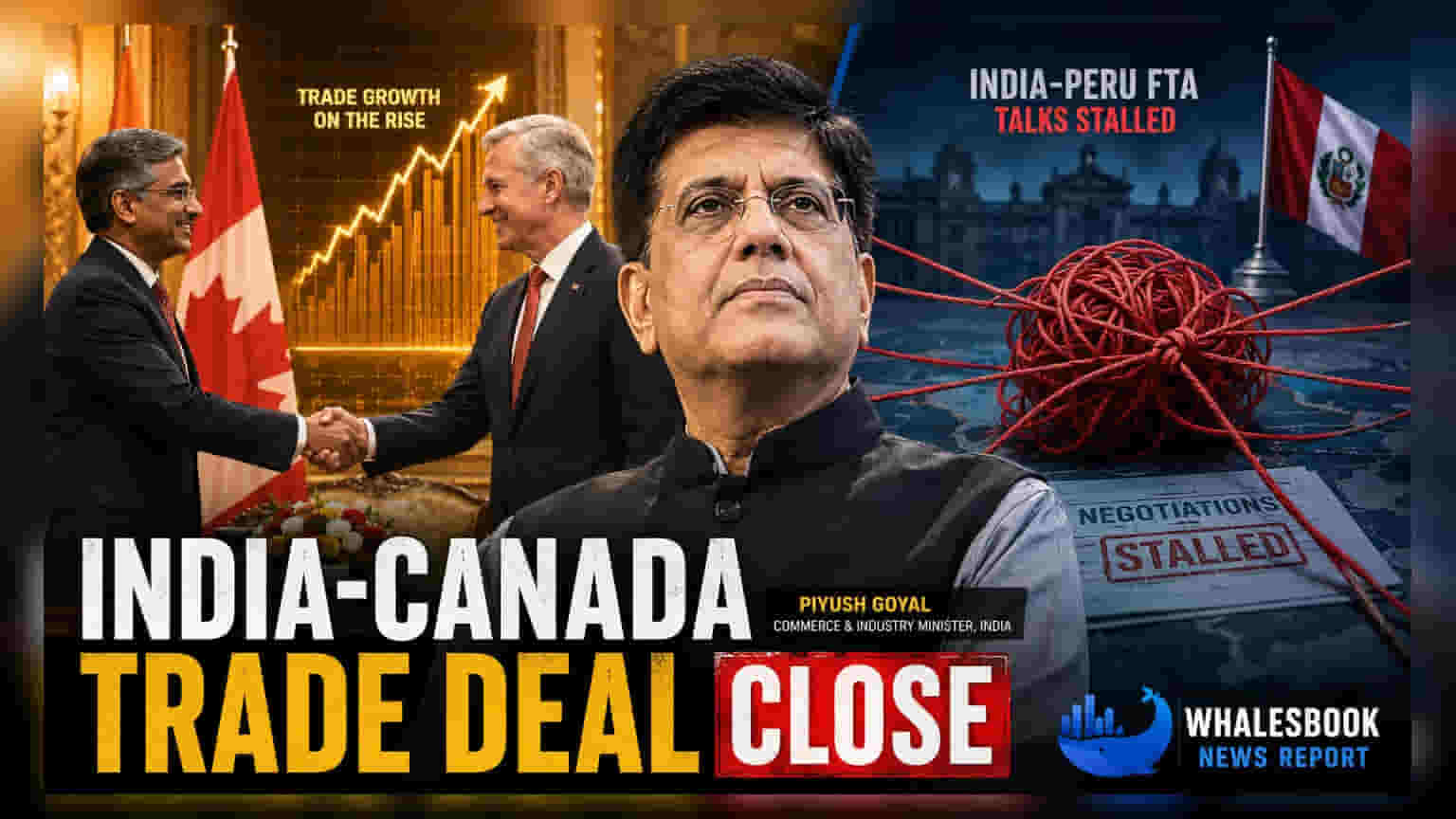
Commerce Minister Piyush Goyal expects a free trade agreement with Canada within six months, while talks with Peru face delays due to market access issues. The government is pushing domestic toy manufacturers to leverage new trade deals to boost exports to Europe and the UK.
What Happened
India is moving toward finalizing a Free Trade Agreement (FTA) with Canada, with the Commerce and Industry Minister Piyush Goyal stating that an agreement could be reached within the next six months. Negotiators are set to meet in Canada next week to advance the discussions. In contrast, the proposed FTA with Peru has stalled due to unresolved market access concerns. The Minister noted that India cannot provide market access for certain products, which has created a bottleneck in negotiations, making a near-term resolution unlikely.
Leveraging Trade Deals For Global Growth
During the 17th Toy Biz International B2B Exhibition, the Minister emphasized the importance of India’s growing network of trade agreements. He pointed to duty-free access across Europe and the upcoming India-UK Free Trade Agreement, scheduled to take effect on July 15, as key tools for domestic manufacturers. The government aims to help Indian businesses move beyond the domestic market and build recognizable global brands by utilizing these preferential trade terms.
The Toy Industry Opportunity
India currently holds a small 0.3% share of the $120 billion global toy market. The government has set an ambitious target to raise this share to 5% over time. India's toy exports were valued at $340 million in 2024, and officials believe this figure has the potential to grow tenfold. To support this objective, the government continues to enforce Quality Control Orders, which require manufacturers to meet specific safety and quality benchmarks. This policy is intended to ensure that Indian toys remain competitive in high-value international markets.
Business Context and Risks
For investors, the impact of FTAs varies significantly by sector. While these agreements provide easier access to international markets, they also increase competition within India by reducing import duties on foreign products. The difficulty in the Peru negotiations highlights that trade deals are complex and often hit hurdles regarding specific product categories. Whether Indian manufacturers can successfully scale their operations to capture global market share will depend on their ability to improve product quality, manage supply chain costs, and comply with international standards. Future developments to watch include the actual outcomes of the upcoming Canada negotiations and the practical impact of the new India-UK trade agreement on domestic export volumes.