

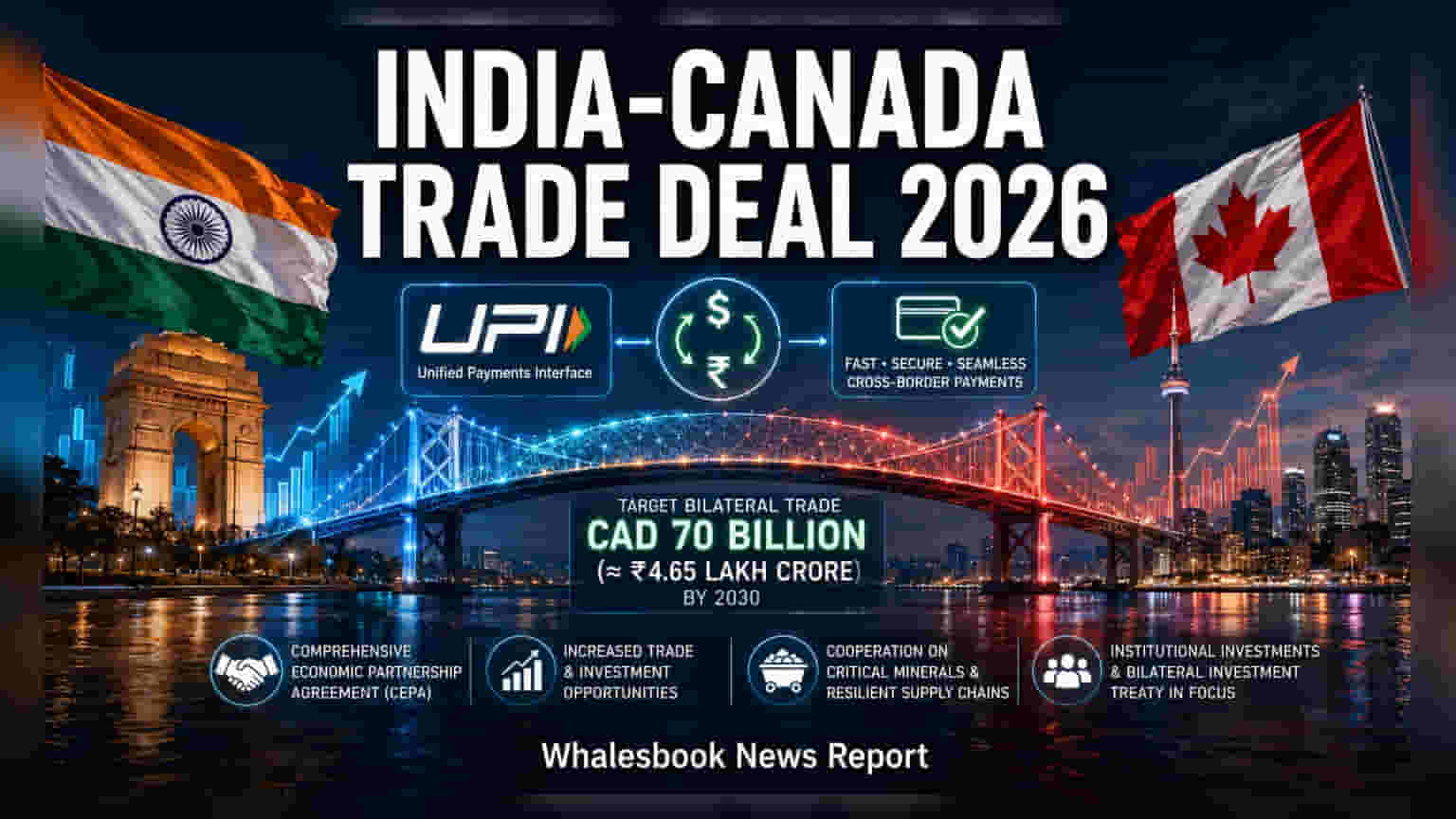
India and Canada aim to finalize a comprehensive trade agreement by late 2026, targeting CAD 70 billion in bilateral trade by 2030. During the inaugural Economic and Financial Dialogue in Toronto, officials also discussed integrating India’s UPI payment system to streamline cross-border transactions and launching a new investment treaty.
India and Canada have formally signaled a push to strengthen economic ties, with the goal of finalizing a Comprehensive Economic Partnership Agreement (CEPA) by the end of 2026. The commitment followed the inaugural Economic and Financial Dialogue held in Toronto, where India’s Finance Minister Nirmala Sitharaman met with Canadian Finance Minister François-Philippe Champagne. The two nations are targeting a significant increase in bilateral trade, aiming to reach CAD 70 billion, or approximately ₹4.65 lakh crore, by 2030.
Expanding Digital Finance and UPI
A major highlight of the discussions was the potential expansion of India’s Unified Payments Interface (UPI) into the Canadian market. If successfully implemented, this move would allow for faster, more efficient cross-border remittances and merchant payments, reducing transaction costs for individuals and businesses. The initiative aims to leverage India’s expertise in digital infrastructure to modernize financial settlements between the two countries. However, the operational success of this project will depend on navigating Canada’s distinct regulatory and banking compliance frameworks, which differ significantly from India’s domestic payment environment.
Investment and Strategic Cooperation
The dialogue also focused on facilitating deeper engagement for institutional investors. Canadian pension funds are already significant investors in India, with large stakes in infrastructure, road projects, and renewable energy sectors. To support this flow of capital, both governments are working toward a Bilateral Investment Treaty. This framework is intended to provide a more stable, secure environment for long-term investments.
Beyond finance, the countries identified critical minerals as a strategic priority. This cooperation is designed to build resilient supply chains and reduce dependence on singular global sources, a move that aligns with broader efforts to diversify trade environments and protect against global supply chain disruptions.
Monitoring Future Progress
While the commitment to a 2026 trade deal is ambitious, investors and businesses should monitor the practical pace of these negotiations. Trade agreements are often complex and susceptible to delays due to domestic policy considerations or changing geopolitical dynamics. For the UPI project, the key monitorable will be the progress of partnerships between Indian fintech entities and Canadian financial service providers, as well as the timeline for regulatory approvals. The next scheduled dialogue in 2027 will likely serve as a checkpoint to evaluate whether these initiatives have transitioned from policy discussions to actual on-ground implementation.