

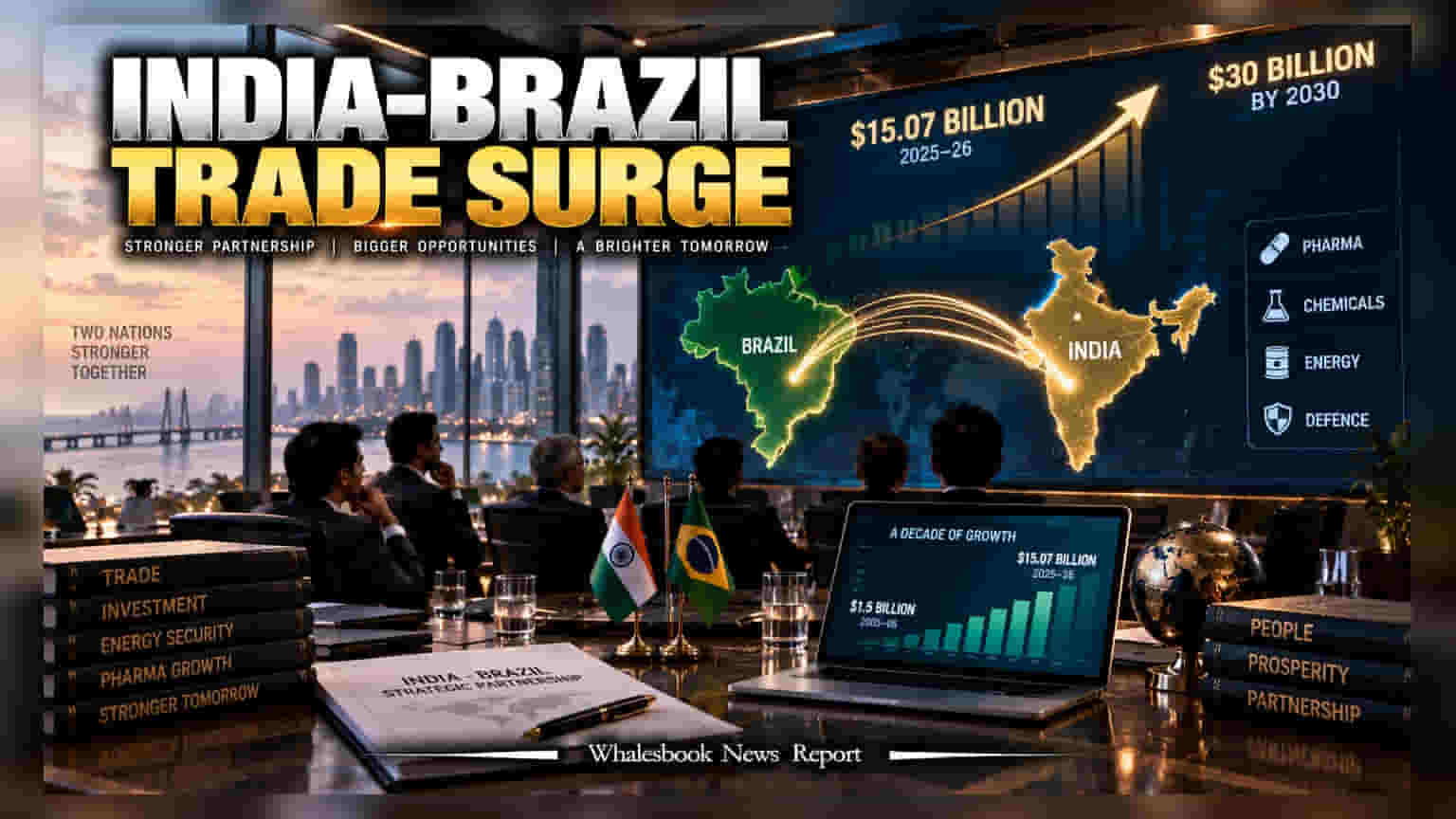
India’s annual trade with Brazil reached $15.07 billion in FY2026, up ten-fold from two decades ago. While both countries aim to double this volume by 2030, India has shifted from a trade surplus to a deficit of nearly $1 billion due to a surge in commodity imports like sugar.
The bilateral trade relationship between India and Brazil has reached a major milestone, with annual trade volume touching $15.07 billion in the 2025–26 fiscal year. This marks a ten-fold increase from the $1.5 billion recorded two decades ago, reflecting deeper economic integration between the two nations. Both countries have now set an ambitious roadmap to increase this trade figure to $30 billion by 2030, with a focus on high-growth sectors including pharmaceuticals, chemicals, energy, and defense.
The Shift in Trade Balance
For investors, the most significant change in this economic relationship is the reversal of the trade balance. In recent years, India maintained a trade surplus with Brazil, but the 2025–26 fiscal year saw this shift into a deficit of approximately $1 billion. This change is primarily driven by a 48% surge in imports from Brazil. A significant portion of this increase comes from commodities, particularly sugar and crude oil. For companies in the Indian sugar and energy sectors, this trend highlights the growing importance of global pricing and import volumes in managing domestic supply and margins.
Key Sectors and Future Growth
India continues to view Brazil as a vital market for its pharmaceutical and chemical exports. However, growth in these sectors is often tied to navigating complex regulatory pathways. Companies looking to expand their footprint in Brazil must manage these approval processes, which remain a primary focus for trade negotiators. The upcoming 18th BRICS Summit, scheduled to be hosted by India in New Delhi on September 12–13, 2026, is expected to serve as a platform for addressing these regulatory challenges and strengthening cooperation in innovation and sustainable trade.
Monitoring the Outlook
As the two nations work toward the $30 billion trade target, the primary monitorable for investors will be the sustainability of the trade deficit. A persistent deficit, driven by rising imports, may prompt policymakers to review import policies or tariffs, particularly in sensitive sectors like sugar or energy. Investors should also track any updates from the BRICS summit regarding new bilateral agreements, as these could influence the ease of doing business for Indian exporters in the Brazilian market. Whether this trade growth translates into better margins for Indian chemical and pharma firms will depend on their ability to secure favorable regulatory access in the coming quarters.