

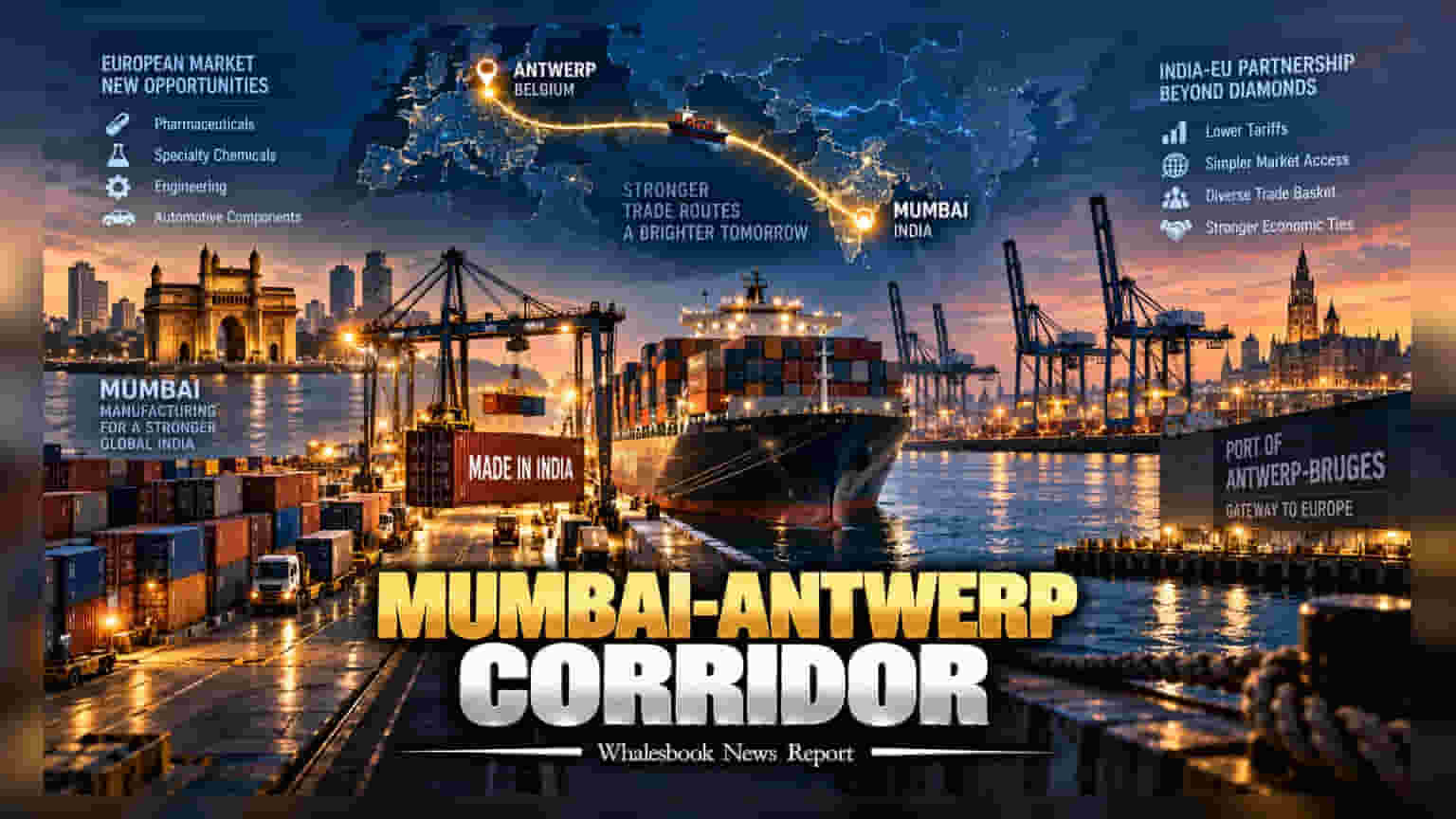
Belgian Prime Minister Bart De Wever visited Mumbai on September 4, 2026, to discuss deepening economic ties. With bilateral trade reaching $13 billion in FY26, the focus is shifting from diamonds toward sectors like pharmaceuticals, chemicals, and engineering. This effort aligns with the recent India-EU Free Trade Agreement, aimed at reducing trade barriers for Indian exporters.
Belgian Prime Minister Bart De Wever visited Mumbai on September 4, 2026, to meet with business leaders and officials, signaling a renewed effort to strengthen economic ties between India and Belgium. The visit underscores a strategic pivot in the bilateral relationship, which has historically been heavily dependent on the diamond trade. Both nations are now looking to expand cooperation into high-growth sectors, including pharmaceuticals, specialty chemicals, engineering, and automotive components.
While industry discussions have highlighted the concept of an enhanced logistics link, the focus is on utilizing the Port of Antwerp-Bruges as a strategic gateway for Indian goods into the European market. By improving logistics coordination and regulatory alignment, officials aim to reduce supply chain costs and make Indian manufactured products more competitive in the European Union.
The timing of this engagement is significant, as it follows the conclusion of the India-EU Free Trade Agreement. Commerce Minister Piyush Goyal has confirmed broad consensus among the 27 EU member states regarding the pact, which is expected to lower tariffs and simplify market access. For Indian exporters, this agreement serves as the primary tool to move beyond traditional commodity exports and capture a larger share of the European market for value-added products.
Diversifying the Trade Basket
For years, the trade relationship between India and Belgium has been synonymous with the diamond industry. Antwerp serves as a global hub for diamond trading, with a vast majority of Indian exports to Belgium consisting of rough and polished stones. However, this concentration creates volatility for the overall trade balance. When the diamond sector slows down, bilateral trade figures often fluctuate significantly, as seen in the dip from $20 billion in FY2022 to roughly $13 billion in FY2026.
By prioritizing sectors like pharmaceuticals and specialized engineering, the goal is to create a more stable and diverse export basket. These industries are less prone to the specific cyclical downturns that often affect luxury goods like diamonds. Furthermore, European demand for Indian pharmaceutical products and chemical intermediates has been steady, providing a potential cushion for trade volumes.
Potential Risks and Market Challenges
While the push for deeper trade ties is positive, investors should be aware of the inherent challenges. The success of this initiative depends heavily on the effective implementation of the India-EU Free Trade Agreement. Any delays in operationalizing the pact or the introduction of new protectionist policies within Europe could hinder growth targets.
Additionally, trade between the two nations has faced historical volatility. Relying on government-led initiatives to change trade patterns is a long-term process, and the private sector’s ability to adapt to European quality standards and regulatory requirements remains a critical factor. Investors may want to monitor sector-specific export data, rather than just overall trade figures, to assess whether the shift toward manufacturing and technology is actually materializing. The next important update to track will be the specific progress on the logistics and energy sector projects planned for early 2027.