

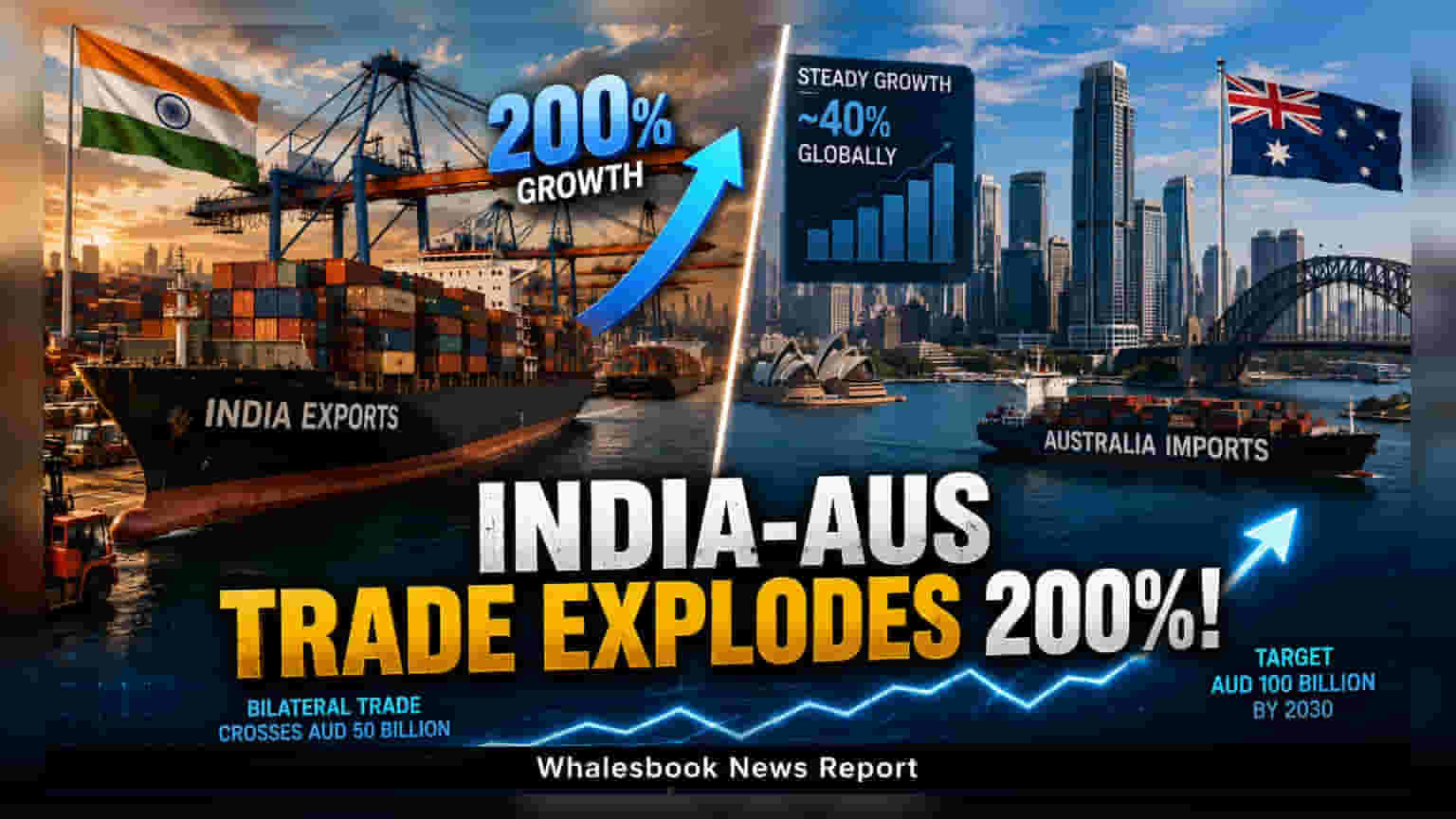
India's exports to Australia have tripled over the last five years, significantly outperforming global export growth. With all Indian goods entering Australia duty-free since January 2026, both nations are now negotiating a broader trade agreement to reach AUD 100 billion in bilateral trade by 2030.
Indian exports to Australia have recorded a substantial 200% growth over the past five years, a performance that stands out against India's broader global export growth of approximately 40% in the same period. This surge is primarily attributed to the India-Australia Economic Cooperation and Trade Agreement (ECTA), which came into effect in December 2022. The impact of this pact has been immediate, with the utilization rate for these trade benefits reportedly reaching 86%, signaling that Indian businesses are actively leveraging the agreement to increase their market presence in Australia.
As of January 1, 2026, Indian goods entering the Australian market now benefit from zero tariffs, a major milestone that has removed the final trade barriers for merchandise. This development has provided a clear competitive edge for Indian exporters in sectors that were previously subject to duties. The bilateral trade volume has already crossed the AUD 50 billion mark, and both governments have set a target to double this to AUD 100 billion by the end of the decade.
The Shift Toward Services and Digital Trade
Following the success of ECTA, which focused primarily on goods, both nations are now in advanced negotiations for the Comprehensive Economic Cooperation Agreement (CECA). This proposed deal aims to go beyond physical goods to include services, the digital economy, and the movement of skilled professionals. For investors, the inclusion of services is a critical monitorable, as it could open new revenue streams for Indian information technology and professional services firms in the Australian market.
This economic cooperation is also extending into infrastructure. Australian firms are already collaborating on large-scale Indian projects, such as the Sardar Vallabhbhai Patel Sports Enclave in Ahmedabad, which is being prepared with an eye toward future international sporting events. Such partnerships highlight the deepening integration of the two economies beyond basic commodity trading.
Risks and Market Realities
While the trade outlook appears positive, investors should remain mindful of inherent risks. International trade agreements are complex and can face delays; historical records show that negotiations between the two nations have faced suspensions in the past, posing a risk to the timeline for finalizing the CECA. Furthermore, bilateral trade remains sensitive to global economic conditions. A slowdown in demand, whether in Australia or globally, could impact export volumes regardless of duty-free access. Economic volatility and shifting regulatory landscapes in either country remain factors that could influence the pace at which the AUD 100 billion trade target is achieved.
The next important update for market participants will be the progress of the CECA negotiations, specifically the scope of market access granted to Indian services companies and any timeline provided for the agreement's conclusion.