

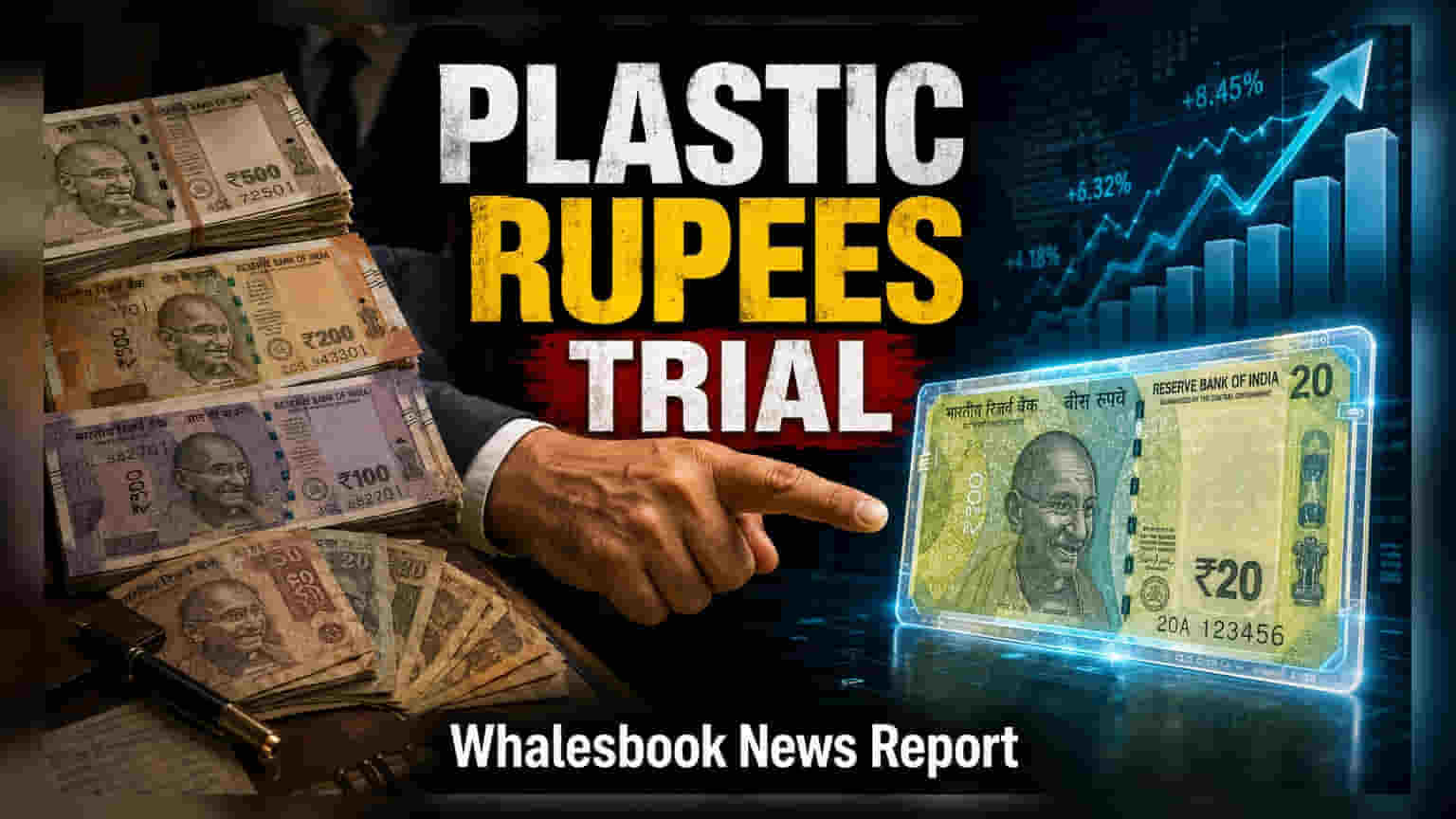
The government has approved trials for one billion polymer banknotes each for ₹10 and ₹20 denominations. The Reserve Bank of India aims to test if these plastic notes, which are expected to be more durable than paper, can perform well in India's climate. They will circulate alongside current paper notes, with no immediate plans for a total replacement.
The Indian government has given the green light to the Reserve Bank of India (RBI) to proceed with field trials for polymer-based banknotes. This initiative will introduce one billion plastic notes each in the ₹10 and ₹20 denominations. The move, aimed at evaluating the performance and durability of polymer substrate compared to traditional paper, marks a significant step in the central bank's efforts to potentially modernize currency management.
Under Section 25 of the RBI Act, 1934, the central bank submitted the proposal to the government, citing the need for field testing before considering any broader rollout. Bharatiya Reserve Bank Note Mudran Private Limited (BRBNMPL), an RBI subsidiary, has already moved to source the materials required. It has floated a global expression of interest for manufacturers to supply biaxially oriented polypropylene (BOPP)-based opacified polymer substrate, with a submission deadline set for August 18, 2026.
While the introduction of polymer currency is being explored, the government has clarified that this is not an immediate move to replace paper currency. The plastic notes are intended to circulate concurrently with existing paper banknotes. This dual-currency approach allows the central bank to maintain the current supply while gathering data on how the new polymer substrate holds up against wear and tear in daily use.
For the economy, this is a pilot project rather than a full-scale conversion. The effectiveness of these notes in India’s diverse and often extreme climatic conditions remains a primary monitorable. While international studies suggest polymer notes offer a longer lifespan, their practical performance in India has yet to be proven. Furthermore, the procurement process introduces potential reliance on specialized global supply chains, which could influence costs and availability.
Investors and observers should note that the project is in its early stages. Official projections suggest that any potential circulation of these notes could happen in the next financial year, specifically FY28, contingent on the success of these trials. The central bank will likely focus on analyzing the durability, user acceptance, and cost-benefit ratios of the plastic substrate versus traditional paper. Future updates regarding the tender outcomes, the finalized cost of production, and any eventual rollout dates will be key indicators of how the program progresses.