

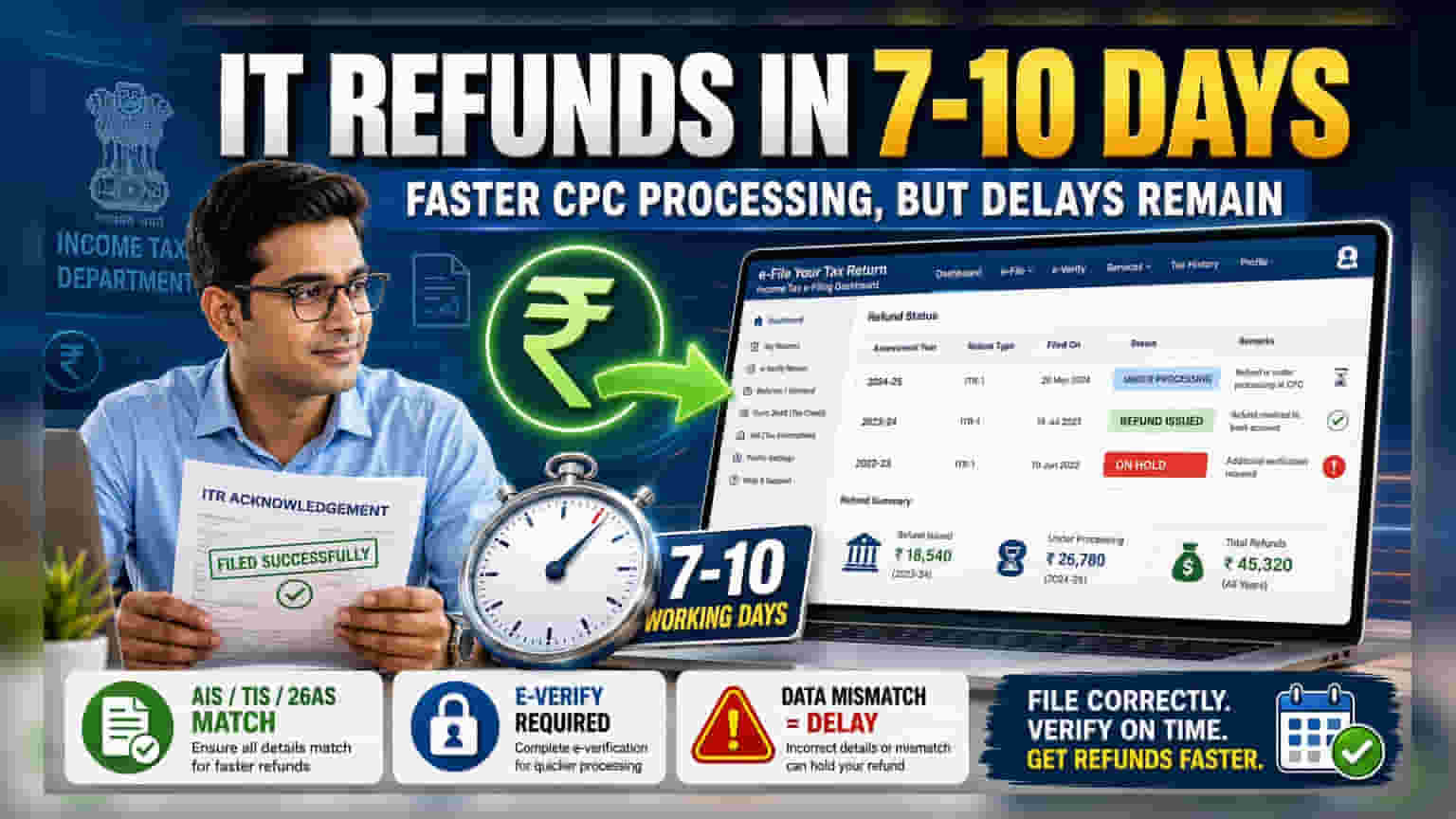
While many straightforward tax refunds are now processed within 7-10 working days due to system automation, others may face delays. Factors like data mismatches, pending e-verification, and automated risk flags can extend this timeline. Understanding these variables helps taxpayers manage their expectations and cash flow.
What Happened
The Income Tax Department has significantly streamlined refund processing for the current assessment year, with many taxpayers receiving their money within 7-10 working days of filing. This speed is driven by enhanced technology at the Centralised Processing Centre (CPC) in Bengaluru. By integrating real-time data from sources like the Annual Information Statement (AIS), Tax Information Statement (TIS), and Form 26AS, the system can now verify standard returns much faster than in previous years. However, this 7-10 day window applies primarily to clean, straightforward filings where all reported data aligns perfectly with the department's internal records.
The Role of Technology and Accuracy
The efficiency gains are largely due to the department's move toward automated data reconciliation. When a taxpayer files a return, the system immediately cross-references the details—such as TDS, advance tax, and self-assessment tax—against the data already available in the department’s systems. If the information matches, the return is processed with minimal human intervention.
For taxpayers, the most important step in this process is e-verification. The refund processing cycle does not start until the return is e-verified. Delaying this step, or providing incorrect bank account details that fail to pre-validate, remains one of the most common reasons for unnecessary waiting, regardless of how fast the system is.
Why Some Refunds Get Delayed
Despite the improved speed, not all returns are processed quickly. The Income Tax Department uses an automated Risk Management Framework (RMF) to screen returns. This system flags filings that exhibit unusual patterns, such as high-value claims, excessive deductions, or discrepancies between reported income and AIS data.
When a return is flagged under this framework, the processing is paused, and the status may show as “On Hold” or “Under Processing.” Common triggers for these flags include:
- Data Mismatches: Discrepancies between the income or TDS reported in the ITR and the data available in the AIS or Form 26AS.
- High Refund Claims: Significant refund amounts relative to the taxpayer's profile may trigger an additional manual review.
- Compliance Queries: Unresolved notices or pending clarifications regarding previous tax years.
Managing Expectations and Next Steps
If a refund is not received within the expected 7-10 day window, taxpayers should not immediately assume there is a major issue. The department typically processes most returns within 4-5 weeks in normal circumstances.
Taxpayers can track the progress of their refund by logging into the official Income Tax e-filing portal. Under the “View Filed Returns” section, the portal provides a lifecycle view of the ITR. Statuses like “Refund Issued,” “Under Processing,” or “On Hold” are updated in real-time. If the status remains “On Hold” for an extended period, taxpayers should check their registered email for any communication from the IT department requesting clarification or documents. Responding promptly to these requests is often the fastest way to resolve the hold and clear the path for the refund to be processed.