

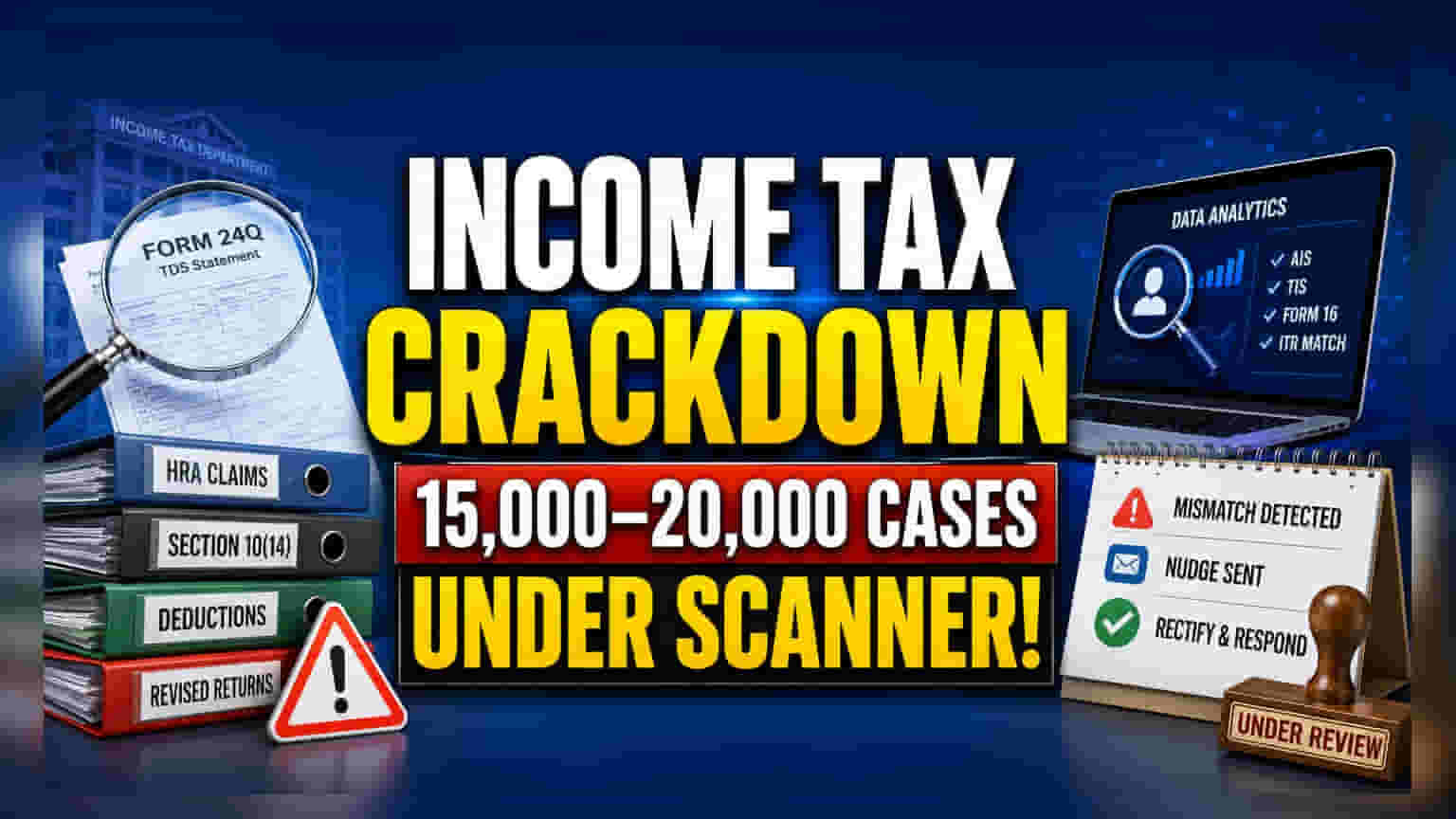
The Income Tax Department is investigating 15,000 to 20,000 salary-related tax filings for discrepancies. The department is working with employers to scrutinize deductions, specifically targeting manipulated claims involving housing allowances and donation categories. This review process uses data analytics to identify mismatches where taxpayers may have incorrectly revised their returns to claim undue benefits.
What Happened
The Income Tax Department has initiated a targeted review of salary-related tax filings to identify potential tax evasion. Authorities have flagged approximately 15,000 to 20,000 cases where discrepancies ranging from ₹50,000 to ₹1 lakh have been detected. The department is currently engaging with employers to scrutinize salary records, particularly focusing on instances where taxpayers may have manipulated deductions to lower their tax liability.
The Targeted Loopholes
The department’s scrutiny focuses on specific practices that deviate from standard tax filing norms. Investigators have identified cases where employees have allegedly withdrawn legitimate claims, such as House Rent Allowance (HRA), to instead claim benefits under Section 10(14) of the Income Tax Act. Section 10(14) covers special allowances intended to cover expenses incurred specifically for job duties, such as conveyance, uniform, or professional development.
Additionally, there is a focus on revised tax returns where taxpayers have retroactively changed the nature of their deductions. For instance, some individuals have reportedly shifted claims from donations made to political parties to donations made to research institutes. While the actual tax impact in individual cases might be small, the systemic manipulation of these figures has drawn official attention.
How Employers Are Involved
Corporate entities and government organizations are being sensitized to the issue through a directive to carefully examine Form 24Q. This form is a quarterly statement that employers must file regarding Tax Deducted at Source (TDS) on salaries. By reviewing this form, the Income Tax Department aims to verify that the deductions claimed by employees align with the actual salary structures and benefits provided.
Employers have also been advised to educate their workforce about the risks of utilizing unauthorized third-party services. The department has noted that some taxpayers have engaged with middlemen who promise to help them claim bogus deductions in exchange for a commission, a practice that leads to incorrect tax filings and potential legal complications for the individual taxpayer.
Data-Driven Scrutiny
The department is utilizing advanced data analytics to flag suspicious returns. This digital approach allows the tax authorities to cross-verify the information provided in an Income Tax Return (ITR) against the data in Form 16 and other financial records available in the Annual Information Statement (AIS) and Taxpayer Information Summary (TIS). Once a mismatch is detected, the department uses its 'Nudge' campaign—a digital communication channel—to inform taxpayers of the error and provide them with an opportunity to rectify their filings.
What To Watch Next
Taxpayers should ensure that all deductions claimed in their returns are supported by valid documentation. If an individual receives a communication from the Income Tax Department regarding a filing discrepancy, it is important to address the query promptly. For employers, maintaining accurate records in Form 24Q and ensuring transparency in salary structuring remains the key monitorable to avoid regulatory oversight.