
Market Volatility Ahead of Holiday Break
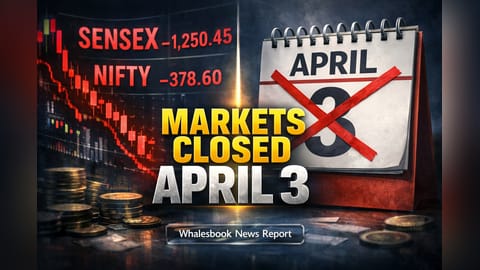
India's stock market closed for the Good Friday holiday after a trading day marked by sharp intraday swings and a significant recovery, especially in large-cap stocks. The Nifty 50 recovered from losses to close higher, driven mainly by gains in technology stocks and a historic surge in the Indian Rupee. This split between specific sectors and the wider market creates a complex picture for trading when it resumes.
IT Stocks Lead Gains Fueled by AI Demand
Information Technology stocks were the strongest performers on April 2nd, with the Nifty IT index rising 2.6%. This sector strength included major companies like HCL Technologies, Tech Mahindra, and Tata Consumer Products among the top gainers on the Nifty 50. HCL Technologies has shown strong performance, delivering 28.86% returns between January 2022 and January 2026, far surpassing peers such as TCS, Infosys, Tech Mahindra, and Wipro, which experienced declines in the same timeframe. This solid performance by the IT sector, even as the wider market faced challenges and global economic worries, points to strong demand for tech services. This demand is boosted by AI adoption and digital transformation projects expected to grow industry revenue to $315 billion by FY26.
RBI Intervention Powers Rupee Surge
The Indian Rupee saw its biggest single-day rise in over 12 years on April 2nd, increasing by 173 paise to close at 93.10 against the US dollar. This historic jump occurred due to direct intervention by the Reserve Bank of India (RBI) to curb currency speculation and volatility. The central bank put in place measures like capping banks' net open positions and limiting certain derivative contracts. Analysts expect the rupee to strengthen short-term, trading in a set range. Long-term stability will depend on global dollar supply and oil prices.
Broader Market Weakness Persists
Even with the strong performance in the IT sector and the rupee's large increase, wider market sentiment was weak. Broader indices, like the Nifty Midcap and Smallcap, closed down 0.3% and 0.4% respectively, showing few investors joined the rally. The market's recovery on April 2nd came after a significant intraday drop. It marked the Nifty's sixth consecutive weekly loss, a negative trend not seen since the COVID-19 era. Underlying issues remain, such as consistent foreign investor selling, high crude oil prices near $106 a barrel, and ongoing global tensions. The IT sector also faces its own issues, like potential AI disruption and current high stock valuations. The Nifty 50's P/E ratio is around 19.96, the BSE Sensex P/E is about 20.2, and the Nifty Midcap 100 has a higher P/E of 33.18, indicating some stocks may be overvalued. Gains relied on a few sectors, while economic weaknesses persisted, showing the rally lacked broad, lasting support.
Investor Watchlist Ahead of Reopening
With markets closed for Good Friday, investors will be watching how domestic actions and global economic trends play out before trading resumes on April 6th. Key factors to track will be the ongoing effects of the RBI's forex measures, the direction of crude oil prices, any changes in foreign investor sentiment, and continuing performance in the technology sector.