

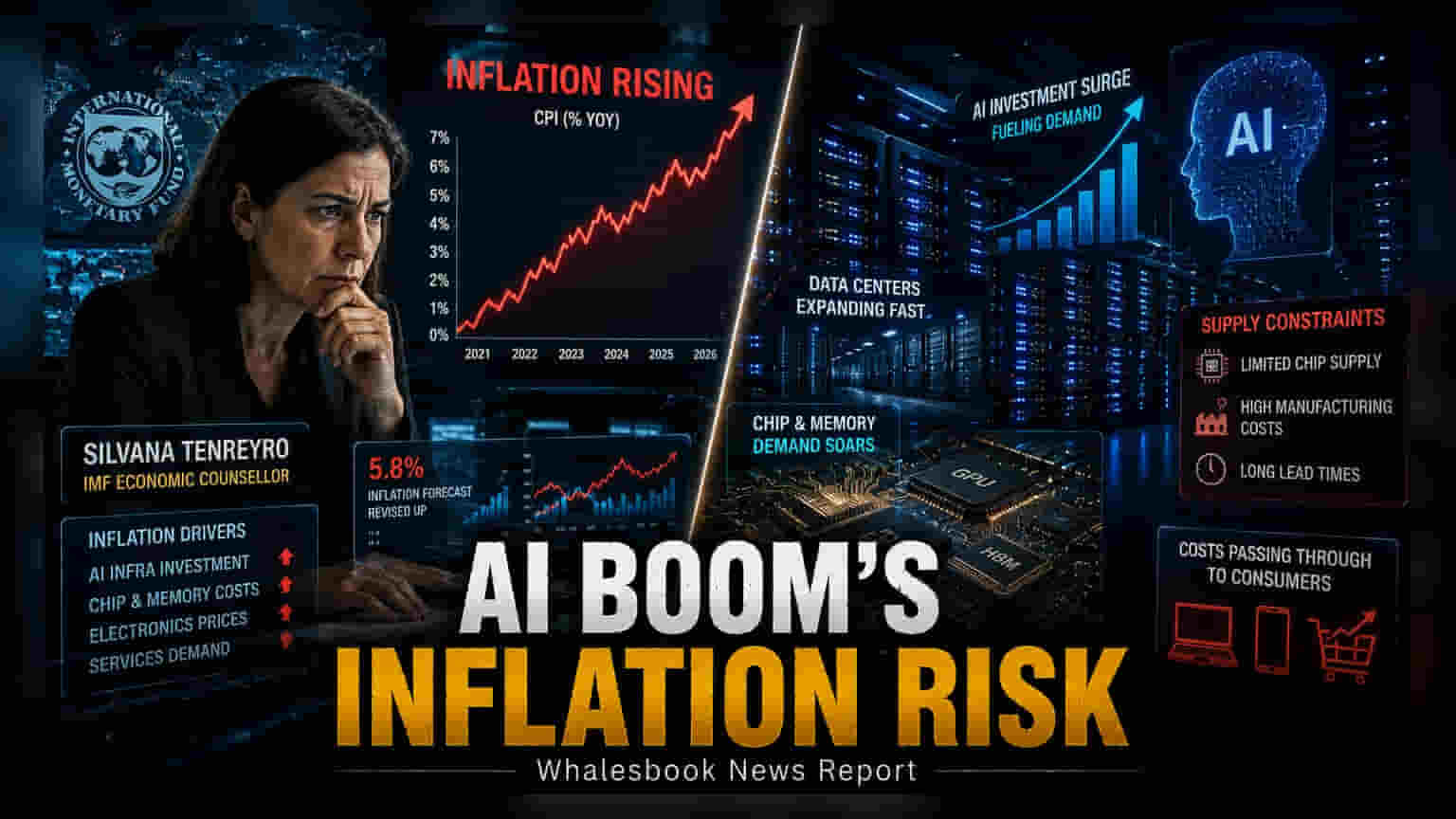
The IMF's new chief economist Silvana Tenreyro warns that heavy investment in artificial intelligence may drive inflation up rather than down. Investors should note that excessive demand for AI hardware could keep consumer prices high, potentially complicating the path for central banks to cut interest rates.
Silvana Tenreyro, the newly appointed Economic Counsellor at the International Monetary Fund (IMF), has raised concerns that the expected productivity gains from artificial intelligence (AI) may not lead to the lower inflation that many investors hope for. In research published on August 20, 2026, via the Bank of England's staff blog, the analysis suggests that the economic impact of AI is more complex than a simple increase in output.
The Inflation Gap: Why AI Spending Outpaces Benefits
At a theoretical level, higher productivity—creating more output with the same resources—should help lower prices. However, Tenreyro and her co-authors, Jenny Chan and Ludovica Ambrosino, argue that the current reality is different. Businesses and households are spending heavily today in anticipation of future AI benefits. This massive surge in investment, particularly in AI infrastructure, is creating demand that outstrips current supply.
This gap between supply and demand is already visible in the tech sector. The intense need for data centers and specialized hardware has led to a sharp increase in demand for computer memory and graphics chips. As a result, the cost of consumer electronics, such as laptops and smartphones, has risen. For investors, this serves as a practical example of how AI-driven investment can fuel inflation in the short term, rather than cooling it.
Sector Differences: Services Versus Exports
The research further explains that the impact on inflation depends heavily on where these productivity gains occur. Improvements in domestically produced services are more likely to help lower inflation because they make essential services cheaper and more efficient.
However, the situation is different in export-oriented industries. If productivity gains are concentrated in sectors that produce goods for export, it can lead to higher wages and increased domestic demand. This creates a scenario where the economy has more money chasing limited services, which in turn pushes up domestic prices.
What This Means for Monetary Policy
The most important takeaway for investors is the potential impact on interest rates. Central banks, including the RBI and the US Federal Reserve, rely on inflation data to decide interest rate levels. If the ongoing AI investment cycle keeps consumer prices elevated, it could force central banks to keep interest rates higher for longer than the market currently anticipates.
Investors should monitor the pricing trends in hardware and the inflation figures for service sectors. If AI-related demand continues to strain supply chains without delivering immediate productivity gains, the market may need to adjust its expectations regarding future rate cuts and corporate profit margins, which could be squeezed by the rising costs of technology infrastructure.