 Whalesbook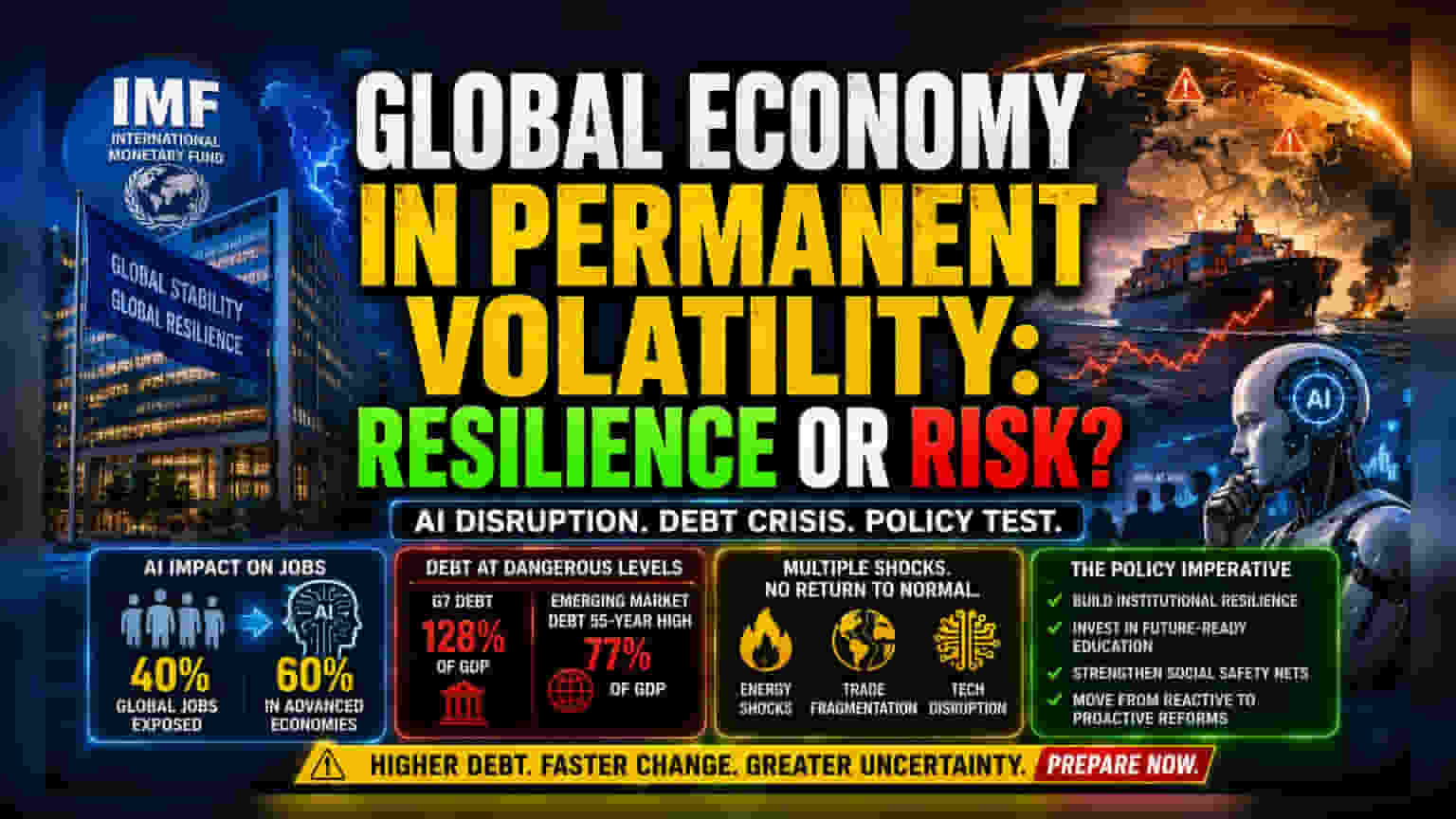


Beyond the Temporary Shock
Global financial stability is entering a period where disruption is no longer an anomaly but an inherent characteristic of the international economic environment. The International Monetary Fund has signaled that policymakers must stop anticipating a return to long-term predictability. Instead, the focus has shifted toward institutional resilience and the capacity to withstand a cycle of overlapping crises, ranging from energy supply shocks caused by regional conflict to trade fragmentation and the rapid, uneven adoption of artificial intelligence.
The AI Labor Market Paradox
The integration of artificial intelligence represents a structural transition comparable to the industrial shifts of the past, yet with a velocity that risks deepening systemic inequality. While current IMF modeling suggests AI could catalyze a 0.8% increase in annual global growth, the distribution of these gains remains a critical concern. Unlike previous technological advancements that primarily targeted routine tasks, AI’s reach now extends into high-expertise roles. Research indicates that approximately 40% of global employment is exposed to AI integration, with this figure climbing to 60% in advanced economies. The risk is not merely job displacement but the erosion of middle-income wage stability, creating a potential 'tsunami' effect in labor markets that governments are currently ill-equipped to manage.
The Forensic Bear Case: Structural Vulnerabilities
Underlying this shift toward permanent volatility is a worrying trend of fiscal exhaustion. Many nations entered this period of escalating conflict with limited policy space, having already stretched public budgets during the pandemic and subsequent recovery phases. Data from the 2026 spring meetings revealed that public debt in G7 economies has reached an average of 128% of GDP, while emerging market debt sits at a 55-year high of 77%. This lack of fiscal discipline severely restricts a government’s ability to act as a buffer during future shocks. Furthermore, the IMF faces its own credibility hurdles; the institution’s desire to resume standard surveillance, such as Article IV consultations with major geopolitical actors like Russia, continues to be stifled by internal political friction and concerns over the legitimacy of engagement during ongoing conflict.
Future Outlook and Policy Focus
The IMF’s upcoming July update to the World Economic Outlook will likely reflect the lingering impact of the April growth downgrade, which was largely precipitated by the expansion of conflict in the Middle East and the resulting disruption to critical maritime trade routes. As the fund nears its $1 trillion lending capacity, its guidance is increasingly focused on the intersection of technological diffusion and social cohesion. For member states, the path forward requires a transition from reactive crisis management to proactive structural reform—prioritizing education systems that emphasize 'learning to learn' and social safety nets designed to mitigate the volatility of an AI-driven labor market.