

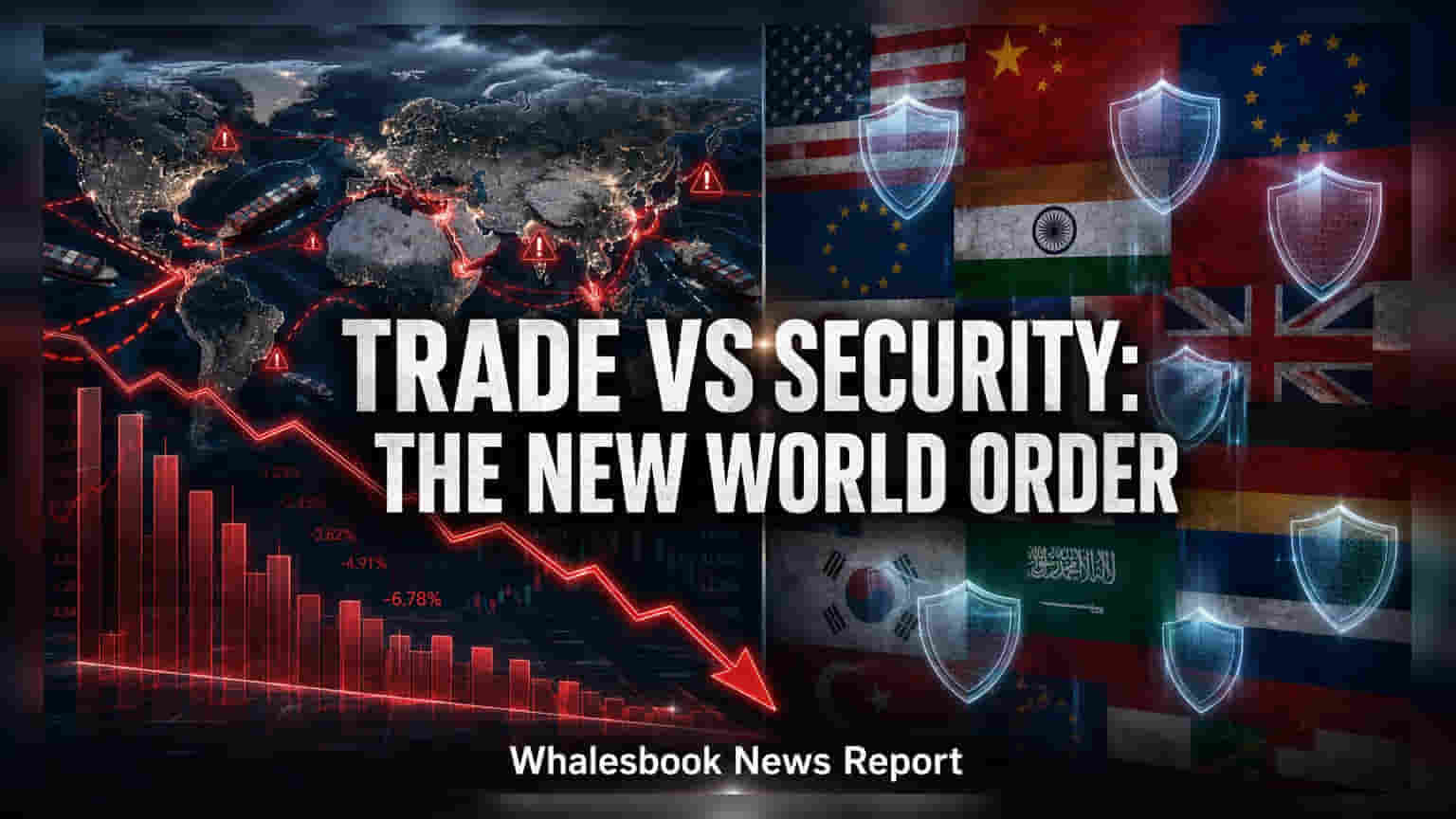
A recent IMF-cited analysis suggests the global era of unbridled trade is ending as nations prioritize national security over economic efficiency. This shift creates distinct challenges for different economies based on their domestic market size and financial influence. The report emphasizes how reliance on the US dollar and exposure to trade disruptions may impact smaller or less-integrated nations significantly more than major powers like the US and China.
The long-standing economic consensus that increased global trade inherently guarantees prosperity is under intense review. According to recent insights citing an International Monetary Fund (IMF) publication, the world is moving away from a model of open, unbridled trade toward a more restrictive framework where national security concerns often outweigh economic benefits. This change is driven by the realization that extreme global interconnectedness can create dependencies, which nations may exploit during geopolitical tensions.
Strategic Challenges for Major Economies
The report highlights that the ability to manage this transition depends heavily on the size of an economy and its internal market capacity. Large economies like the United States, with its US$33 trillion GDP, the European Union, and China, have the structural depth to absorb the costs of this strategic pivot. These nations can afford to focus on securing supply chains and protecting key industries even if it results in reduced efficiency or higher costs for certain goods.
Vulnerabilities of Smaller and Emerging Nations
Smaller economies face a more difficult reality. While some nations have built success as global financial service providers, those without large domestic markets or a massive industrial base find themselves in a weaker position. These countries often rely on extensive trade to sustain their economic activity and have little control over the global trade environment. A major point of contention is the dominance of the US dollar as a reserve currency. While this status provides the US with significant financial influence, it also places other countries at risk of being affected by sanctions or shifts in US financial policy, as evidenced by recent international restrictions on Russia and Iran.
India’s Unique Economic Position
The analysis positions India as a unique case within this changing global landscape. As a large nation that has not fully embraced the extensive market liberalization seen in China, India occupies a specific space. It maintains a dual reliance, depending on the US for critical technology and on China for various industrial and consumer goods. The report notes that India’s current economic structure leaves it more vulnerable to global trade disruptions compared to the world’s largest economies. This is because India does not yet possess the deep integration in high-value financial services of a global hub or the manufacturing scale of a dominant exporter. For investors, the takeaway is that as global trade dynamics shift toward security-first policies, nations like India must navigate a complex path to improve industrial output and market integration to reduce external economic risks. The primary monitorable for long-term economic stability will be how these nations adapt their internal growth strategies to withstand potential volatility in global supply chains and financial settlement systems.