

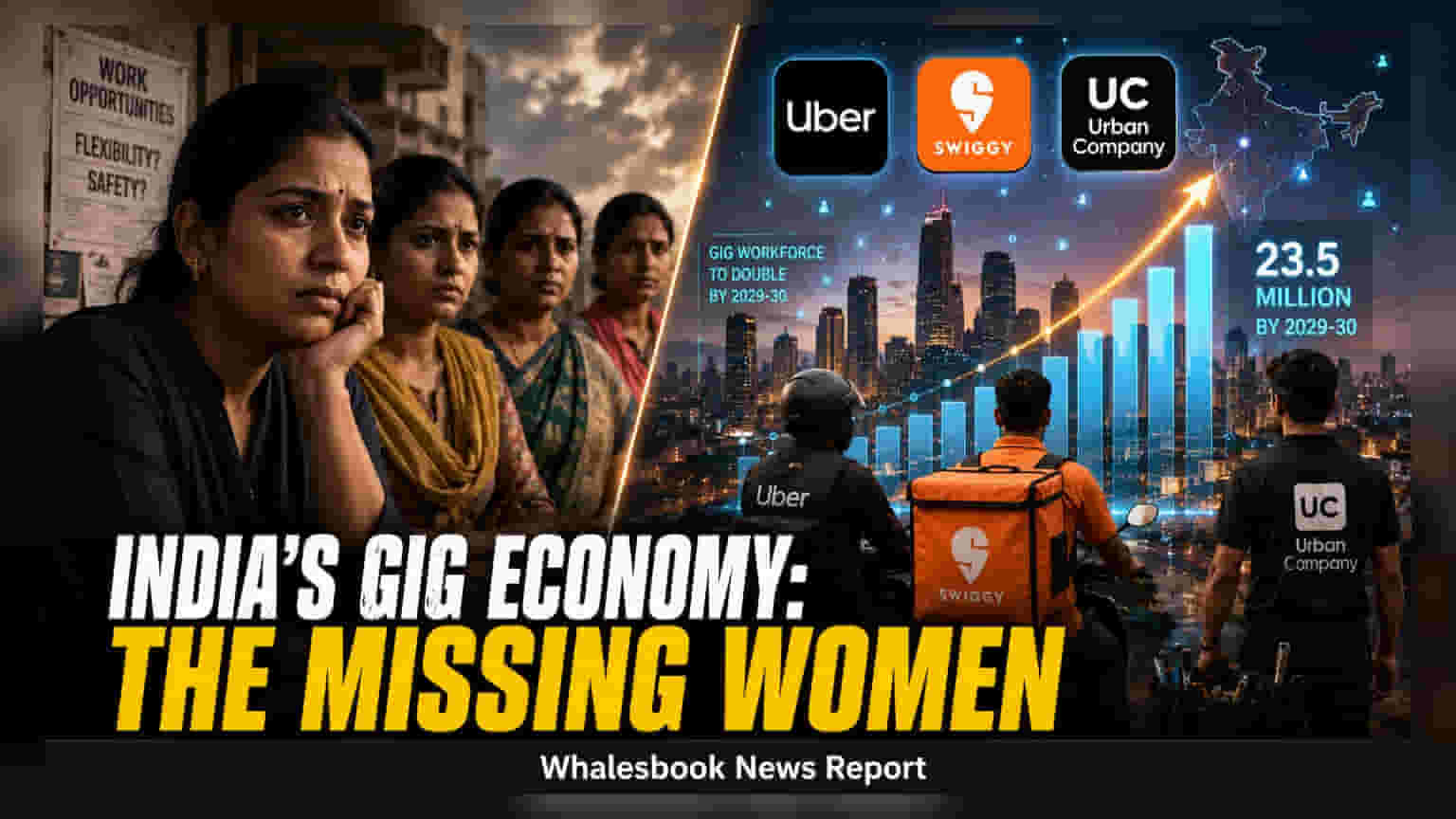
A joint study by the ILO and NCAER reveals a significant gender disparity in India's gig economy, where women remain underrepresented despite the sector's rapid growth. With the workforce projected to reach 23.5 million by 2029-30, experts warn that addressing digital skill and safety gaps is essential to unlocking potential economic gains.
India’s gig economy is on a massive growth trajectory, with the workforce expected to nearly double to 23.5 million by 2029-30. However, a new report by the International Labour Organization (ILO) and the National Council of Applied Economic Research (NCAER) warns that this expansion is currently missing a significant segment of the workforce: women. While the sector creates millions of jobs across delivery and ride-hailing, the study highlights a persistent gender gap that hinders both individual economic empowerment and broader national growth targets.
Gig Economy Workforce Set to Double
The economic implications of this exclusion are substantial. Current projections indicate that the gig workforce will grow to 23.5 million over the next few years. Economists have noted that if India could increase female labor force participation to 50%, the country’s annual economic growth could see a boost of approximately one percentage point. The ILO and NCAER study suggests that the gig economy, if made more accessible, could serve as a powerful engine for this transition.
Despite the growth of platforms like Uber Technologies, Swiggy, and Urban Company, the report finds that women remain notably underrepresented in app-based work. The reasons identified are multifaceted, ranging from safety concerns and mobility restrictions to societal expectations regarding caregiving duties. These factors often make the traditional, high-intensity model of gig work less suitable for many women.
The Digital and Safety Divide
The research underscores a critical disconnect between financial access and digital capability. While India has made significant strides in banking, with female account ownership reaching nearly 89% in 2024, this has not translated into digital financial inclusion. The study highlights that only 25.2% of Indian women perform online banking transactions, compared to 47.1% of men. This digital skill deficit acts as a barrier to entry for platform-based work, which requires comfort with smartphone apps, GPS navigation, and digital payments.
Furthermore, the design of these platforms may inherently cater to patterns better suited to men. Analysts point out that algorithmic management, which often prioritizes speed and long, unpredictable hours, may not account for the specific safety or flexibility needs of women. Investors and stakeholders are increasingly watching how platforms adapt their models—such as introducing safety-first features or more flexible scheduling—to tap into this underutilized workforce.
For investors monitoring the sector, the key takeaway is that the long-term sustainability of the gig economy model may depend on its inclusivity. Future monitorables include how these platforms address digital literacy gaps, safety concerns, and potential regulatory shifts aimed at formalizing gig work and ensuring fairer access for all demographics. As the sector matures, the ability of these companies to bridge the gender gap could become a factor in their ability to scale and maintain a steady supply of workers.